
1st International Conference on Sama Dilaut, December 1-3, Tawi-Tawi
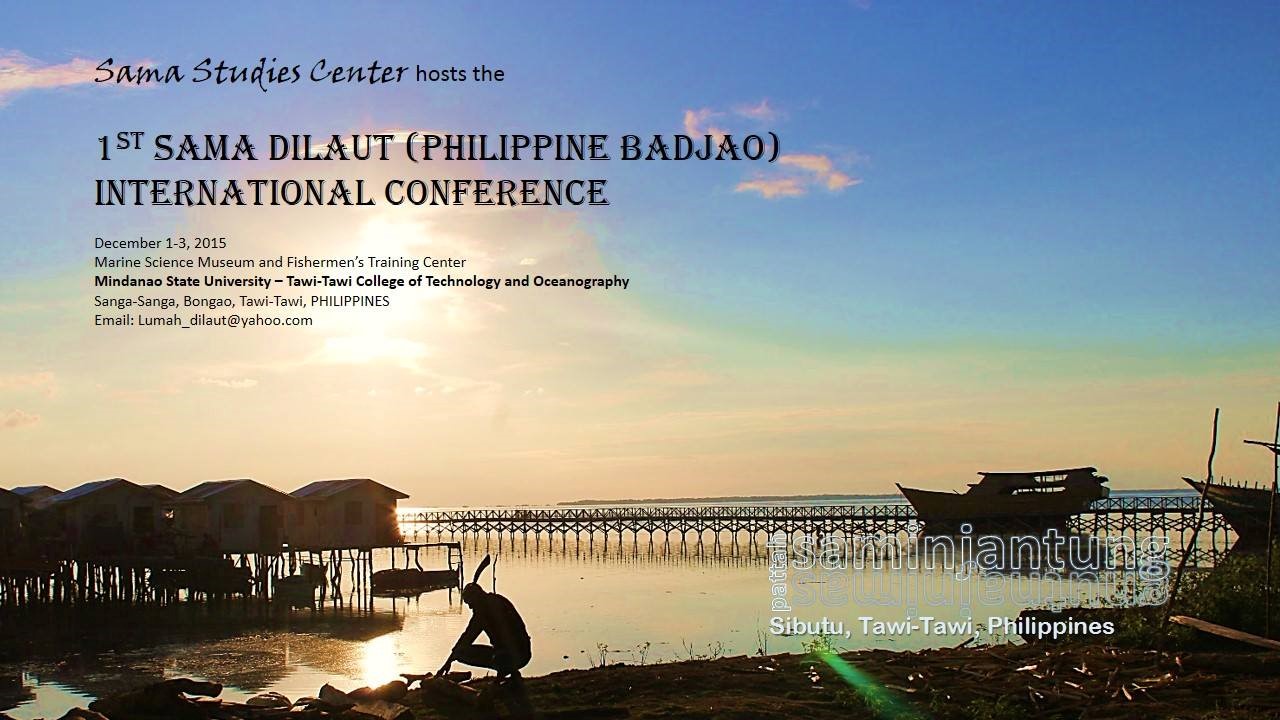
The first Sama Dilaut International Conference will be held December 1-3 in Tawi-Tawi, Philippines. Among the invited scholars are Prof. Harry Arlo Nimmo, who made extensive fieldworks among Sama Dilaut in Tawi-Tawi in the 60’s. He has written the book Magosaha: An Ethnography of the Tawi-Tawi Sama Dilau and the memoir The Songs of Salanda and Other Stories of Sulu.
The conference is organized by Sama Studies Center and aims to open a dialouge between scholars, scientists, statesmen and development actors with the Sama Dilaut themselves. The meeting will be “an opportunity to look back to what has always been held by the Sama Dilaut as their life-ways since time immemorial and as traditional, and to commit to give them renewed winds to sail and to secure abundant seas that may facilitate their journey to reclaim their space and reorder their present realities”.
Objectives of the conference:
- To strengthen research and encourage academic interest on the plight and situation of the Sama Dilaut (Badjao) by highlighting their roles in the social and cultural development of the Sama society, and their contributions to the dynamics of maritime and sea-based economy in Tawi-Tawi and the Philippine waters, and the impact and consequences of geopolitics in Southeast Asian region in this roles and contributions;
- To discuss development models and survey affirmative actions, and evaluate empowerment programs and interventions for this most marginalized of Sama ethnic communities; and
- To provide venue and spaces for the Sama Dilaut to tell their narratives and as well as for listening to alternative voices speaking as interlocutors for Sama Dilaut issues.
More information about the conference can be found here: Sama Dilaut International Conference
Difficult Situation for Sama Dilaut in Sabah
In late April and early May, I traveled to Sabah, Malaysia, to meet Sama Dilaut and learn more about their present situation. I visited many islands in the Semporna region making interviews about their livelihood and challenges. Still there are many houseboats in the region and I could also see new houseboats being built. Livelihood is still good but fish is on decline in the region.
Most Sama Dilaut in Malaysia are stateless. They have no legal right to stay in Malaysia and they face risk of deportation to the Philippines. However, 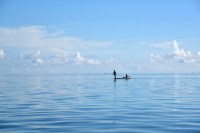 many boat nomadic and traditional Sama people have certain “lepa passports” (or boat dwelling passports) that assure them to stay in Malaysia, but these documents are expensive and difficult to renew. In practice, Sama Dilaut run little risk of arrest and deportation as long as they stay in the islands but many of them are afraid of entering Semporna town. When they enter the harbor to sell their fish and buy water, gasoline, cassava and other staples they use middlemen. Many Sama Dilaut do never enter town and they rely on land-dwelling Bajau people with Malaysian IC for all trade. Being stateless do also mean that you can’t get medical care, education and demand for basic social security.
IC Raids in Semporna and Lahad Datu
Raids are common – several times I have witnessed Malaysian police and military making raids in the harbor of Semporna looking for people without legal documents. One time young people threw themselves into the water to stay away from authorities. I have also seen many migrants being sent back to Bongao in Tawi-Tawi, Philippines, of whom many have lived in Malaysia for decades or have even been born here
One very poor and vulnerable Sama Dilaut community is the Sama Dilaut community in the town of Lahad Datu. In January this year many of the people in the community, including families, were arrested by Malaysian authorities and sent to Tawau, a larger neighbouring city of Semporna. Some managed to run away and started to make a living in Lahad Datu islands. Others were deported to Philippines and eventually made it back to Philippines. During the last trip I met Sama people from Lahad Datu in the small island of Tobalanos in the Semporna region, whom told me that they had been sent to Philippines and then come back again. No one wants to live in the Philippines.


Sama Dilaut Put in Indonesian Camp Released
Last year I reported about Sama Dilaut people from Semporna had been caught for illegal fishing in Kalimantan, Indonesia, and put in a camp in Tanjung Baru. Most of these people came from the islands of Denawan, Omadal and Maiga outside of Semporna. Now, all these people have been released and I talked to many Sama people who had been detained for more than two months. They told me that they had been away for “magosaha” (approximately: search for livelihood) and they said that they will never go back to Indonesia.
Children Live in a Very Difficult Situation
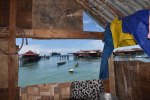
View from Sama Dilaut House on Mabul Island
Sama Dilaut children have a very difficult situation. They have no access to medical treatment and schooling. At the same time there is a big population growth in the area and the marine life is limited. Commercial fishing boats are on the increase and destructive fishing methods, as dynamite fishing, is still in practice, also among Sama Dilaut. On islands like Mabul malnourished children die in infections next to partying tourists. Sometimes families stay one day without food.
No one takes the responsibility. Malaysian authorities do not recognize them as citizens and most resorts renounce social responsibility. Most Sama Dilaut completely rely on social connection s with people who live under the same difficult situation as them.
Of course, tourism is crucial in order to secure the rich marine life in the area but by utilizing land that have traditionally been used by indigenous peoples you also have to a take social responsibility – and you can’t take it for granted that the local authorities will do so. Resorts should take a bigger social responsibility on the islands they are working on.
Human Photo Safaris
In Semporna human photo safaris are on increase. Many boats leave Semporna harbor every day and head off against islands like Maiga, Bodgaya, Omadal, Nusatenga etc. Sama Dilaut gets exploited as safari boats go up near to their houses and boats taking intrusive photos. Children are encouraged to jump from small houses in exchange for sweets. The tourists, of whom most are Asians, pay a lot of money to the organizers of these trips, but little is sent back to the people that is used in much of the international marketing of the Semporna region.
New BBC production about the Bajau released
On April 19 BBC released the first episode of three of the “Hunters of the South Seas”. The video shows Bajau fishing and diving, animistic beliefs and everyday life in the village of Sampela, southeast of Sulawesi. The movie is only available in UK but a small clip can be seen in other countries as well.
The video can be seen here: Spear fishing with the Bajau – Hunters of the South Seas
BBC has made many productions of Bajau over the years, of which the best known is Sea Bed Hunting On One Breath – Human Planet.
Bajau in Sulawesi – Boat life, Diving and Traditional Fishing Methods
For three weeks I have been travelling in Sulawesi, Indonesia, where I have visited three different Bajau communities. In the beginning I was travelling with professor Erika Schagatay (Department of Health Sciences) who re-visited a Bajau community in Kamaru, Buton, after 26 years.
“The equipment has changed, but many of the houses and the boats look just like before”, Erika Schagatay said. ”Today many spearfishers use fins and modern masks which they didn’t do in the 1980’s”. Sometimes they also dive using a compressor, in addition to the more common breath-hold diving. During the stay we measured the lung capacity of some of the divers and found that the divers have a big lung capacity for their height compared to people in the wider community who do not live as divers.


Sampela – A Bajau Community in the Heart of a National park
In the Bajau community Sanpela in Wakatobi many traditional fishing methods are still used, and equipment is still mostly only wooden goggles. Many households do not have a boat with engine and use only paddle and sails. Also women are fishing and many of them do regularly dive for seashell, trepang and clams in shallow waters.
One common fishing method is called “ngambaj” in which several fishing boats gather and use nets to surrond coral fish while others hits the water and try to chase the fish against the net. They are also using harpoons to spear bigger fish surrounded by the nets. This fishing method is also used in the Philippines and Malaysia – but I have never witnessed a more succesful “ngambaj” than in Sanpela where each fisherman got more than 10 kilo of fish. Here, in the Wakatobi National Park fish is plenty and many of the corals are intact.
WWF Indonesia has worked a lot in the area to promote traditional fishing methods and educate people on the vulnerability of the marine ecosystems. In other parts of Sulawesi fish bombs and cyanide are common, but in Wakatobi these methods are very rare nowadays.
Pongka – They Stay Several Weeks at Sea at a Time
In Torosiaje – a Bajau village highlighed by the British award-winning photojournalist James Morgan, many Bajau still do “pongka”. They stay at sea for weeks and sleep in their boat (”lepa”). When I was there a few fishermen were planning for longer fishing trips to remote islands. However, no one here is still living permanently in the boat and it seems unlikely that there still are Bajau boat nomads left in Sulawesi. Pongka is a way of life depicted in the German/French movie Sulawesi, the last See nomads.
Bajau – one of the Most Widespread Peoples of Southeast Asia
In Sulawesi there are approximately 150 Bajau communities, according to the study Mapping Indonesian Bajau Communities in Sulawesi. There are also plenty of Bajau communities in such scattered islands as East Java, West Nusa Tenggara, Molucca and Papua. Between these communities language differs only slightly, and it has been found that not less than 90 % of the words used in the Bajau communities in Sulawesi are identical – unlike in the Sulu Sea, Philippines, where dialects are plenty. In Sulu, every single island can has its own Bajau (Sinama) dialect.
The Bajau is one of the most spread indigenous peoples in Sotheast Asia, but they are always a minority population. They live in pockets throughout Indonesia, Philippines, Brunei and in the eastern part of Malaysia. It is their historical nomadic lifestyle and search for vibrant coral reefs with good fishing and trade that have made them so widespread.
Stateless Sama Dilaut Boat Nomads Put in Indonesian Camp
676 Sama Dilaut have been put in a camp for illegal fishermen in Tanjung Batu in Indonesia. They came in their houseboats from Semporna, from where thay had been chased away by the Malaysian authorities because they have no legal documents and are thought to distrurb the tourists.
At the same time, the newly elected government in Indonesia wants to stop illegal fishermen and they have made several raids in the ocean outside of Kalimantan where hundreds of boats have been seized (among them the Sama houseboats).
The Sama Dilaut were initially supposed to be released and sent back to Malaysian waters on December 17 and, but Malaysia and Indonesia are still arguing about who’s responsibility it is to handle the problem. As most Sama Dilaut are stateless no one wants to take the responsibility. Sama nomads are stuck between two national states – even if they have moved into these waters for centuries
Berau Post and a Swedish newspaper, Sydsvenskan, have reported from the incident but others seem to be silent. They have been in the camp for over a month.


A Two-Month Long Trip in Southeast Asia Starts
For two months I will be travelling in Indonesia, Malaysia and the Philippines where I will be living with the sea nomads Bajau Laut. It will be a time of fishing, diving and ethnography!
In the beginning, I will travel with Professor Erika Schagatay at Mid Sweden University in Sulawesi, Indonesia, who will visit the same Bajau village as she visited in 1988. We will also visit the Tukangbesi islands outside of Sulawesi and learn more about Sama diving skills.


Article in Human Evolution – an international Journal
In the aftermath of the conference Human Evolution Past, Present & Future – Anthropological, Medical & Nutritional Considerations in 2013 the journal Human Evolution – an International Journal decided that they would bring out a special issue on the Aquatic ape hypothesis. I and professor Erika Schagatay submitted an article titled A Living Based on Breath-Hold Diving in the Bajau Laut, where we present new dive data that has been measured during 2013.
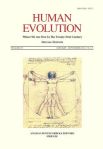
The conclusion of our paper is that there is potential in man to live a life on subsistence diving, which is possible thanks to the strong human diving response and good swimming ability. The important thing for subsistence divers are not to stay as long as possible in the water on any given dive, but to maximize the bottom time during a longer time of diving.
Man’s ability to live from and in water is drastically different from our closest relatives, such as chimpanzees and gorillas. However, several human characteristics such as absence of body hair, a strong diving response and a large spleen are also present in marine mammals such as dolphins and whales. It is also important to keep in mind that all aquatic mammals previously lived on land. The idea that ealso humans have spent a long time close to water during her evolution is not too far-fetched after all.
You can read the full article here: A Living Based on Breath-Hold diving in the Bajau Laut Diving.
Children Under 5 die due to Infections Next to Snorkeling Tourists
The Sama girl Nurlyn lives in a traditional houseboat (lepa) in Semporna. Her family is originally from the Philippines, from where they fled pirates and conflicts. It was 50 years ago – but now they are afraid of being sent back. They have no papers, no identification documents.
“I’m good at rowing a boat”, Nurlyn says in an article written by the Danish journalist Pia Kainø Jensen which was published in the Danish newspaper Weekendavisen on July 18. “I am also a great swimmer and I can dive underwater just like the boys, and I can catch fish with spears. But I can not dive as deep as my father. My mother can also dive.”
You can see the front page of the magazine here (Mød havfolket) and read the article here: De har hjemme på havet (Danish). Many of the images in the article have been taken by me during my travels to Malaysia, the Philippines and Indonesia.
Recently, another Sama girl from Mabul Island, Semporna, Malaysia, has become famous thanks to this YouTube clip where she rescues a boat from sinking and helps Asian tourists (the video has been viewed more than 2.4 million times):
Nurlyn and the girl on the boat are two of many Bajau Laut in Semporna lacking legal papers. They are in fact stateless: they can’t attend school, they have no right to medical care and they get no support from the government. On many islands, like on Mabul Island, they live next to luxurious tourist resorts. Here, children under 5 die due to infections next to snorkeling tourists from all over the world.
Fire in Downtown Davao – Hundreds of Sama are Homeless
A large fire broke out on Friday night in Isla Verde, Davao City. The fire appears to have started in a kitchen in the community that largely consists of wooden houses. The fire spread quickly and was not under control until six hours later.
Isla Verde consists the largest Sama Community in Davao City, many of them are now homeless. The residents have been evacuated to a local school. One person has been reported dead. Manila Bulletin: Fire leaves thousands homeless in Davao City (2014-04-05)
The Sama community of Matina Aplaya was not affected.
Semporna – Renassiance of the Houseboat
At year-end, I and photographer Andreas Ragnatsson went to the Philippines and Malaysia to meet Sama Dilaut. In Davao, the Philippines, we spearfished with superb divers. In Semporna, Malaysia, we visited the islands of Bodgaya, Mabul, Sibuan and Maiga and talked to them who are still living on their “lepa” houseboats.


Different groups of Sama Dilaut
Sama Dilaut in Philippines, Malaysia and Indonesia can be divided into four groups, of which today only two are living on boats. The northernmost group is Sama Dilaut from Zamboanga, Basilan and Jolo, who are generally known as “Badjao” in the Philippines . They live today scattered over large parts of the Philippines, (eg, Davao, Manila, Cebu) where they fled after unrest in the Sulu Sea. None of them live on house boats today, but many still make a living from fishing and live along the shorelines.
The largest group of boat nomads is Sama Dilaut from Bongao, Tawi-Tawi, Philippines . Most of these, however, have fled to Sabah, Malaysia, where many still live on their house boats. Today, there are no nomads left in Tawi-Tawi because of the unsecure situation in the region. Many Sama Dilaut house-dwellers in Semporna told me that they want to return to their boat-dwelling lifestyle, which make them more mobile and give them better fishing opportunities. For many it is only a matter of money – if they would afford it they would build a houseboat and return to the sea.
A closely related group to Sama Dilaut of Tawi-Tawi is Sama Dilaut of Sitankai, Philippines, that used to live on the sea. Many of these people came to Semporna in the 60’s on their houseboats where they established the village Bangaw Bangaw. Today all of them live in houses
The fourth group is Sama Dilaut of Indonesia, who generally are called Indonesian Bajau. They speak a slightly different dialect than their relatives in the Sulu Sea but most words that are related to the sea are identical, as for example “amessi” (hook-and-line fishing), “amana” (speargun fishing) and “amosaj” (to paddle). Indonesian Bajau live over large parts of Sulawesi and even as far south as Flores. Today, only few Indonesian Bajau live on house boats and the number decreaces. Only ten years ago many Indonesian Bajau were boat-dwellers along the eastern coast of Sulawesi (eg, Lasolo) but today there are only few nomads in the Togian Gulf left.
Unclear how the Typhoon Haiyan has Affected the Bajau
The typhoon Haiyan hit the central parts of Philippines on November 8, and it is estimated that 5 000 people have died and more than 600 000 have been left homeless.
The last days many people have asked me how my friends in Davao have been affected by the storm – and I am happy to inform you that their village in Matina Aplaya were not hit. I have spoken to some members of the community and they told me that it rained and blew more than usual, but that their lives continue as usual. Davao City is located in the southern part of the Philippines, outside the area where the typhoon hit.
However, there are many Bajau Laut communities on islands like Cebu, Bohol and Leyte that were badly hit by the typhoon. It is not clear how these stilt villages have been affected. Most Bajau Laut in central Philippines are refugees from the long-going unrest in the Sulu Sea, located in the southwestern part of the Philippines. they have lived in poverty for a long time and this disaster has probably worsened their situation
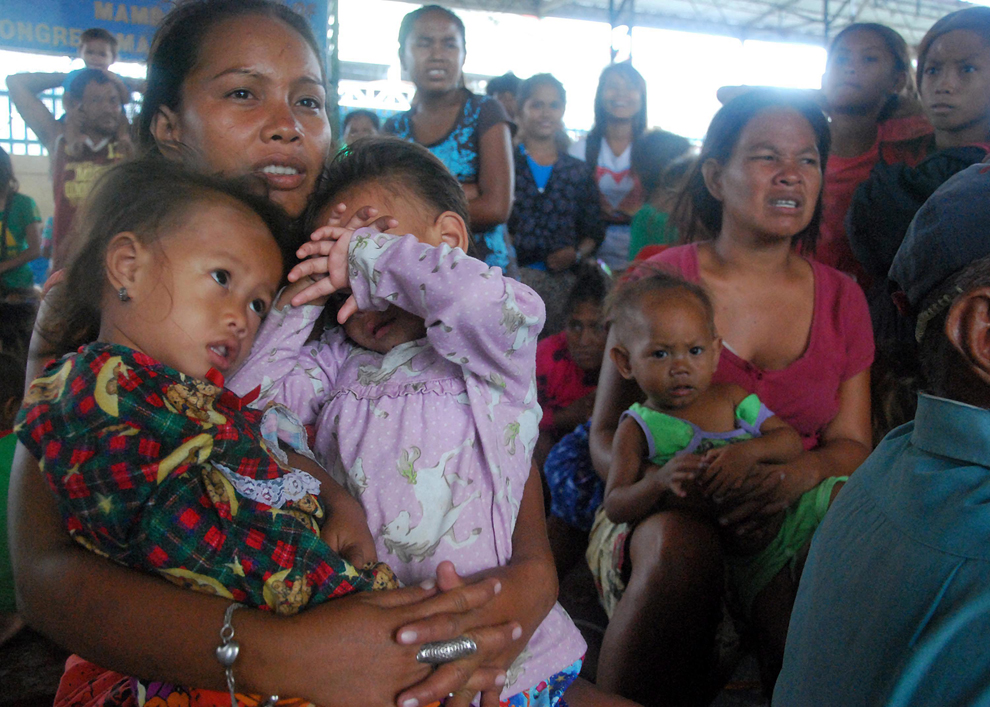
Families of Indigenous Filipino Badjao seek refuge inside a gymnasium turned into an evacuation center during a heavy downpour brought by Typhoon Haiyan in Cebu province, Philippines, Nov. 8. (Jay Rommel Labra/EPA)
A World Famous but still Stateless Bajau Diver
More than 2,8 million people have seen BBC:s production “One breath”, featuring the Bajau Laut diver Sulbin. However, we don’t know much about the man. What reality is he living in? Helen Brunt, an anthropologist who spent eight years (2004-2012) in Sabah has written an article about Sulbin in Minority Voices: Malaysia: The story of an infamous, yet invisible Bajau man.
Sulbin lives on Mabul, one of the most popular tourist islands in the waters of Semporna, Sabah, Malaysia. Here more than 1 000 Bajau Laut have their dwellings (some are living on boats) and most of these people lack legal documents. Hence, they are stateless.
Sulbin and his wife have had seven children, but only two of them have survived infancy. Their youngest child were brought to hospital 2011 even if they were facing risk of deportation to the Philippines. The child didn’t survive and Sulbin and his wife recieved a medical bill for the treatment the child had received – they have to pay the same prize as uninsured foreigners.
On Mabul many Bajau Laut children die of childhood diseases, at the same time as tourists spend time in resorts enjoying the corals and night clubs.
Helen Brunt just completed her dissertation, ‘Stateless Stakeholders: Seen But Not Heard? The Case of the Sama Dilaut in Sabah, Malaysia‘, in which she problematize Bajau Laut’s statelessness and the complications to create well-anchored conversation projects. If people are stateless, how can they be fruitful stakeholders in national parks? First they have to be considered as legal human beings.
Here you can see Sulbin in action:
Philippine Records in Sama Freediving Contest
The winner of the Sama Freediving Contest, Juli Musuari reached 260 feet, or 79 meters. It is the deepest dive ever by a diver from the Philippines. Sama diving capabilities have been known for a long time, but it is not until now their dives have been measured by professional standards.
Totally 18 Sama from the Davao region participated in the contest, of whom five were from Matina Aplaya. Nasahali Musahali, a man from Matina Aplya, finished second, reaching 242 feet, or 72 meters.
The contestants were diving in the traditional Sama way, called Rod and Line. They were using rods of between 3-7 kilo to descend and were then pulled up by two partners on the boat. The competition consisted of three rounds. For information on all dives please visit Kadayawan Sama Freediving Contest 2013.
Here you can see the Silver Dive by Nasahali Musahali. As most other Sama in Davao he is originally from Zamboanga.
Sama Freediving Contest
On August 15th Freediving Philippines are organizing a Sama freediving contest in Davao City. It will be held during the annual Kadayawan festival, that highlights the 11 indigenous tribes of Davao.
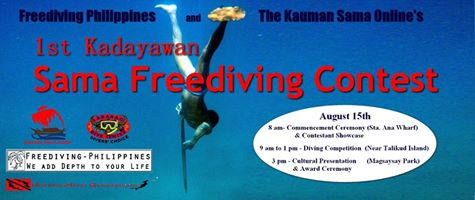
“Bajau are also indigenous to the Davao region”, writes Luke Schroeder on Sinama.org who is one of the organizers of the event. Totally 23 men are participating in the contest, all of whom have dived more than 80 feet. Ten men from the Sama Community of Matina Aplaya are participating.
Goals of the Event (from Sinama.org)
*Increase awareness in the Davao area about the Sama tribe. Many government offices and schools are unaware that the Sama are indigenous to the Davao region.
*Honor the Sama people. Overall perception of the Sama people in urban areas of the Filipinos is in many cases degrading towards them. Sama are a peace loving people and very hard working. We would like to make this known.
*Set national records for the sport of freediving.
*Provide oppor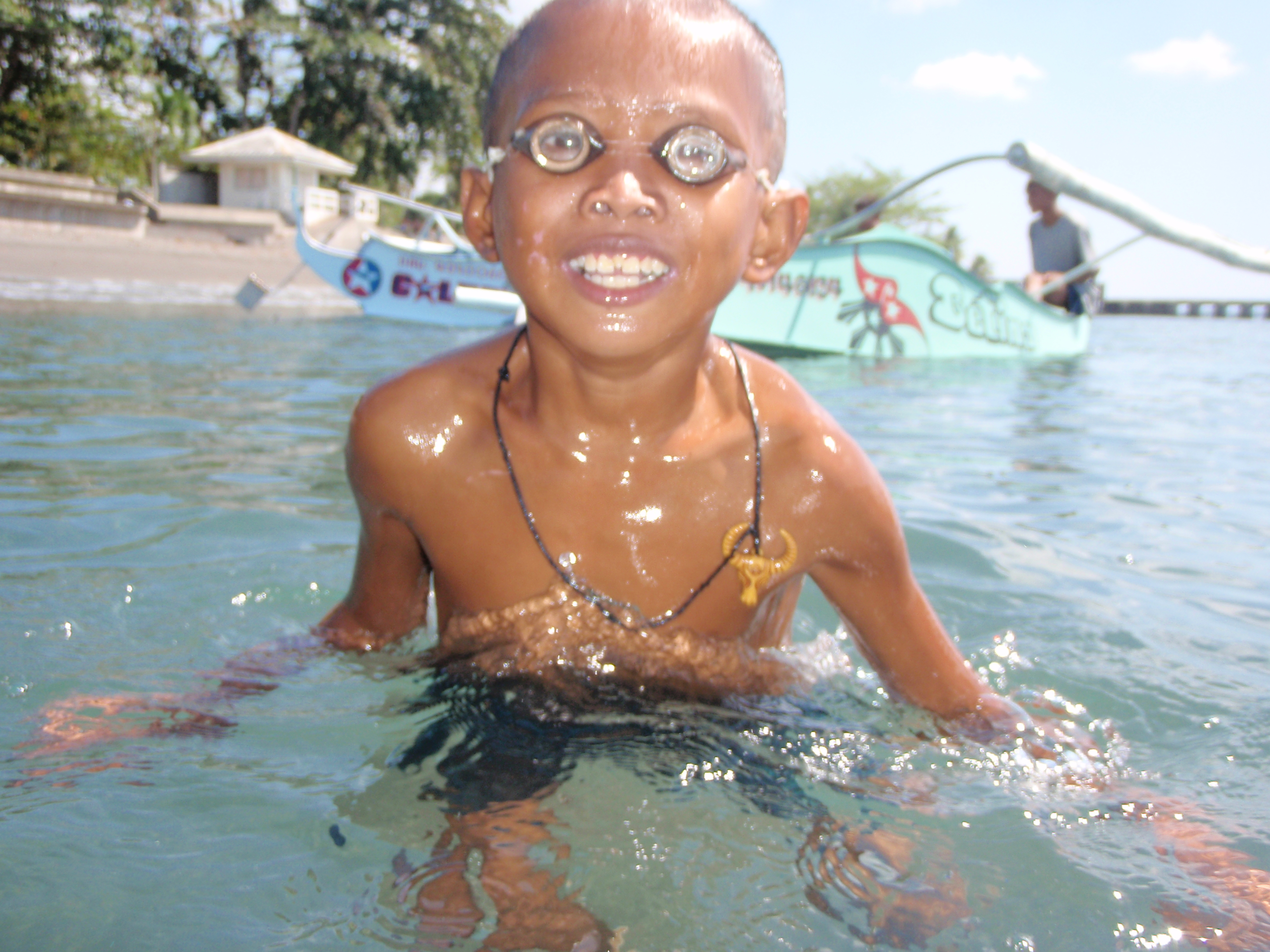 tunities for a few exceptionally skilled Sama divers.
Current Philippine Records (from Freediving-Philippines.com)
Static Apnea- 3:06 minutes by Villongco Zenon Alejandro Dario
Free Immersion- 32 meters by Carmelo Navarro
Lucy – Was She Living in a Lake Margin?
In the end of June I went to Addis Ababa, Ethiopia, were I visited the National Museum. Here the remnants of the world’s most famous fossil, Lucy, can be found. The skeleton is 40% complete and is estimated to be 3.2 million years old.
Lucy was discovered in 1974 near Hadar in Ethiopia, by Donald Johanson and his colleague Maurice Taieb. She was classified as Australopithecus afarensis.Donald Johanson and others have suggested that Lucy had been living in a mosaic environment (forests, grasslands, lakes). However, the fossil of Lucy was found next to crocodile and turtle eggs and crab claws (Johanson & Taieb 1976).
Today the excavation site lies in a dessert, but 3, 2 million years ago the area were green and flourishing. Many scientists have suggested that Lucy fell in to a lake after she died – but perhaps lake margins was the biotope she preferred? Probably she was actually feeding from the lake.
Throughout the years, the so called Aquatic Ape Theory has been ridiculed – even if the most famous fossil was found next to crocodile eggs and crab claws.


However, the distinct adaptation to a water-based lifestyle took place later. Homo Erectus was probably much more adapted to an littoral environment than her Australopithecine forefathers – as a swimmer and free-diver (see earlier posts).
In the National Museum of Ethiopia you can also find see the skulls of Omo 1 and Omo 2, the oldest fossils of Homo Sapiens ever found. They are estimated to be around 190 000 years old. Today, the Omo Valley of Ethiopia is one of the most unique places on earth because of the wide variety of people.
References
Johanson, D.C., and Taieb, M., 1976, Plio-Pleistocene hominid discoveries in Hadar, Ethiopia: Nature, v. 260, p. 293–297
Poster about Sea Nomads in Southeast Asia
During the Conference on Human Evolution in London me and Erika Schagaty presented a poster about sea nomads in Southeast Asia, where we summarize some of the key observations and conclusions we have made during our work with Bajau Laut. Erika Schagatay met Bajau Lautin eastern Indonesia and Orang Laut in western Indonesia already in the 1980s. 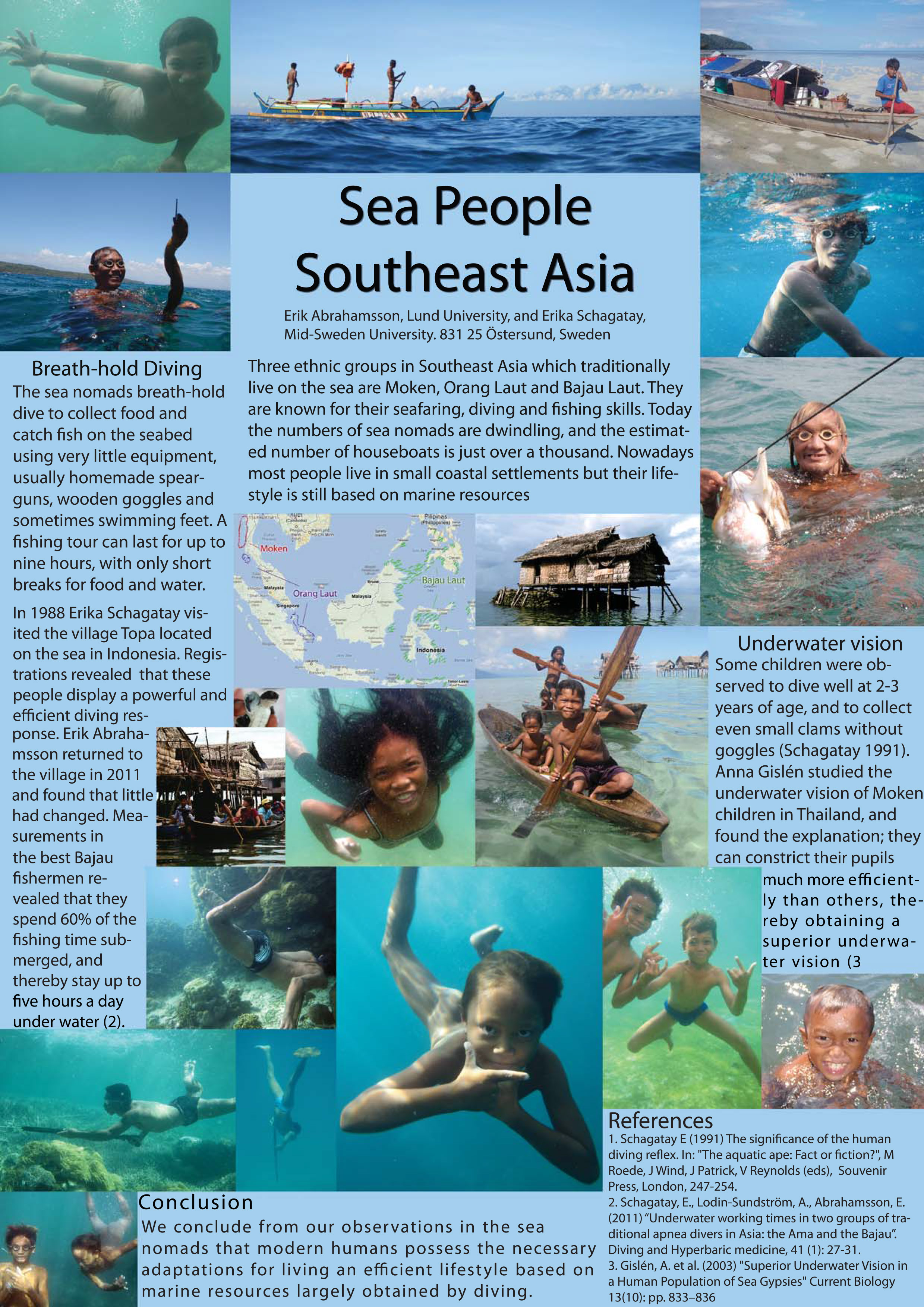
Poster information:
Abrahamsson, E and Schagatay E. (2013-05-09) Sea People – Southeast Asia.
Presented at Human Evolution Past, Present & Future – Anthropological, Medical & Nutritional Considerations
“Homo Erectus were Shallow Water Divers”
Between 8th-10th on May researchers from all over the world gathered in London, presenting new research on human evolution, health and migration – with focus on the so called waterside theory. During the conference we could hear about swimming babies, water births, free diving, indigenous diving, underwater vision, surfer’s ear, coastal migration, bipedalism, aquatic mammals and much more.
Outspoken critics to the aquatic ape theory were also present, as for example Donald Johanson and John H. Langdon. Already in the first session, Donald Johanson declared that the so called aquatic ape theory is nonsense – before he had even heard the arguments that were to be presented during the conference.
The Aquatic Ape Theory has changed since it was first publicized by Alister Hardy and Elaine Morgan. Initially most proponents suggested that human ancestors spent a period of time on the coastlines after the separation from the forefather of the chimpanzee (5-7 million years ago), and then left for land. But nowadays many of the leading waterside scientists suggest that the evolution to a marine environment continued.


Marc Verhaegen – one of the organizers of the conference – presented a controversial idea that Homo Erectus likely were shallow water divers. As a matter of fact their migration out of Africa was made exclusively along coastlines or rivers, and Homo Erectus had much larger brains and skulls than their predecessors (among many marine animals big skulls are equivalent to shallow diving). According to Verhaegen, Homo Erectus were much more adapted to a marine environment than for example Lucy and her species Australopithecus Afarensis. It is now clear that our big brains and sinuses as well as our voluntarily breath control evolved during Homo Erectus time on earth – which is highly likeable due to a rich intake of marine food and much time spent in water. Probably did also physiological traits as the human diving response, neonatal swimming reflexes and diving reflex evolve over time, not only during a short period of time 5-7 million years ago.
Hence, human evolution in an aquatic environment water was not only a historic incident that took place in Africa millions of years ago, but was an ongoing process throughout evolution of human beings. Our present aquatic adaptations are not remnants from an old way of living, as initially suggested by professor Alister Hardy and Elaine Morgan, but adaptations that were crucial also in the emergence of Homo Sapiens 200 000 years ago.
However, this theory is hard to accept within the anthropological community as they strongly emphasize a mosaic environment, suggesting that human beings were living in different environments throughout human history, just as we are living today. Human beings are thought to be able to live in any kind of environment and are not considered to be environmental specialists. But we can’t ignore that Homo Sapiens during most of her time as a living species has been living in an tropical environment feeding from an marine environment. As a matter of fact, we started to live on dry open spaces, like savannahs, much later.
Several newspapers wrote about the Human Evolution Conference, partly misunderstanding and misinterpreting the waterside theory. For example, Independent asked if “did humans come from the sea instead from the trees?”
Then – what can we learn from the new perspectives in the waterside theory? We have to start to accept that human beings have evolved in the same way as all other creatures – living predominantly in one habitat occupying only a small number of niches. We have not always been environmental generalists and we are still today – physiologically and biologically – much more adapted to a life along coastlines than a life on mountains or savannahs.
Declining fish stocks might give “crucial consequences for our species”
The world’s fish stocks are decreasing. It is estimateds that 90 % of all big fish are already gone. Dr. Michael Crawford, of Imperial College London, sys that “without plentiful DHA, we face a future of increased mental illness and intellectual deterioration. We need to face up to that urgently”. Docosahexaenoic acid (DHA) is an omega-3 fatty acid found in seafood. You can find the article in Mail Online here: Early human ancestors were ‘aquatic apes’: Living in water helped us evolve big brains and walk uprig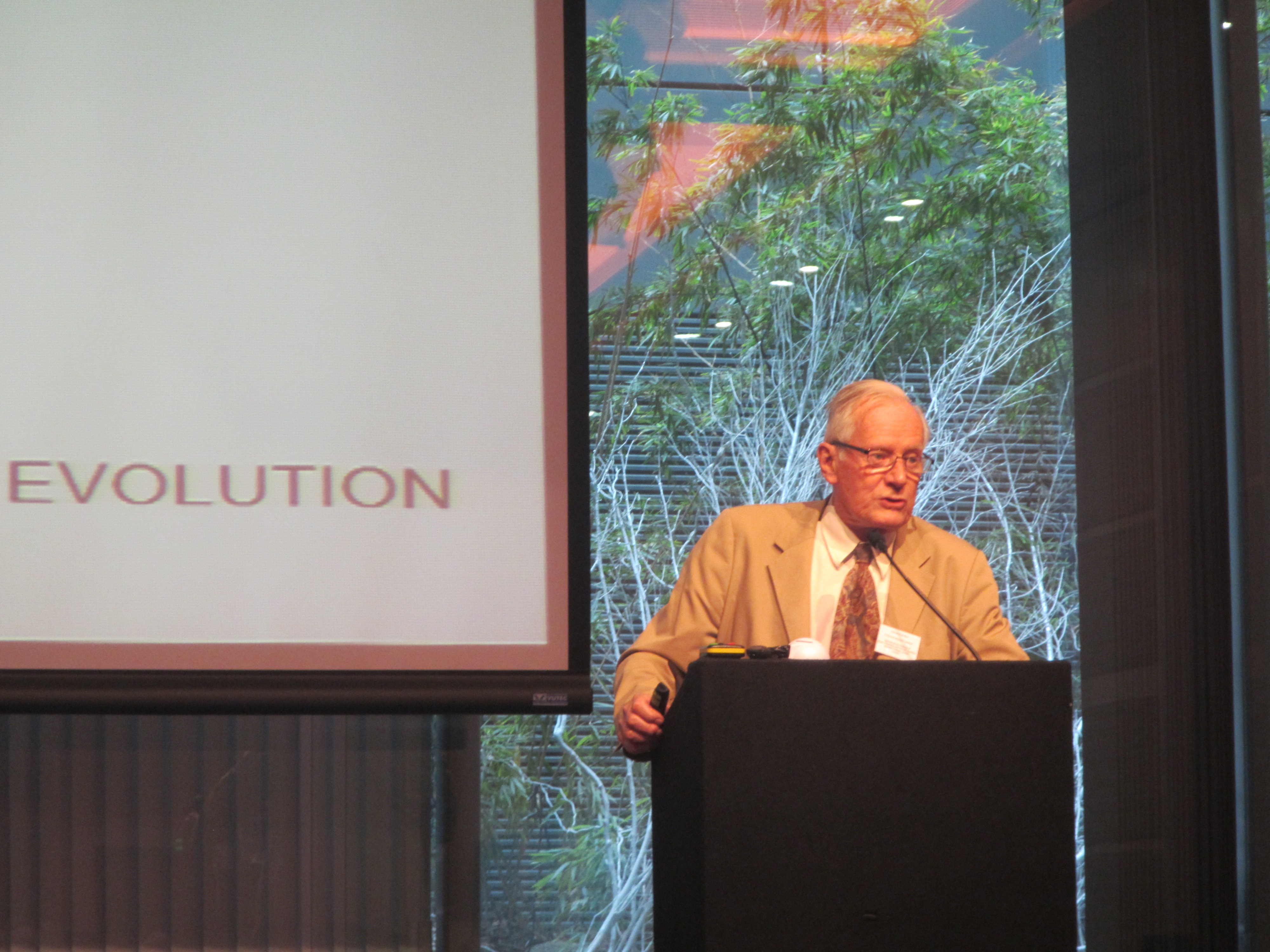 ht, scientists say.
Michael Crawford – one of the speakers at the Human Evolution onference in London 8-10th of May – states that Docosahexaenoic acid have been crucial for the development of our brains (as well as for other mammals making a living from the sea). According to Crawford we should eat 40 gram fish per day, 200 days a year.
However, by improving our mental health we will also completely undermine the marine stocks – and what will happen when we are another two billion people on the earth? Add overfishing to pollution, climate change and habitat destruction, and a picture of a system in crisis emerges.
Conference on Human Evolution in London
In the conference, scientists will present new research and evidence highlighting the connection between humans and an aquatic lifestyle, as for example breath-hold diving, sea food/nutrition and water birth. Among the invited guests are Donald Johanson (the discoverer of Lucy) and David Attenborough (broadcaster and naturalist).
This conference clearly indicates that the Waterside-hypothesis (popularly the Aquatic Ape Theory) is getting more accepted in the scientific community. More and more scientists are now accepting that water has played an important role in human evolution, but the question is how big the aquatic impact has been.
Here you can find the program: Human Evolution Past, Present & Future – Anthropological, Medical & Nutritional Considerations.
Change in the programme for the second day: Day 2. Scars of Evolution
Visitors are welcome to admit posters on human evolution that will be presented during the conference. Prof. Erika Schagatay at Mid-Sweden University and I will present a poster on sea nomads of Southeast Asia focusing on their underwater vision, breath-hold diving and sea harvesting skills – characteristics that demonstrate that human beings still today can be highly adapted to the sea. I have also been invited to give a speech on Bajau Laut and their adaptations to the sea. See you in London!
The Placenta is Thrown into the Ocean
Bajau Laut have been living in Southeast Sulawesi since the 16th century. Originally, they were involved in the spice trade, transporting lucrative spices from Moluccas to Borneo. When the Dutch colonialists changed the trade routes many Bajau Laut stayed on their houseboats made a living completely from sea harvesting. Some do still today.
WWF in Wakatobi
Most Bajau villages on Buton and Wakatobi in Southeast Sulawesi were created only one or two generati ons ago, when Bajau sea nomads settled in pile houses.
In one of the villages of Buton, Lasalimu, I met Sadar, a Bajau who works for WWF in Wakatobi. His work is to persuade Bajau fishermen stop dynamite fishing. “In Wakatobi we have been quite successful but further north many Bajau use fish bombs and cyanide”.
In Wakatobi most fishermen make a living from skin diving, as compressors are illegal. “We also try to regulate how much fish they can catch a day”, Sadar told me, “it is necessary because they are fishing in Wakatobi National Park”.
Sadar also told me that it still is practice among some Bajau to throw the placenta in the ocean after giving birth. They believe that the child will protect the sea as “it is the home of their sibling”. You can read more in this article in Al Jazeera: Indonesia’s last nomadic sea gypsies (2012-10-06).


Born on the sea
After my visit in Buton I headed north to Lasolo where many Bajau Laut are living on small, isolated islands. Around these islands, many Bajau used to live on the boats till only a few years ago. More or less everyone above 10 years old were born on the sea.
The author of Outcasts of the Islands, Sebastian Hope, visited Lasolo in the last decade and met sea nomads close to Boenaga and island of Labengke in Lasolo. But today all of them are living in houses.
In the Gulf of Togian in northern Sulawesi, however, it is still possible to find Bajau Laut who have been on the boat their entire lives.
Sama Language – spread over the Coral Triangle
Throughout The Coral Triangle you can find pockets of Sama communities, distinctive from the surrounding society, but speaking more or less the same language as other Sama groups living miles away.
It has been very interesting to be able to meet Sama people in Philippines, Malaysia and Indonesia and compare their dialects. As a matter of fact, there are still many similarities in their languages. For example, most words related to their maritime lifestyle are identical in all dialects I have encountered, like “amana” (spear-gun fishing) “messi” (hook-and-line fishing), “anga ringi” (netfishing), “e‘bong” (dolphin), “kalitan” (shark), “bokko´” (turtle), “gojak” (waves), “mosaj” (to paddle).
During my next Indonesian trip I would like to visit Flores, not far from Australia … probably they will speak a similar dialect here as well… But that will be explored during another journey. Now I am heading back to Semporna.
Bajau Kids Swim with the Turtles

In Eastern Kalimantan, Borneo, Bajau Laut have been living for generations. Originally they arrived on houseboats from the Sulu Sea.
I visited Derawan Islands where I stayed for one week. It is a tourist paradise with excellent diving spots and fascinating sea creatures as manta rays and hawksbill sea turtles. Most people on the islands are Bajau and they speak more or less the same dialect as in Semporna, Malaysia. I was pleased to see that most children still speak Sinama – and they were spending their afternoons swimming and playing next to sea turtles in the shallow waters.


Derawan Islands consist of a large number of island, of whom two are inhabited – Pulau Derawan and Pulau Maratua. The islands are far from as exploited as for example Mabul in Semporna, and all resorts are owned and run by local people.
One of the islands, Sanalaki, is well-known for their hawksbill turtles and coral manta ray . Here visitors can swim with the giant rays and watch the turtles when they enter the beach at night laying their eggs. On the island of Kakaban you can also find a lake full of jellyfish – but they are completely harmless.
Recently, many Sama Dilaut used to stay in the area, moving between Indonesia, Philippines and Malaysia in search for fishing grounds. But today there are no nomads left, as the Indonesian government repeatedly have confiscated their boats and sent them back to Malaysia. They are not welcome as they lack legal papers.
The local people control the islands – they where empty when Bajau settled here for more than 100 years ago. “I want Sanalaki to become as Sipadan in Malaysia”, one local Bajau dive operator told me, “a tourist heaven and a sanctuary”.
The Derawan Islands are also important for the Indonesian live fish trade. From here, great numbers of lobster and groupers are transported to Surabaya on Java and Tawau in Sabah, Malaysia. Much of the fish end up on luxury restaurants in Jakarta, Singapore, Kuala Lumpur and Hong Kong.
After Derawan I am heading towards Southeast Sulawesi where I will visit Bajo Laut, who have lived in the area for hundreds of years. They are distant relatives to Bajau Laut in the Sulu Sea, but much of their lifestyle are the same. Once again I will visit the village Topa which I went to almost two years ago – following the footsteps of Erika Schagatay, who was there for more than 20 years ago.
Speargun Fishing in Philippines – an Ecological Living
It is always a pleasant experience to come to the Sama Community in Matina Aplaya, Davao City, Philippines. Almost 100 people greeted me when I entered the village in the beginning of December. I could see children playing drums, fishermen preparing their “pana” (speargun) and women nursing their small children.
Then followed one month of swimming, fishing, playing with children, playing volleyball and celebrating Christmas and New Year.
Skilled 10-year old fisherman
I had the opportunity to follow one of the younger fishermen in the village, Jimmy, 10,at sea. I followed him underwater while he caught fish after fish with his harpoon. He is one of few children in the village that has grew up as a traditional fisherman, and hence, one of few children that has ruptured his eardrum. However, it is getting more and more difficult to make a living from the sea, due to over-fishing and more extreme weather.


But why do they rupture their eardrums? In fact, it is seen as practical since diving is an everyday activity. The ruptured eardrum can be seen as an investment: If you are going to make more than 10 000 dives during your lifetime, and if you never have learned how to equalize properly, then rupturing your eardrum becomes a shortcut to the ocean’s depth. “If you rupture it once, you will have no problem diving throughout your life” one young fisherman explained. Of course, older men have hearing problems and the fishermen will get ear infections over the years as water enters their middle ears … but they are taking inherited medicines … and the inner ear will generally never be affected.
In the Sama community of Matina Aplaya it is still common that the fishermen make up to three week long journeys to abundant fishing spots further south in the Davao Gulf. It is not easy – but not either impossible – to make a living completely from the sea. They sleep on the boat: spearfish during the day and hook-and-line fish in the evening. When they return to the village they normally buy a big fish and share it with their families… Many of the fishermen continue to harvest at sea – no matter what the season or happenings around them.
How big is their ecological footprint?
This is the fourth time I visit the village since 2010 when I started to study about Bajau Laut right here – and I hope to be able to make many future visits. One new thing for this time was that a quite many families had started to make a living from selling of secondhand shoes, that they buy in the market in sacks for either 1 000 pesos or 2 800 pesos each. Then, they are repairing the shoes and selling them to people in Davao and neighboring cities.
In December it is also common that Sama and other local tribes of Davao are playing music and dance while going from house to house begging for food and money. The Sama children are performing with recycled drums, made by metal and plastic waste. A group of enthusiastic children can make 200-300 pesos a day in this way.
Many people might say that Sama are uncivilized and dirty – that they are begging parasites. But in fact they are making a lot of recycling services that the modern Philippine society doesn’t do. For example they collect a lot metal and plastic waste from the shorelines, they reuse and restore clothes and shoes, establish a flourishing second hand market, and they catch fish with sustaining fishing methods. Most of their money goes to purchasing of water and food, like cassava, fish and fruits – even if they also are buying Christmas gifts. Overall, their ecological footprint is nearly zero.
Recently, the Philippine spokesperson at United Nations climate change conference in Doha, Naderev Sano, made a long-lasting impression on many of the listeners. Only days before the eastern Mindanao of Philippines had been hit by a devastating typhoon… ”There is massive and widespread devastation back home. Heartbreaking tragedies like this are not unique to the Philippines”, he said, emphasizing that Philippines and other countries may face more extreme weather disturbances if climate change is left unchecked You can see his speech here: Plea by Naderev M. Sano of the Phillipines and read an article in the Guardian about the speech here: Will Philippines negotiator’s tears change our course on climate change?
Indeed, the Philippines and the world are facing many climate-related challenges – and I am sure that we can learn a lot from the Bajau tackling these problems!
Badjao Association of Matina Aplaya
Another new thing in the community is that they have organized themselves in an organization – The Badjao Associaition of Matina Aplaya. The purpose of the organization is to establish a long-term livelihood for the community, either on fishing or selling of clothes and pearls. For example, the members of the organization will be able to borrow money for a small cost. They are also planning to build a local school: “If the children can learn how to read and write in their own language, they will be able to attend the regular Philippine school”, Lolita, one of the community leaders, said.
In the beginning of January I am heading back to Malaysia – and from there I will go to Sulawesi, Indonesia, where I will live with the Bajo, another Sama Dilaut group, who have been separated from their relatives in Malaysia and Philippines for almost 200 years. In Sulawesi I will visit the isolated village Lasolo – one of the places where their might still be boat-dwelling Sama people outside of Borneo.
Sama Dilaut of Semporna: Fish Bombers or Peaceful Nomads?
For more than one month I have been living in Semporna, in Sabah, where I have visited remote islands and several Sama Dilaut (Bajau Laut) communities. I have talked to sea nomads, been diving, attained a wedding and continued to learn the basics of Sinama.
One thing that surprises me is the life pulse and energy I always feel when I visit a Sama community. Even if I go to Semporna or remote parts of Mindanao I always get the same feeling.
Hundreds of sea nomads
In Semporna hundreds of house boats have their moorage, either close to one of the many islands in the region or simply in Semporna town close to the Sama Dilaut communities Kampong Halo and Bangau Bangau. They make their living entirely from the sea: they are net fishing, hook-fishing, spear gun fishing and dive for sea cucumber and pearls. During low tide they also go along the shallow corals and collect sea shells. It is fascinating to see the water adaptation of the Sama – an adaptation that starts in early age. A child learns to swim when it is 2-3 years old, it learns how to paddle a boat at five and dive at the age of six.


Dynamite Fishing
Unfortunately, some of the Sama Dilaut fishermen are also involved in dynamite fishing and compressor diving. Fish bombing is, of course, devastating for the marine life as it completely destroys the corals. But as one fisherman told me: “when I go hook fishing I must wait a long time for a catch, but if I throw a bomb I will get plenty of fish in seconds!” Of course, bomb fishing is highly illegal and leads to imprison and big fines. I met one pregnant woman with small children whose husband and oldest son had been caught bombing fish, which left the family without livelihood.
It is important to note, however, that it is unusual that boat living Sama make a living from dynamite fishing. It is much more common among more settled, house-dwelling Sama Dilaut fishermen.
Refugees from Philippines
Nearly all Sama Dilaut in Sabah are refugees from the Philippines. Many of them lack Identity cards and passports. A majority doesn’t even have a birth certificate. Without ID you have no right to get medical support (it costs 50 RM, approximately 17 USD without ID for a medical checkup and only 1 RM if you are a Malaysian citizen) and schooling. However, many Sama Dilaut have a “lepa passport” (a houseboat passport) authorized by the local government which gives them right to stay in the waters of Sabah.
Probably, the reason behind Sama Dilaut’s partly devastating fishing methods is linked to the fact that they are not recognized as legal – as a matter of fact many Sama Dilaut do never set their foot on land because of fear of deportation. Hence, if you are living there illegally and don’t get any support from local authorities, you might be tempted to get involved in devastating fishing practices.
Ethnic discrimination
When I talk to the Sama Dilaut they all tell me one thing – they are afraid of the Tausug people of the Sulu – which have ruled the area for centuries. Today many Tausug are armed and some of them have been in part of the creation of the Abu Sayyaf guerilla. For decades they have been fighting against the Philippine government in order to establish a free Muslim state in southern Philippines. Recently, a peace agreement were settled which has calmed the overall situation, but single Sama individuals are still under huge threat (see: Philippines peace deal is far from a done deal for more information). Their catch and their machines are taken under night. Young women are forced to marry which make them escape in the middle of the night. Bombs have been thrown into their houseboats.
In Philippines, the police don’t do much to ease the situation for Sama Dilaut. In Malaysia, however, the police and military are very active, and thousands of tourists are arriving every year, which make the situation calm.
Have they always been nomads?
It is estimated that the nomadic lifestyle of Sama Dilaut is more than 1000 years old, but I have wondered if the present day sea nomads always have been living in the boat, or if they till recently have been living in houses? During my first month of stay with Sama Dilaut I have been asking many nomads about their history. As a matter of fact, some of the present day sea nomads have actually quite recently been living in houses in Philippines, but they resurrected their forefathers way of living when they came as refugees to Malaysia. It is still unclear how many of the nomads that have been nomads for generations, and that is one question I would like to figure out during my six month long stay in Southeast Asia.
In one week I am going to Philippines where I will visit the Sama Dilaut community in Matina Aplaya, Davao City. Here many people are living entirely on spear-gun fishing and they use no compressors and no dynamite. I am really looking forward to come back to Mindanao!
Estino Taniyu – a famous Sama Dilaut Swimmer
During my stay in Semporna I heard that many people were talking about Estino Taniyu, a Bajau Laut from Bangau Bagnau, who is working for the Malaysian Navy . They told me that he had won a swimming competition in Europe. “Melikan Taraug”, (‘the white men lost’), they said. I searched for Taniyu on the Internet and read that he had swum across the English channel, the third Malaysian and the first Bajau Laut ever to do so. He crossed the channel in 13 hours and 45 minutes.

Estino Taniy is far from the fastest swimmer who has swum across the channel, but we have to keep in mind that none Bajau swimmer have gone through professional training. Estino has grown up in an are that was completely water based only 50 years ago, when they arrived from Sitankai on their houseboats. It is also worth to mention that the first man ever who swam across the channel, Matthew Webb in 1875, needed more than 21 hours to complete the endeavor – and he hold the record for decades.
I met Estino Taniyu’s mother in her house in Bangau Bagnau. She told me that thousands of Semporna locals, including Pakistani and Malay people, had come to their house to celebrate when Estino returned from England. She also told me that Estino used to follow his father fishing when he was young.
“I made it through physical and mental preparation, the experience of being a village boy and the son of a fisherman and support from my team and the Malaysian army,” Estino told The Borneo Post in an interview. You can read more in their article: Semporna welcomes home English Channel swimmer

 The Aquatic Ape