
Living with Sea Nomads 2012-2013
On October 18th, I am heading towards Southeast Asia for a six months long stay with Bajau Laut – The People of the Sea.
My first stop will be on Borneo, Malaysia, where I will live among Bajau Laut sea nomads. Still, more than hundeds of people spend their entire lives on boats. Here I will gather material for my Master Thesis on dynamite fishing and make a short movie about Bajau Laut’s maritime lifestyle. Thanks to Barnens Stipendiefond that has given me a grant for making the film!


During the journey I will also spend time in southern Philippines, where I will visit a Bajau Laut community in Davao City – where I have lived for several months.
In the beginning of next year I am also heading towards Sulawesi, Indonesia, where I will live among Bajo people (they are relatives of Bajau in Malaysia and Philippines, but speak a different dialect).
Throughout the journey I will also collect diving statistics for professor Erika Schagatay at the Mid-Sweden University. I am bringing three logging devices that will measure how deep the Bajau fishermen dive and for how long they stay under water. The most interesting data is, though, their underwater working time during a longer period of diving.
I will make continuous updates on the blog during the journey.
Tribal Olympians
To celebrate the 2012 Olympic games, Survival International reveals some of the astonishing skills of the world’s tribal peoples, from the Awá archers of the Amazon to the Bajau divers of Borneo: Tribal Olympians.
“Scientists have discovered that the Bajau are submerged for up to 60% of the time they spend in the water, which is nearly as long as a sea-otter”. The source of this information comes from a research made by Erika Schagatay, Angelica Lodin-Sundström and Erik Abrahamsson during 2010 and 2011. You can find the article here: Underwater working times in Ama and Bajau Divers
From the Survival International article: “Swifter, higher, stronger was the motto that Pierre de Coubertin, founder of the International Olympic Committee, coined for the Olympic Games. How far can a Hamar man jump; how deep can a Bajau pearl-hunter dive?
The astonishing skills of tribal peoples are not only a measure of just how swift, high and strong we can be as humans – where our physical and mental limits lie – but an indicator of the extraordinary diversity of mankind.
In short, they show us – just as the Olympians will in the London 2012 Games – what it is to be human”.
Mysteries of the Seafloor – The Great Barrier Reef visualized in new Project
Google Ocean, which was launched in 2009, is now starting a new project, Catlin Seaview Survey which will focus specifically on the Great Barrier Reef – the largest coral reef in the world. The project is a joint venture between Google, the University of Queensland and the Catlin Group.
Tens of thousands of 360-degree, high-definition panoramas of underwater forests, grasslands and crags will be taken by robot camerasvand made available on the internet. You can read more about the project in this ain The Guardian: Virtual diving: underwater panoramas of the Great Barrier Reef – in pictures.
Google Ocean has made it possible for any Internet user to explore the under water world, in what has been called “virtual diving” . Here you get the possibility to explore the ocean – which contains 99% of the biosphere.
Google Ocean contains information from leading scientists and oceanographers. Individual divers do also contribute – who knows what Bajau Laut would depict if they were getting a camera in their hands?
Bajau and Moken kids with Great Underwater Vision
In the end of Decmber we visited Bajau Laut in Davao City, Philippines, where we went fishing and diving at the coast of Samal Island. The Bajau children in Davao learn how to dive in an early age. They have a superb underwater vision and learn how to fish with a harpoon in the age of ten.
The researcher Anna Gislén at Lund University has studied the underwater vision of Moken children at the southern coast of Burma. She found that they have the capacity to maximally constrict their pupils and therefore focus on small objects under water. She has also shown that all children have the potential to see clearly under water – but they will have to practise for weeks. You can find the study here: Superior Underwater Vision in a Human Population of Sea Gypsies
Here you can also see a short BBC-movie about Moken’s ability to see clearly under water:
Article on Indigenous People’s Diving Skills
Swedish scientists have studied the diving skills of Ama in Japan and Bajau Laut in Philippines. The result is fascinating: the divers in both groups stay in general more than 50% of the working time under water while spearfishing or sea harvesting. Erika Schagatay, professor at the department of engineering and sustainable development at Mid Sweden University, has lead the study.
The study gives strong support to the idea that repeated diving has played an important role in the human evolution. Read the article here: Underwater working times in Ama and Bajau. The article was published in March 2011 in Diving and Hyperbaric Medicine.
New Book about the Aquatic Ape Theory
Recently a new book on the Aquatic Ape Theory was published: Was Man more aquatic in the past? – Fifty years after Alister Hardy. A large number of scientists from different fields have contributed to the impressive book. More and more the AAT-proponents seem to agree on that a maritime lifestyle have been shaping our physical and mental characteristics all the way to Homo Sapiens, ant not only at the time of the divorce from the forefather of the chimpanzee.
I hope that this book will make anthropologists as well as other scientists and the general public more at ease with the idea of a great maritime impact on the human evolution.
Back to the Boats!
In Semporna, Borneo, you can probably find the highest concentration of houseboats in the world. The nomadic lifestyle does also seem to be flourishing, as some of the new houseboats are more robust than many of the stilt houses.
Back in Malaysia I visited Danawan island where more than 100 houseboats are anchored from time to time. Danawan is one of the most isolated islands in the region and just one hour boat ride from the Philippines; a country which is frightening many people.
“We all come from the Philippines”, one of the Bajau boat dwellers said. “But we can’t live their anymore; some pirates threw fish bombs in to our boats”. In Semporna the Bajau Laut remain their nomadic lifestyle, traveling from island to island or city to city in search for fish and buyers. “We use to travel between Lahad Datu and Semporna”, one man said. “Some of my friends also go to Indonesia”. When I asked if they prefer to stay on the boat instead of in a house, they generally say yes. “We can move freely on the boats”, one woman said, “but we have to avoid the strong waves”.
The Bajau Laut generally have a very good health. They eat cassava, sea vegteblaes and fish – a diet which can be recognized as “indigenous”. More or less everyone is slim and they seldom get sick.
But the truth is that they can’t afford to be sick – as health care is very expensive for non-Malaysian citizens. “In Malaysia we have security, but we have no support from the government”, the woman said. Without identity card it is impossible to get education and health care. Bajau Laut are literally ignored by the Malaysian government. They can freely dwell in the Malaysian water due to their status as indigenous people, but they have no possibility to gain from the social system. Even if they have stayed there for 10-15 years they can’t get a Malaysian citizenship, as they have no birth certificate and no money.
Still, Semporna can be seen as a heaven for Bajau Laut. Here the fishing is good and water is clean – making the spearfishing and dwelling to an ideal lifestyle. Actually they are living in a symbiosis with the thousands of tourists that every year visit Semporna, for diving and recreation. The Malaysian government wants to preserve the fish populations and they know that tourists love the beautiful islands and the exotic stilt houses. Therefore, house building on the islands are more or less impossible, if you don’t get a very expensive permission. But the Bajau Laut, on the other hand, can build as many houses they want – if they keep it small. The waters of Semporna is, hence, both a free state for Bajau Laut and a paradise for the tourists.
The houseboat communities live in co-existence with land bounded Bajau communities. Most nomads don’t speak any other language than Sinama and they depend on trade to get cassava and, more recently gasoline. But most fresh water and dry wood can be brought from nearby islands, like Danawan.
Bajau Laut are facing discrimination from the surrounding society. They are looked down upon by other Bajau groups who have been in school, learned Malay and adapted to the Malaysian society. “I don’t have any ‘Pala’u’ friend”, one woman in Danawan islands said. “They don’t take a bath for a week”, she explained. In general Bajau Laut have darker skin than other Bajau people and bleached hair, due to the many hours on sea – making their status even lower.
Bajau Laut know how to survive and have done so for centuries. But they are put aside by governments and discriminated by their neighbors. They are also increasingly facing problems due to over-fishing and climate change, and who knows what their future will look like. But maybe, as water level rises, their nomadic lifestyle will have a renaissance. Back to the boats!
Short Documentary in Swedish Radio
Here comes a link to a reportage in the Swedish Radio and the programme P3 Planet, in Swedish: “De dyker djupare och djupare tills det spricker”. (They dive deeper and deeper till the eardrums rupture). The reportage is about Erik Abrahamsson’s stay with Bajau Laut in the Philippines.
20 years later …
How much has a Bajo village changed in 20 years? It was one thing that I wanted to find out when I went to Topa in southeast Sulawesi.
Erika Schagatay, a professor in Human Physiology at the Mid-Sweden University, was there for 20 years ago when she documented the diving skills of Bajo fishermen.
I brought some pictures from her last trip, and when I arrived to the village they were really excited to the see the old photos. They told me that I was the third visitor in 20 years (an Australian tourist had been there for a couple of years ago), and the children were afraid of me in the beginning, but became soon used to the strange foreigner.


So, what about Topa? Actually very little seems to have changed over the last 20 years. Most houses are still of traditional style, nearly every family make their living from the sea, and most children spend half day in water. But of course, some of the inhabitants have mobile phones and many houses has an electricity source.
“We came here 60-70 years ago”, the community leader said. “Before we lived on boats, which we had done for centuries before that. We are Sama Asli” – the ‘genuine’.
I spent some intensive days in Topa before I started the long journey back to Malaysia. The children became more and more confident with my presence and we went swimming several times. And as you can expect – they are great divers!
“Bajo are Illegal Fishermen”
When I was in Wakatobi I also met a young Bajo man, called Sadar, who is working for the World Wildlife Fund (WWF). His work is to inform Bajo communities about the devastating effects of dynamite and cyanide fishing.
“Many Bajo don’t like my work”, he says. “For some of them the ocean is only about business. They only care about catching the fish”.
Sadar estimates that as many as 20% of the Bajo fishermen are using destructive fishing methods. “But many of them are still using the pana, the spear”, Sadar says, “and it is mostly businessmen with contacts in Makassar or Manado that are using the bombs”.
I ask if there are other groups using dynamites and cyanide, and he says “yes”. “But Bajo is the group that are using most destructive methods. It is sad, but that is the reality”.
The WWF-project in Wakatobi has been successful and less and less people are using dynamite in Wakatobi today. “But in other places, as for example in Kendari some miles north of Wakatobi, there are much more illegal fishermen”, Sadar says. “But no conversation project”. The reason is simple: Wakatobi is a national park and is important for the Indonesian tourism industry. Outside the national park it is business as usual.
Outcasts of the Sea – Bajo in Sulawesi
The Bajau Laut have been spread over a huge area of Southeast Asia. Originally they come from the Sulu Sea in the Philippines, but only recently they were accused of illegal fishing in the Australian fishing zone … The last weeks I have been in Sulawesi in Indonesia, in order to meet Bajau, or Bajo, and to get an understanding about the diversity of these fascinating people.
I took a ferry from Sabah and arrived four days later in Wakatobi in Southeast Asia. I moved in to a Bajo village called Sanpela, based approximately 100 meter from the closest island, Kaledupa, where I stayed for one week. It was astonishing how similar the language and the lifestyle was as compared to Malaysia and Philippines – even if they have lived separated for maybe 200 years. It took some days to learn a partly new vocabulary but after that we could communicate quite smoothly. The inhabitants were glad to hear news from Malaysia and Philippines, as some of them have relatives there. “Are there much fish?”, “Do you have any pictures”, “Are there still conflicts in the Philippines?”


The village Sanpela was established for 60-70 years ago when boat-dwellers arrived in the area. Still today more or less every family make a living from the sea (spear-, net- and hook-fishing), and you can see boys as young as five running around with fishing spears. Some people do also work with tourism, as Wakatobi is home of some of the best coral reefs in the world.
I came in contact with the Bajo village through the Dutch organization PESISIR who is working in Sanpela, where they support education and health care. Over the last years more and more tourists and student groups have come to Wakatobi, but it hasn’t affected Bajo in a very big scale.
My next project is to visit the Bajo village Topa, that is much more isolated. Erika Schagatay, a professor in Human Physiology at the Mid-Sweden University was there for more than 20 years ago, and I have brought some pictures from her journey. It will be very interesting to see how the village have changed over the past decades … but probably it ill be very much the same.
Bajau are outcasts of the see, but they are still Sama, “the same”. No matter if they are living in the suburbs of Manila or in an Indonesian National Park.
The Boat – their House and Heaven
It was a real chock to enter Semporna (northeastern Borneo) at the first time. Everyone was speaking the language Sinama, they were driving cars, working in banks, using Internet cafes, etc. What in Mindanao was a small language spoken by a small tribe of sea people, is here the everyday language of more than 70 000 people.
But in fact this is not very strange. Today you can find many different Bajau groups. Originally they were all sea nomads but some left the nomadic life centuries ago. In Davao City I have been living with a Bajau group called sama Sama Pala´u or “the people that lives on boat” and they have maintained their traditional way of living in a very high extent. Few of them go to school, they are not familiar with the modern lifestyle and they make their living from fishing.
So, are there any Sama Pala’u (or Bajau Laut) in Semporna? Oh, yes! On my second day in Semporna I went to an isolated island called Denawan where I stayed for two nights. And there I could see more than 50 house boats = sea nomads, and approximately 50% of these boats are not equipped with an engine. They are used to travel between islands of Sabah, Kalimantan (Indonesia) and Philippines in search for fish and good weather conditions. They can freely cross the boarder between Malaysia and Philippines due to their status as indigenous people. They live on the boat – their house and their heaven!
In Semporna the fishing is great. On Denawan island Sama Pala´u cathced large number of fish every day, that later will be sold in the cities of Semporna, Sandakan or Kota Kinabalau. The dive sites outside of Semporna are listed among the best sites in the world, and every year thousands of tourists are arriving. They are mostly served by Bajau workers.
I have also been spending a lot of time in the fish port of Semporna, called Jombatan. It´s a lively place with fishing boats, fishermen, fruits, restaurants and thousands of Sinama speakers. Many of them were very really surprised and glad when they realized that I could speak their dialect: “You are the first white person that speak our language!”.


“We Break our Eardrums”
I have been talking to some of the younger fishermen in Matina Aplaya and they all say the same thing: “in young age we deliberately broke our eardrums”. It pains and bleeds for one week but after that they can dive without pain for the rest of their lives. Even a boy as young as eleven told me that his eardrums were now broken – “abostak talinga na!” You can find find more information about Bajau’s habit to break eardrums in this article : The last of the sea nomads (The Guardian).
I have also asked Bajau in Davao about the old times, when they first arrived in the city for approximately 30 years ago. The community leader of Matina Aplaya told me that before he settled in a stilt house in Davao he was a boat dweller. “When I got married in the age of 19 I built a boat for me, my wife and my younger brother and we stayed on the boat for a couple of years”. “It was a nice time, a lot of fish, a cluster of house boats, cheap food, and healthy coralls”. They had no boat machine and were paddling around the harbour of Davao. “Our two first children were born on the boat”.
The Badjao community in Matina Aplaya was established for approximately 20 years ago. In the beginning the village consisted of only a small number of families, but today the village has more than 300 inhabitants. And the number increases for every year as new migrants arrive from Zamboanga City. In total, there are three Badjao communities in Davao City. And they still break their eardrums …


The “Outcasts”
Badjao have mastered the seas of Southeast Asia for centuries. They have been known as Sama Dilaut – the people that lives on boats. Historically they have been famous pearl divers and fishermen, and they could navigate over vast distances.
Today – on the other hand – they are seen the lowest people of all, specially in the Philippines. They are seen as uneducated (which they are), uncivilized, dirty and lazy. In many part of the Philippines, Badjao have become beggars, due to reduced fish levels and conflicts in the Sulu Sea.
But Badjao don’t seem to mind about the discrimination. They are still proud and know their traditions: they have other skills, other conceptions and other motives in life. Unlike many other indigenous tribes in the Philippines, Malaysia and Indonesia they preserve their language and traditions, and no not suffer from social problems.


Sama Pala’u
They are called the “Outcasts” and have resisted outside pressure for centuries. In young age they deliberately break their eardrums; they are Sama Pala’u – “People living on boats”.
Badjao – “People of the Sea”
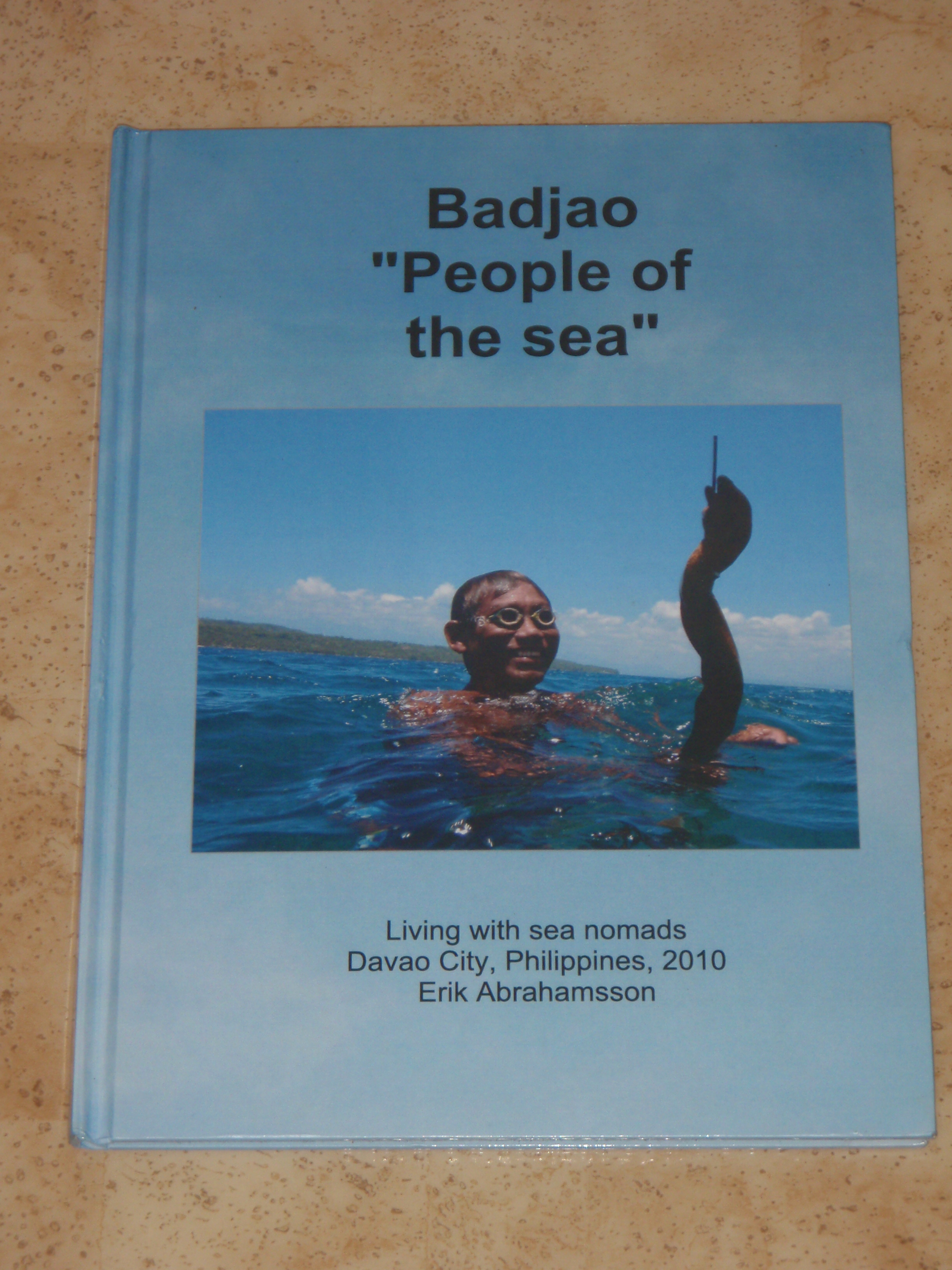
The book “Badjao – People of the Sea” was written in 2010 after a fieldwork among Bajau Laut (or Sama Pala´u) in Davao City. To learn about indigenous people, is to learn about humanity.
Are they really poor?
Here comes some information about the Badjao community in Matina Aplaya, were I was living between February-April this year.
• One of 300 has a work in the regular job market
• Two have been studying in high school
• Almost no one of the elders can write or read
• Ten of approximately 150 children are in school
• Most people live on less than one dollar a day.
In a general life quality index Badjao is in the vey bottom, and they would have been a priority for organizations like Oxfam and Save the Children. But why? In fact, they are among the most active and smiling people I have met. They are living in a rich village life, the children are playing without computer games and a vast majority has healthy bodies. Even if they have small resources, we can consider them as happy and proud. How can we tell them that they are poor? How come that the Western living standard has become the norm for all people?
During the history we have seen thousands of indigenous cultures being destroyed as roads, mining companies etc. have been spread over their land. Today many governments, corporations and politicians say that change is inevitable and that modern society will expand all over the world like a natural law. There seems to be nothing to do.
But Badjao is a living example of that change is not inevitable. They are still living as a distinct cultural group, their culture is more flourishing than ever, and even it they have been living next to the modern society for years, they still hold on to their lifestyle and traditions. And why not? You can’t force them to change under the flag of “inevitable change” or “development”.
Today the indigenous rights organizations are strengthen their positions. Organizations as Survival International and IWGIA promote the idea that indigenous small-scale cultures should be seen as small nations with their own land and sovereignty, and freedom to decide their own future.
So, let the Badjao children play with their boats, let the adults be illiterate, let them worship the coconut and let them arrange minor age marriages. And, most importantly, give them exclusive right to fishing water they have traditionally utilized. If you protect their land, you will protect their culture.
Staying with Bajau Laut in Philippines
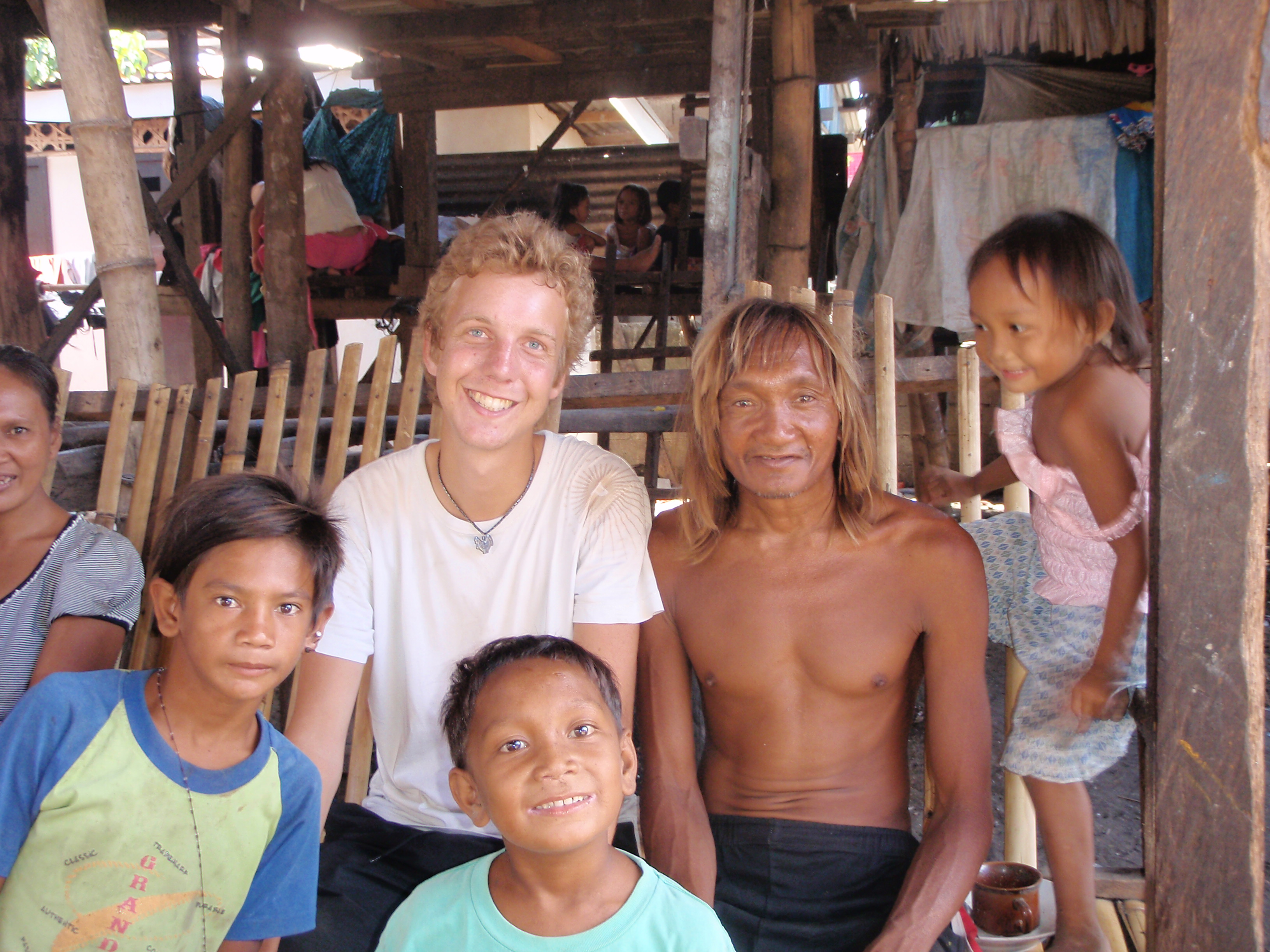
In the beginning of April I finally left the Badjao community in Matina Aplaya, Davao City. It was a great time of playing with children, swimming and fishing. Towards the end I also started to learn the basics of their language, Sinama, which made the conversations deeper for every day. In the beginning I mostly played “Pangua” (zombie) with the younger children.
Many of the approximately 300 people in the community wanted to say good bye when I took my bag and left the village. Before they had recevied more than 500 pictures which I had printed and distributed among the families, and now they were waving with their photos and asked when I would come back – which probably will be within 1 year! Back home I will bring a couple of souveniers: a fishing spear, a traditional swimming foot, a pair of homemade swimming glasses, colorful cotton and pearls.
If you want to learn more about the journey, go to my “Aquatic Ape” page in Resedagboken
Nonsense
Ludwig Wittgenstein: “7. What we cannot speak about we must pass over in silence.”

 The Aquatic Ape