For a Living Ocean

Latest

Speargun Fishing in Philippines – an Ecological Living

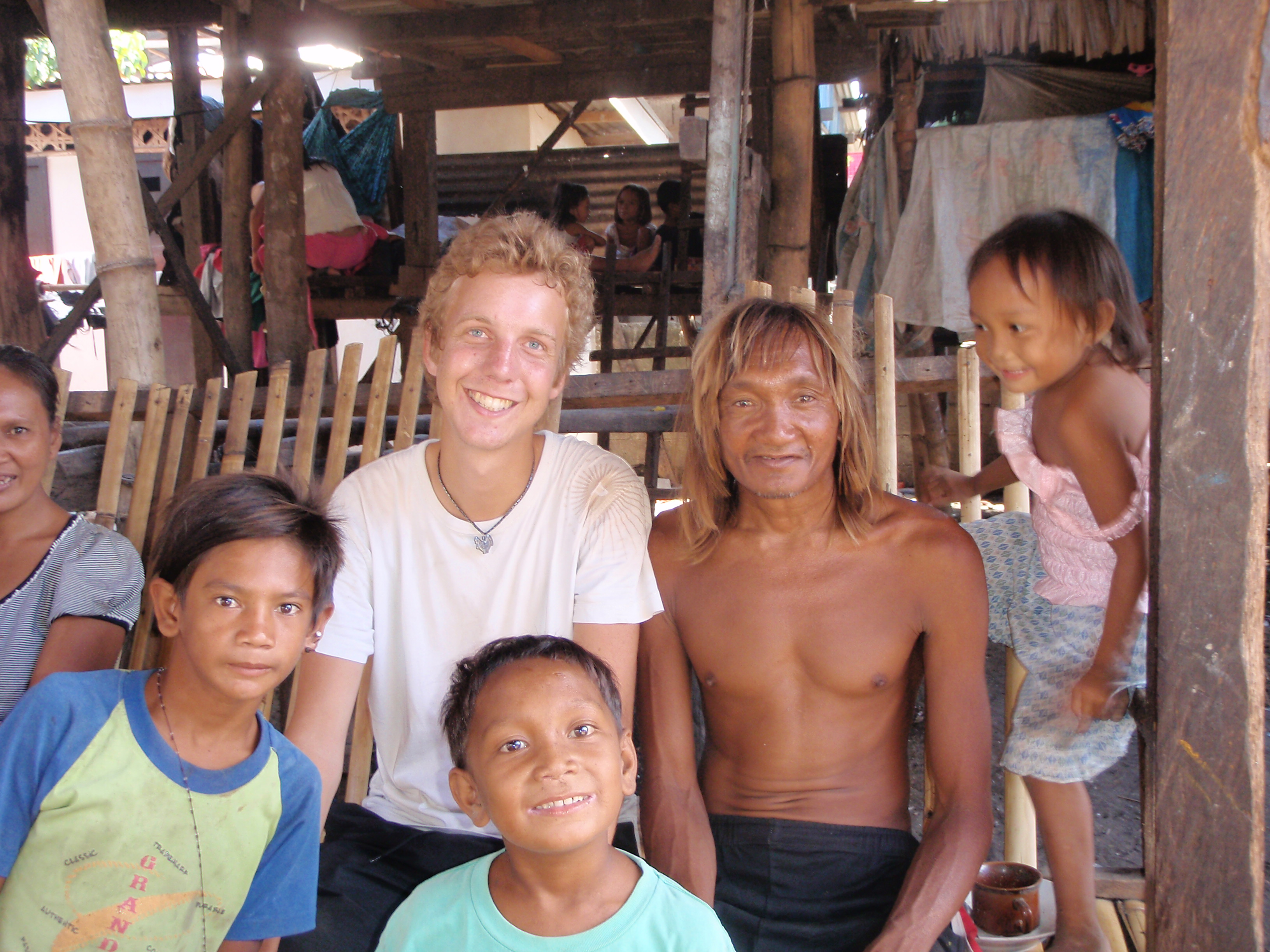
It is always a pleasant experience to come to the Sama Community in Matina Aplaya, Davao City, Philippines. Almost 100 people greeted me when I entered the village in the beginning of December. I could see children playing drums, fishermen preparing their “pana” (speargun) and women nursing their small children.

Then followed one month of swimming, fishing, playing with children, playing volleyball and celebrating Christmas and New Year.

Skilled 10-year old fisherman

I had the opportunity to follow one of the younger fishermen in the village, Jimmy, 10,at sea. I followed him underwater while he caught fish after fish with his harpoon. He is one of few children in the village that has grew up as a traditional fisherman, and hence, one of few children that has ruptured his eardrum. However, it is getting more and more difficult to make a living from the sea, due to over-fishing and more extreme weather.

But why do they rupture their eardrums? In fact, it is seen as practical since diving is an everyday activity. The ruptured eardrum can be seen as an investment: If you are going to make more than 10 000 dives during your lifetime, and if you never have learned how to equalize properly, then rupturing your eardrum becomes a shortcut to the ocean’s depth. “If you rupture it once, you will have no problem diving throughout your life” one young fisherman explained. Of course, older men have hearing problems and the fishermen will get ear infections over the years as water enters their middle ears … but they are taking inherited medicines … and the inner ear will generally never be affected.

In the Sama community of Matina Aplaya it is still common that the fishermen make up to three week long journeys to abundant fishing spots further south in the Davao Gulf. It is not easy – but not either impossible – to make a living completely from the sea. They sleep on the boat: spearfish during the day and hook-and-line fish in the evening. When they return to the village they normally buy a big fish and share it with their families… Many of the fishermen continue to harvest at sea – no matter what the season or happenings around them.

How big is their ecological footprint?

This is the fourth time I visit the village since 2010 when I started to study about Bajau Laut right here – and I hope to be able to make many future visits. One new thing for this time was that a quite many families had started to make a living from selling of secondhand shoes, that they buy in the market in sacks for either 1 000 pesos or 2 800 pesos each. Then, they are repairing the shoes and selling them to people in Davao and neighboring cities.

In December it is also common that Sama and other local tribes of Davao are playing music and dance while going from house to house begging for food and money. The Sama children are performing with recycled drums, made by metal and plastic waste. A group of enthusiastic children can make 200-300 pesos a day in this way.

Many people might say that Sama are uncivilized and dirty – that they are begging parasites. But in fact they are making a lot of recycling services that the modern Philippine society doesn’t do. For example they collect a lot metal and plastic waste from the shorelines, they reuse and restore clothes and shoes, establish a flourishing second hand market, and they catch fish with sustaining fishing methods. Most of their money goes to purchasing of water and food, like cassava, fish and fruits – even if they also are buying Christmas gifts. Overall, their ecological footprint is nearly zero.

Recently, the Philippine spokesperson at United Nations climate change conference in Doha, Naderev Sano, made a long-lasting impression on many of the listeners. Only days before the eastern Mindanao of Philippines had been hit by a devastating typhoon… ”There is massive and widespread devastation back home. Heartbreaking tragedies like this are not unique to the Philippines”, he said, emphasizing that Philippines and other countries may face more extreme weather disturbances if climate change is left unchecked  You can see his speech here: Plea by Naderev M. Sano of the Phillipines and read an article in the Guardian about the speech here: Will Philippines negotiator’s tears change our course on climate change?

Indeed, the Philippines and the world are facing many climate-related challenges – and I am sure that we can learn a lot from the Bajau tackling these problems!

Badjao Association of Matina Aplaya

Another new thing in the community is that they have organized themselves in an organization – The Badjao Associaition of Matina Aplaya. The purpose of the organization is to establish a long-term livelihood for the community, either on fishing or selling of clothes and pearls. For example, the members of the organization will be able to borrow money for a small cost. They are also planning to build a local school: “If the children can learn how to read and write in their own language, they will be able to attend the regular Philippine school”, Lolita, one of the community leaders, said.

In the beginning of January I am heading back to Malaysia – and from there I will go to Sulawesi, Indonesia, where I will live with the Bajo, another Sama Dilaut group, who have been separated from their relatives in Malaysia and Philippines for almost 200 years. In Sulawesi I will visit the isolated village Lasolo – one of the places where their might still be boat-dwelling Sama people outside of Borneo.

Sama Dilaut of Semporna: Fish Bombers or Peaceful Nomads?

For more than one month I have been living in Semporna, in Sabah, where I have visited remote islands and several Sama Dilaut (Bajau Laut) communities. I have talked to sea nomads, been diving, attained a wedding and continued to learn the basics of Sinama.

One thing that surprises me is the  life pulse and energy I always feel when I visit a Sama community. Even if I go to Semporna or remote parts of Mindanao I always get the same feeling.

Hundreds of sea nomads

In Semporna hundreds of house boats have their moorage, either close to one of the many islands in the region or simply in Semporna town close to the Sama Dilaut communities Kampong Halo and Bangau Bangau. They make their living entirely from the sea: they are net fishing, hook-fishing, spear gun fishing and dive for sea cucumber and pearls. During low tide they also go along the shallow corals and collect sea shells. It is fascinating to see the water adaptation of the Sama – an adaptation that starts in early age. A child learns to swim when it is 2-3 years old, it learns how to paddle a boat at five and dive at the age of six.

Dynamite Fishing

Unfortunately, some of the Sama Dilaut fishermen are also involved in dynamite fishing and compressor diving. Fish bombing is, of course, devastating for the marine life as it completely destroys the corals. But as one fisherman told me: “when I go hook fishing I must wait a long time for a catch, but if I throw a bomb I will get plenty of fish in seconds!” Of course, bomb fishing is highly illegal and leads to imprison and big fines. I met one pregnant woman with small children whose husband and oldest son had been caught bombing fish, which left the family without livelihood.

It is important to note, however, that it is unusual that boat living Sama make a living from dynamite fishing. It is much more common among more settled, house-dwelling Sama Dilaut fishermen.

Refugees from Philippines

Nearly all Sama Dilaut in Sabah are refugees from the Philippines. Many of them lack Identity cards and passports. A majority doesn’t even have a birth certificate. Without ID you have no right to get medical support (it costs 50 RM, approximately 17 USD without ID for a medical checkup and only 1 RM if you are a Malaysian citizen) and schooling. However, many Sama Dilaut have a “lepa passport” (a houseboat passport) authorized by the local government which gives them right to stay in the waters of Sabah.

Probably, the reason behind Sama Dilaut’s partly devastating fishing methods is linked to the fact that they are not recognized as legal – as a matter of fact many Sama Dilaut do never set their foot on land because of fear of deportation. Hence, if you are living there illegally and don’t get any support from local authorities, you might be tempted to get involved in devastating fishing practices.

Ethnic discrimination

When I talk to the Sama Dilaut they all tell me one thing – they are afraid of the Tausug people of the Sulu – which have ruled the area for centuries. Today many Tausug are armed and some of them have been in part of the creation of the Abu Sayyaf guerilla. For decades they have been fighting against the Philippine government in order to establish a free Muslim state in southern Philippines. Recently, a peace agreement were settled which has calmed the overall situation, but single Sama individuals are still under huge threat (see: Philippines peace deal is far from a done deal for more information). Their catch and their machines are taken under night. Young women are forced to marry which make them escape in the middle of the night. Bombs have been thrown into their houseboats.

In Philippines, the police don’t do much to ease the situation for Sama Dilaut. In Malaysia, however, the police and military are very active, and thousands of tourists are arriving every year, which make the situation calm.

Have they always been nomads?

It is estimated that the nomadic lifestyle of Sama Dilaut is more than 1000 years old, but I have wondered if the present day sea nomads always have been living in the boat, or if they till recently have been living in houses? During my first month of stay with Sama Dilaut I have been asking many nomads about their history.  As a matter of fact, some of the present day sea nomads have actually quite recently been living in houses in Philippines, but they resurrected their forefathers way of living when they came as refugees to Malaysia. It is still unclear how many of the nomads that have been nomads for generations, and that is one question I would like to figure out during my six month long stay in Southeast Asia.

In one week I am going to Philippines where I will visit the Sama Dilaut community in Matina Aplaya, Davao City. Here many people are living entirely on spear-gun fishing and they use no compressors and no dynamite. I am really looking forward to come back to Mindanao!

Estino Taniyu – a famous Sama Dilaut Swimmer

During my stay in Semporna I heard that many people were talking about Estino Taniyu, a Bajau Laut from Bangau Bagnau, who is working for the Malaysian Navy . They told me that he had won a swimming competition in Europe. “Melikan Taraug”, (‘the white men lost’), they said. I searched for Taniyu on the Internet and read that he had swum across the English channel, the third Malaysian and the first Bajau Laut ever to do so. He crossed the channel in 13 hours and 45 minutes.

Estino Taniy is far from the fastest swimmer who has swum across the channel, but we have to keep in mind that none Bajau swimmer have gone through professional training. Estino has grown up in an are that was completely water based only 50 years ago, when they arrived from Sitankai on their houseboats. It is also worth to mention that the first man ever who swam across the channel, Matthew Webb in 1875, needed more than 21 hours to complete the endeavor – and he hold the record for decades.

I met Estino Taniyu’s mother in her house in Bangau Bagnau. She told me that thousands of Semporna locals, including Pakistani and Malay people, had come to their house to celebrate when Estino returned from England. She also told me that Estino used to follow his father fishing when he was young.

“I made it through physical and mental preparation, the experience of being a village boy and the son of a fisherman and support from my team and the Malaysian army,” Estino told The Borneo Post in an interview. You can read more in their article: Semporna welcomes home English Channel swimmer

Living with Sea Nomads 2012-2013

On October 18th,  I am heading towards Southeast Asia for a six months long stay with Bajau Laut – The People of the Sea.

My first stop will be on Borneo, Malaysia, where I will live among Bajau Laut sea nomads. Still, more than hundeds of people spend their entire lives on boats. Here I will gather material for my Master Thesis on dynamite fishing and make a short movie about Bajau Laut’s maritime lifestyle. Thanks to Barnens Stipendiefond that has given me a grant for making the film!

During the journey I will also spend time in southern Philippines, where I will visit a Bajau Laut community in Davao City – where I have lived for several months.

In the beginning of next year I am also heading towards Sulawesi, Indonesia, where I will live among Bajo people (they are relatives of Bajau in Malaysia and Philippines, but speak a different dialect).

Throughout the journey I will also collect diving statistics for professor Erika Schagatay at the Mid-Sweden University. I am bringing three logging devices that will measure how deep the Bajau fishermen dive and for how long they stay under water. The most interesting data is, though, their underwater working time during a longer period of diving.

I will make continuous updates on the blog during the journey.

Tribal Olympians

To celebrate the 2012 Olympic games, Survival International reveals some of the astonishing skills of the world’s tribal peoples, from the Awá archers of the Amazon to the Bajau divers of Borneo: Tribal Olympians.

“Scientists have discovered that the Bajau are submerged for up to 60% of the time they spend in the water, which is nearly as long as a sea-otter”. The source of this information comes from a research made by Erika Schagatay, Angelica Lodin-Sundström and Erik Abrahamsson during 2010 and 2011.  You can find the article here: Underwater working times in Ama and Bajau Divers

From the Survival International article: “Swifter, higher, stronger was the motto that Pierre de Coubertin, founder of the International Olympic Committee, coined for the Olympic Games. How far can a Hamar man jump; how deep can a Bajau pearl-hunter dive?

The astonishing skills of tribal peoples are not only a measure of just how swift, high and strong we can be as humans – where our physical and mental limits lie – but an indicator of the extraordinary diversity of mankind.

In short, they show us – just as the Olympians will in the London 2012 Games – what it is to be human”.

Mysteries of the Seafloor – The Great Barrier Reef visualized in new Project

Google Ocean, which was launched in 2009, is now starting a new project, Catlin Seaview Survey which will focus specifically on the Great Barrier Reef – the largest coral reef in the world. The project is a joint venture between Google, the University of Queensland and the Catlin Group.

Tens of thousands of 360-degree, high-definition panoramas of underwater forests, grasslands and crags will be taken by robot camerasvand made available on the internet. You can read more about the project in this ain The Guardian: Virtual diving: underwater panoramas of the Great Barrier Reef – in pictures.

Google Ocean has made it possible for any Internet user to explore the under water world, in what has been called “virtual diving” . Here you get the possibility to explore the ocean – which contains 99% of the biosphere.

Google Ocean contains information from leading scientists and oceanographers. Individual divers do also contribute – who knows what Bajau Laut would depict if they were getting a camera in their hands?

Bajau and Moken kids with Great Underwater Vision

In the end of Decmber we visited Bajau Laut in Davao City, Philippines, where we went fishing and diving at the coast of Samal Island. The Bajau children in Davao learn how to dive in an early age. They have a superb underwater vision and learn how to fish with a harpoon in the age of ten.

This slideshow requires JavaScript.

The researcher Anna Gislén at Lund University has studied the underwater vision of Moken children at the southern coast of Burma. She found that they have the capacity to maximally constrict their pupils and therefore focus on small objects under water. She has also shown that all children have the potential to see clearly under water – but they will have to practise for weeks. You can find the study here: Superior Underwater Vision in a Human Population of Sea Gypsies

Here you can also see a short BBC-movie about Moken’s ability to see clearly under water:

Article on Indigenous People’s Diving Skills

Swedish scientists have studied the diving skills of Ama in Japan and Bajau Laut in Philippines. The result is fascinating: the divers in both groups stay in general more than 50% of the working time under water while spearfishing or sea harvesting. Erika Schagatay, professor at the department of engineering and sustainable development at Mid Sweden University, has lead the study.

The study gives strong support to the idea that repeated diving has played an important role in the human evolution. Read the article here: Underwater working times in Ama and Bajau. The article was published in March 2011 in Diving and Hyperbaric Medicine.

New Book about the Aquatic Ape Theory

Recently a new book on the Aquatic Ape Theory was published: Was Man more aquatic in the past? – Fifty years after Alister Hardy. A large number of scientists from different fields have contributed to the impressive book. More and more the AAT-proponents seem to agree on that a maritime lifestyle have been shaping our physical and mental characteristics all the way to Homo Sapiens, ant not only at the time of the divorce from the forefather of the chimpanzee.

I hope that this book will make anthropologists as well as other scientists and the general public more at ease with the idea of a great maritime impact on the human evolution.

Sea Bed Hunter in Semporna, Borneo