
The Displacement of Bajau Laut: A Lost Haven in Sabah
In a contentious move aimed at allegedly enhancing security and curbing cross-border crime, Malaysian authorities have evicted over 500 Sama Dilaut individuals from their homes within Tun Sakaran Marine Park off the coast of Semporna, Sabah, starting on June 4. The Sama Dilaut saw their coastal stilt huts demolished or burned by enforcement officials, sparking a wave of criticism from rights groups and local activists.
Historical and Cultural Significance
The Sama Dilaut have been part of the marine landscape in Semporna for centuries. Their picturesque traditional settlements have attracted global attention for their unique architectural style and seemingly harmonious coexistence with nature. These settlements were not just homes but symbols of eco-living and sustainable practices, resonating deeply with any human. Bod Gaya, in particular, was renowned for its lovely stilt houses located next to a mountain top inside the Marine Park, as well as its boat-building activities of both houseboats and dugout canoes, a craft that has been passed down through generations.

Government’s Stance
Sabah’s Minister of Tourism, Culture, and Environment, Christina Liew, defended the eviction operation, stating that it was necessary to uphold the sovereignty of the country’s laws. According to authorities, unauthorized activities such as illegal fishing, building without permits, and unpermitted farming within protected areas managed by Sabah Parks necessitated the crackdown. She also highlighted security concerns, including cross-border crime.
Liew claimed that some homeowners might have intentionally burned their own houses to garner sympathy and virality on social media. According to the authorities, notices had been sent to 273 unauthorized settlements, and between Tuesday and Thursday, June 4 to 6, no less than 138 structures were demolished inside the Tun Sakaran Marine Park.
Humanitarian Concerns and Advocacy
The Sama Dilaut are mostly born without nationality documents, which limits their access to basic amenities such as healthcare and education. This lack of documentation means they are often treated as undocumented migrants, living in constant fear of detention and deportation. Local activists and rights groups have condemned the evictions, calling for the government to halt these actions and ensure the Sama Dilaut’s safety and protection.
Mukmin Nantang, founder of the social advocacy group Borneo Komrad, criticized the government’s actions as cruel, noting that the Sama Dilaut have lived in the area since before the establishment of modern borders. The destruction of their homes and forced displacement raises serious humanitarian issues, as the community lacks alternative housing options and struggles to understand and comply with local laws.
Pusat Komas, a human rights group, has called on the state to provide alternative homes for the displaced and address documentation issues to ensure fair treatment and access to essential services for the Sama Dilaut. The advocacy emphasizes the need for a humane approach that respects the Sama Dilaut’s way of life and their historical connection to the region.
Personal Insights and Experiences
I have been visiting the area regularly between 2011 and 2023, and I know locals in stilt houses and houseboat owners who normally have their moorage within the marine park. One memorable experience was with a young Sama Dilaut man who took me diving in the shallow waters off the paradise island of Sibuan. He showcased the vibrant marine life of the area, and we spotted a moray eel and clams. He was acutely aware that fishing within the park was prohibited and mentioned that they always fished outside the no-go zone.


Each time I returned to the park, old structures had been replaced with new ones. This constant renewal was a testament to their adaptability and a perfect example of green architecture. New houses always emerged, yet the overwhelming beauty of the settlements remained unchanged.
The key word in Sama Dilaut architecture is adaptability. In the West, we generally aspire for solidity, thick and immovable construction. We don’t build with the elements but rather to master them, to control them. The Sama Dilaut, on the other hand, have learned how to live with the elements and to adapt their construction to the natural environment. Hence, waves, floods, and erosion are minor problems for Sama Dilaut’s settlements—while they have closer access to sea life than anyone else.

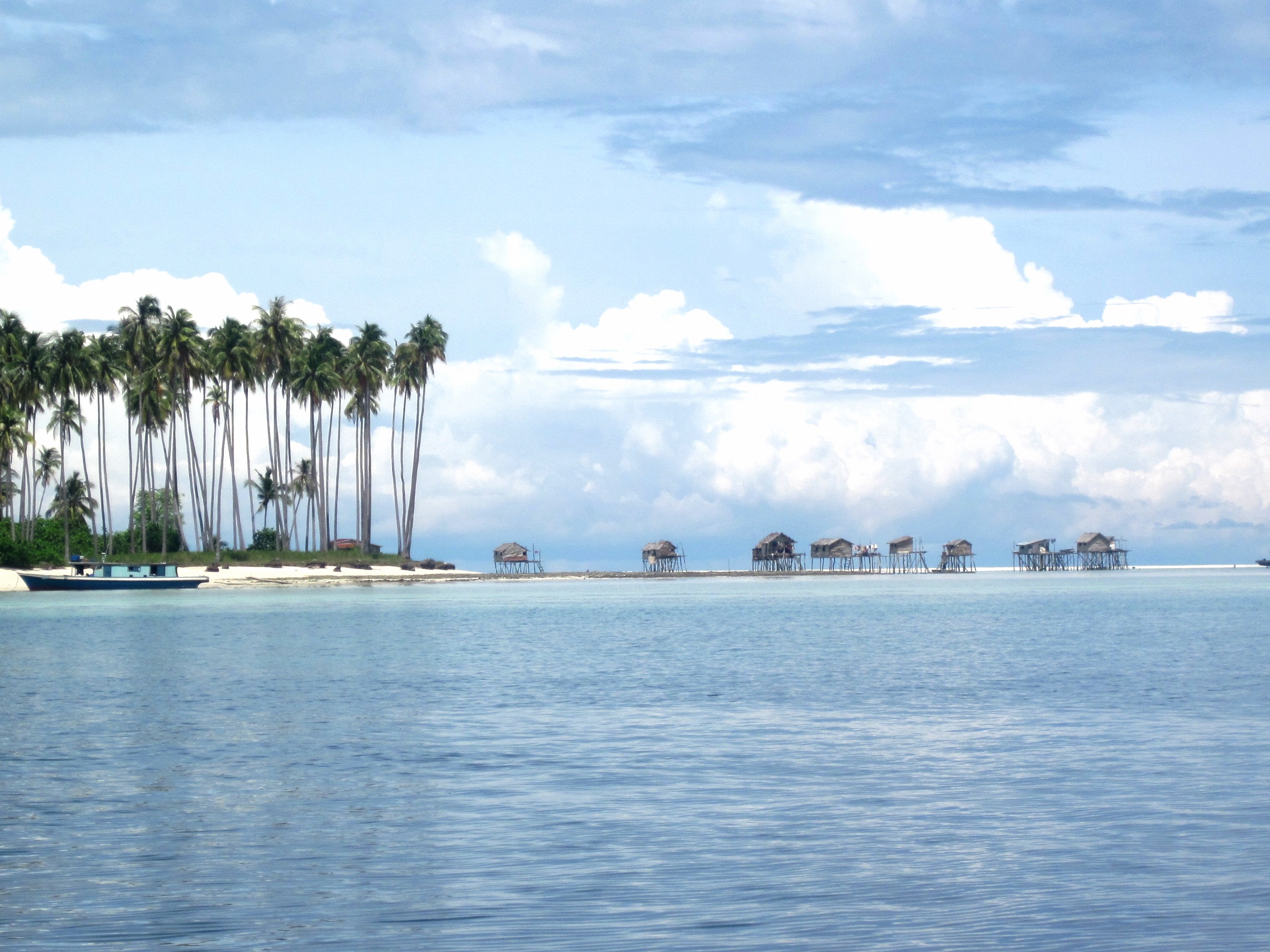

However, now something essential has been broken. It is profoundly sad that it was not possible to combine the marine park’s conservation efforts with the traditional settlements and lifestyle of the Sama Dilaut. Even if it is true that illegal fishing and lodging have been issues within these protected areas, the Sama Dilaut lived with the tides and the waves, holding on to ancient traditions. We must also remember the everyday struggles the Sama Dilaut go through—this was one of their last havens. The state’s rationale has taken a new step, prioritizing enforcement over coexistence.
Unworthy Othering
For years, photo safaris have been organized regularly within Tun Sakaran Marine Park, with thousands of tourists handing out crackers to take photos of the “wild” Sama Dilaut. This practice reduces the Sama Dilaut to mere spectacles for tourism, stripping away their dignity and humanity. Tour operators referring to them as “sea gypsies” reflect deep-seated racism in the area.
The Sama Dilaut face statelessness and structural violence, evident in many locals’ aversion to eating with them, disdainful looks on the streets, and the belief that they are destined to live this way. Now, their homes have been demolished, exacerbating the already widespread poverty among the Sama Dilaut.
Final Reflections and Future Implications
Many of the reasons cited by authorities, such as smuggling and national security concerns, also apply to other Sama Dilaut settlements around the Semporna area, such as Denawan Island. Was this an excuse to remove settlements particularly within Tun Sakaran Marine Park, or is it possible that similar actions will be taken in other parts of the area?
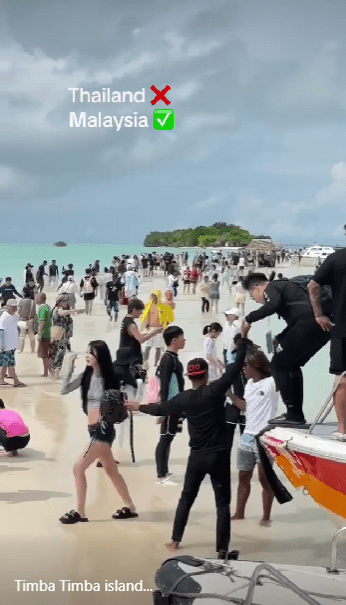
One potential reason behind the evictions is the significant influx of tourists to Semporna, as tourism is vital to the area’s economy. In the image to the left, taken on another paradise island in the area, Timba Timba, which lies outside the marine reserve, one can see hundreds of tourists enjoying the white beaches and boosting their social media accounts — and that is going on day after day.
This raises questions about sustainability. What is actually most valuable: the long-term health of the environment or the immediate influx of hard cash from tourism? The Sama Dilaut are left in a limbo, caught between the pressures of a booming tourism industry and the need to preserve their traditional way of life and the natural environment they depend on.
The picturesque and culturally rich settlements of Bod Gaya and Maiga are no more, dismantling not just homes but a significant part of the region’s heritage. As the world watches, it is crucial for advocacy and dialogue to continue, ensuring that the Sama Dilaut receive the protection and dignity they deserve.


For more information, you can read the following articles:
Malaysia evicts 500 sea nomads in crackdown on migrants (by Reuters, Asia Pacific, June 4, 2024).
Malaysia defends eviction of sea nomads, citing security concerns (by Reuters, Asia Pacific, June 8, 2024.)
Exploring the Lives of the Sama Bajau: A Field Report from Sabah, Malaysia
Amidst the bustling activity of the Philippine night market in Kota Kinabalu, I found myself surrounded by the vibrant energy of fish vendors, children selling plastic bags, men and women in worn-out clothes transporting ice on wheelbarrows, and restaurant owners showcasing mantis shrimp and lobster in front of warm grills. This market, a microcosm of the larger economic struggles faced by the Sama Dilaut, became the starting point of my field trip to Sabah, Malaysia, aimed at collecting data for my thesis on the Sama Dilaut’s role in the economy and fishing industry.
At the turn of the year from 2022 to 2023, I embarked on this journey to delve into the lives and challenges of the Sama. Despite their hard work and exceptional fishing skills, they continually struggle with capital and opportunities, often finding themselves on the losing end of trade. To better understand their plight, I employed the “follow the thing” methodology, as elaborated by Appadurai, focusing on the seafood chain. Fish serve as a lens through which we can explore critical issues such as conservation, destructive fishing methods, and structural violence.
Kota Kinabalu: A Vibrant Market Scene
The trip began in Kota Kinabalu, the largest city and tourist hub in northern Sabah. This city hosts a bustling Philippine night market with various Sama Bajau groups from numerous Philippine Islands. The harbor, filled with trawlers, longliners, and shrimp boats, serves as a transit hub for fish trade. Across the water lies Pulau Gaya, home to many undocumented migrants from the Philippines. I engaged with local fish vendors, small seafood restaurant owners, Sama Dilaut children selling plastic bags, fish traders, boatmen, and more. As always, crowds gathered around me when they realized that I speak Sinama, often filming to boost their social media following. Common questions included how long I had been learning Sinama, if I could speak Malay or Tausug, if I was married and how much dowry is in my country.
One afternoon, I decided to visit Pondo on Pulau Gaya, which is designated a ‘no-go zone.’ At the informal jetty, I befriended a young Filipino man who helped me cross to Pondo, after carefully evading the Marine Police that controlled the area. We docked at Ridwan’s parents’ stilt house and walked towards the island, surrounded by excitement and friendly questions. A group of children followed us, asking for candy, which I promised to give later to avoid too much fuss. However, due to serious problems with drugs and glue-sniffing, it was unsuitable to stay long. After 30 minutes, we returned to the boat, bought candies for the kids, and headed back to the city.
Upon arrival, I found myself amidst a volleyball match between fish traders, who saw me arriving from the sea, leading to a relaxed atmosphere filled with questions and jokes.


Meetings with Stakeholders in Kota Kinabalu
In Kota Kinabalu, I met Terrence Lim, the director of Stop Fish Bombing Malaysia, an organization dedicated to combating destructive fishing methods. He shared insights into fish bombing, cyanide fishing, and the marginalization of the Sama Dilaut community. According to Terrence, “Fish trades can now be settled at sea. Everyone has a phone, and money is being sent online.” However, he explained that the Sama Dilaut cannot register SIM cards and are completely dependent on the informal cash-driven economy.
Terrence also mentioned, “Big fishing boats are using sonars for fishing, and there’s a growing concern about the difficulty of catching big fish, further marginalizing the Sama Dilaut community.” He further explained that the Sama Bajau are often on the losing end of negotiations, having to sell their fish quickly due to lack of storage and their statelessness.
Kudat: Exploring New Horizons
Next, I traveled to Kudat, located in the northernmost part of Sabah. The Tun Mustafa Marine Park is here, though it attracts fewer tourists compared to other popular destinations. My goal was to explore new areas where many Sama Dilaut from Semporna had moved in search of better opportunities. After purchasing ferry tickets—and taking photos with the young female vendors who recognized me from social media posts in Kota Kinabalu—I met the chief engineer, who shared insights about the area’s environmental issues, including pollution and acidification. Upon arrival, I realized that most residents were Ubian, a Sama group from an island near Tawi-Tawi in the Philippines.
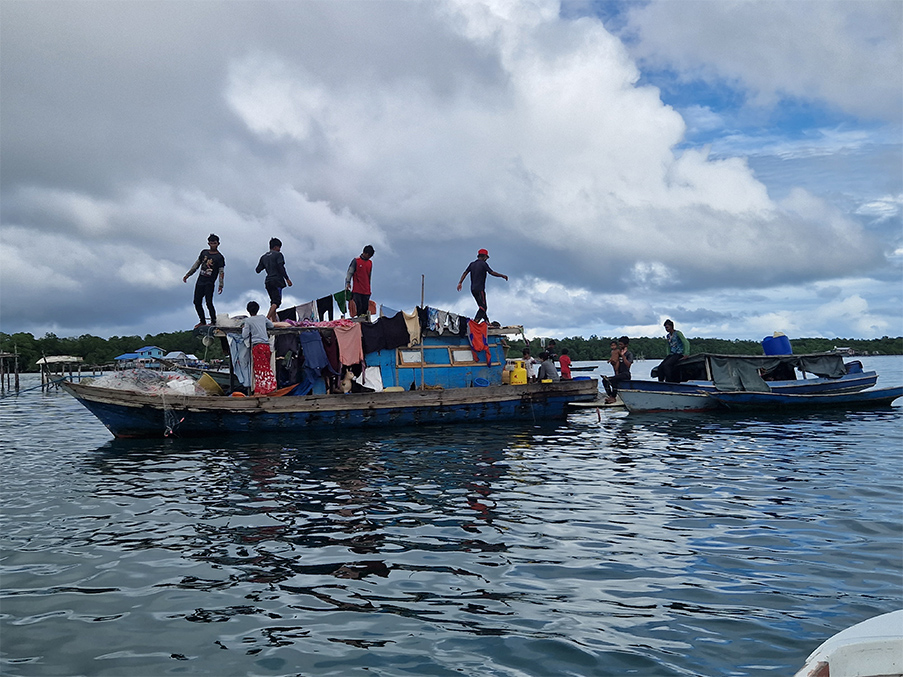
I looked for someone to take me to Bankawan Island, east of Banggi, where Terrence had mentioned a recently established Sama Dilaut community. I met a group of older men who helped me find a boatman. Next morning, we drove towards a cluster of three anchored houseboats, and the people on them greeted us warmly with big smiles. One young father, holding his baby boy with a protective amulet around his neck and arm, pointed at me and said “melikan, melikan” while waving happily.
The meeting was full of contrasts. The father continued to socialize with his little child, who had likely seen a white person for the first time. This made it a special occasion for the Sama Dilaut, who generally hold white people in high regard, having had mostly positive experiences with them in the past. We talked about their fishing habits and how long they had been living in the area. The father on the boat said they had been there for a few years and showed me some shellfish and a lobster they were planning to sell in Karaket. A young boy wearing a Neymar Jr. t-shirt was fishing with a hook and line, while a young man standing on the roof of the larger houseboat asked for my phone number, holding up a mobile phone. They told me fishing was better in Kudat than in Semporna and that they didn’t plan to return to Semporna.
Before leaving, I offered cookies and money. We also spoke to other houseboats, learning about nearby Sama Dilaut communities around the Tun Mustafa Marine Park. We were invited to a water village, clearly visible on Google Earth, where we toured and saw sea cucumbers being farmed. The community consisted largely of undocumented migrants from the Philippines, making their living from fishing and fish farming.
Semporna: A Deep Dive into Local Life
The final destination was Semporna, where I have spent significant time during previous trips to Sabah. Over the years, I have established relationships with various people and places in Semporna, allowing me to gather valuable information. The central market, which had faced years of construction delays due to lack of funds and alleged corruption, was finally completed. However, it was mostly abandoned, with only the fruit and fish markets being utilized. The rest of the trade took place on small tables scattered around sidewalks and walkways, particularly in Kampung Air. Young boys had turned the new central market into a makeshift football field, giving the area an almost ghost-town feel.
Walking through Kampung Air, I noticed the bustling activity with small restaurants, cafes, and stalls selling various goods. The Sama Dilaut who had come to buy staples and sell fish were as always very silent, reflecting the everyday struggles they face, such as racism, poverty, statelessness, and difficulties in making a living at sea. All these challenges can be described as structural violence, a concept originally put forward by sociologist Johan Galtung. This violence has no clear beginning or end, and no single person to blame. It is embedded in the spaces in between—in the market, in the tone of the seller, in the waiting room at the health clinic, and in the long gazes on the street.This was later reflected when I stumbled across a few fishermen from Bangau Bangau who had brought in a sizable catch of cuttlefish. When I asked them how many days they had been out at sea, they replied, “Three days,” at which point the fish trader, who had just started to weigh their catch, said with disdain in his voice, “Sleeping, eating, and pooping on the boat,” whereupon the Sama men fell silent once again.
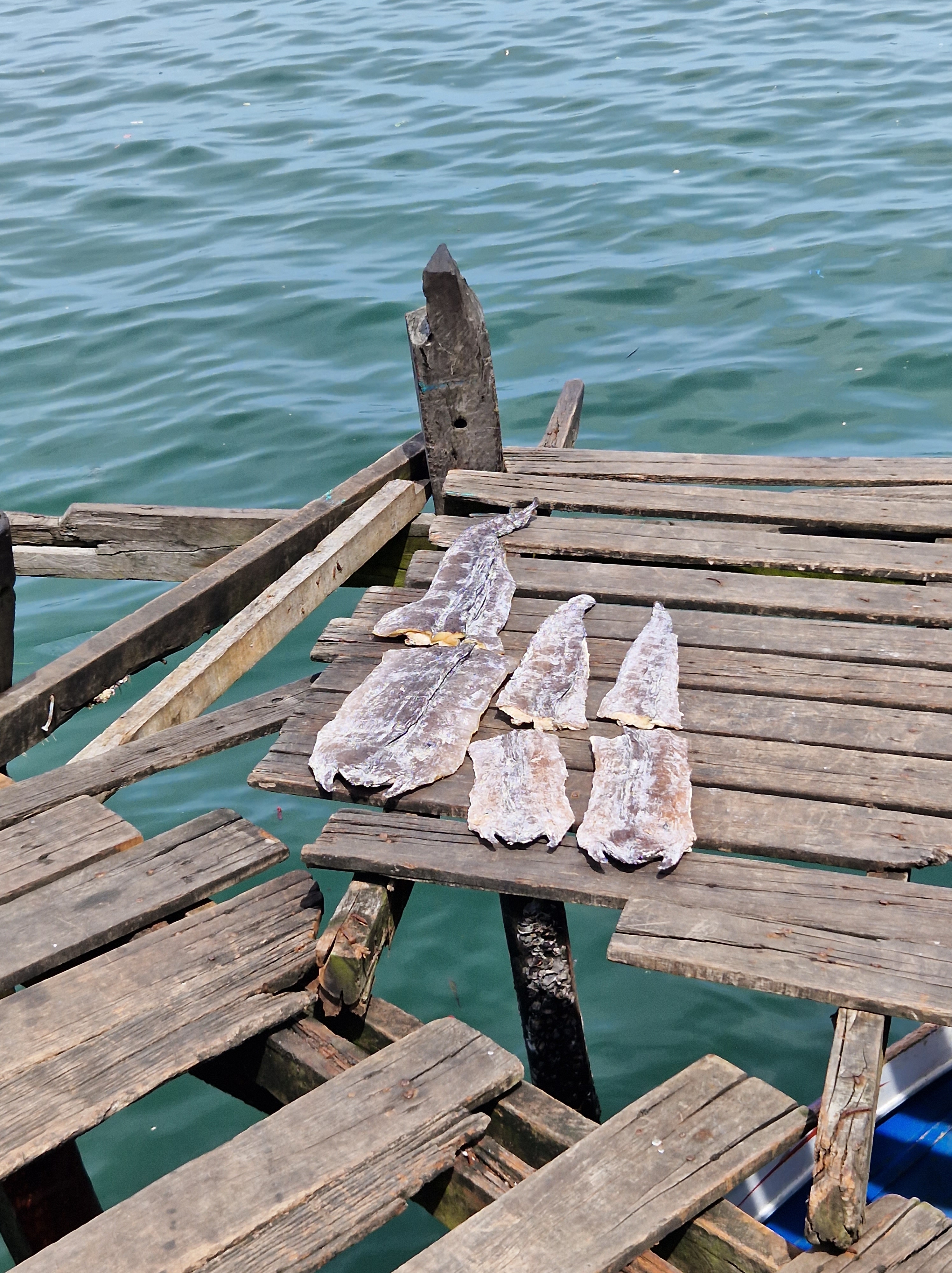
Further down the wooden bridges, I noticed dried moray eels being prepared for sale. A vendor explained that these eels are bought from fishermen for 5 RM (approximately $1.10 USD) per kilo, dried, and then sold for 15 RM (approximately $3.30 USD) per kilo in Tawau. This 200% increase in value highlights the inadequate compensation the Sama Dilaut receive for their livelihood.

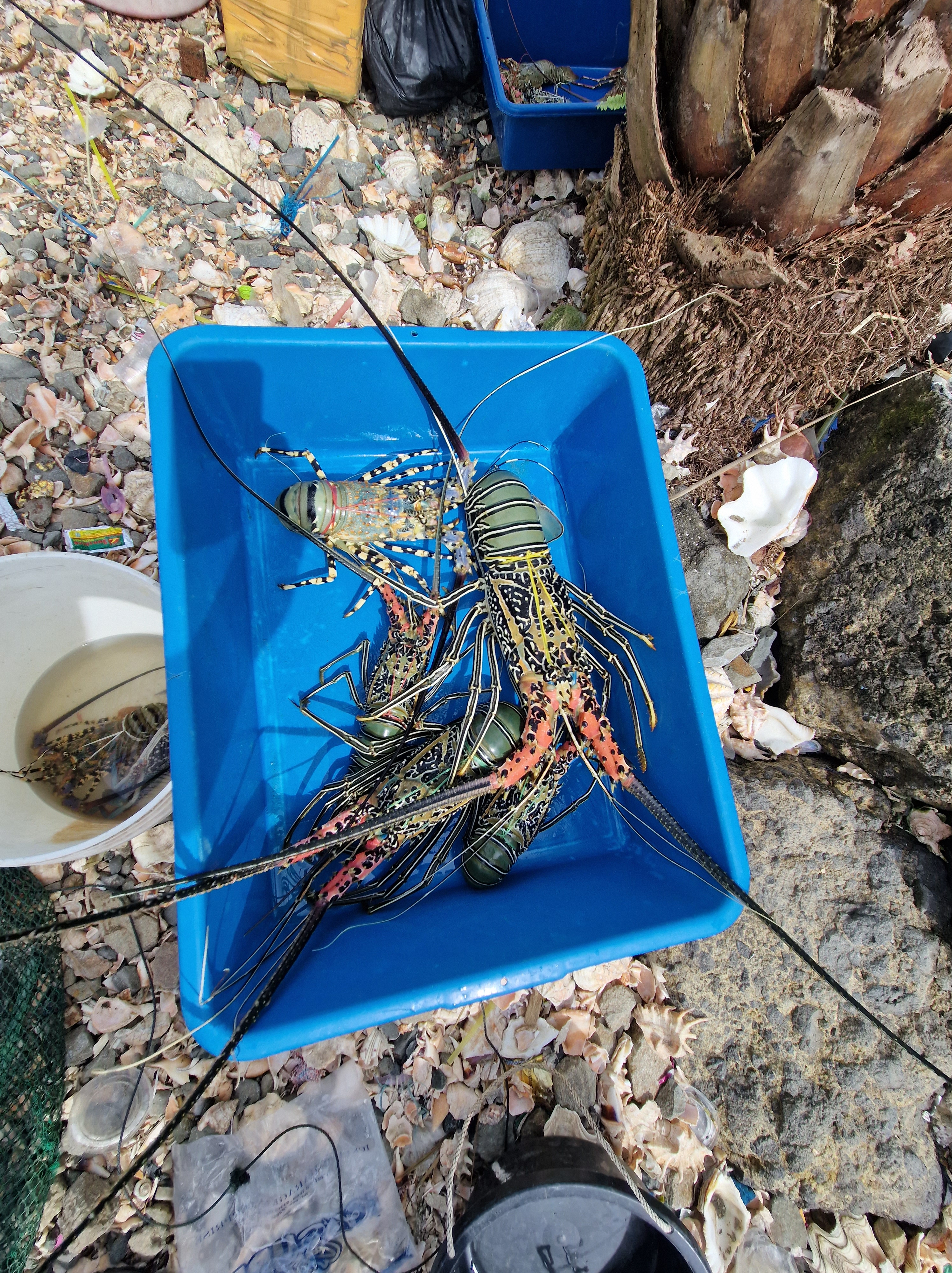


At a nearby store selling fishing equipment, I observed items reflecting various fishing methods used in the area—spear gun fishing, hook and line fishing, net fishing, and compressor diving. The new fish market near Kampung Air was lively, with many people recognizing me from previous visits. The market offered a wide variety of fish, and I engaged with children selling plastic bags, who were amazed that I could speak Sinama.
Exploring Sama Villages and Marine Life with Sabah Parks
Following Sabah Parks on one of their tours, I visited the Sama Dilaut village of Tatagan, located at the foot of Mount Bod Gaya in the Tun Sakaran Marine Park. Despite tensions between Sabah Parks and the village, I met Kirihati, one of the few who still live on larger houseboats. He shared his experiences and the challenges of maintaining this traditional way of life. Kirihati was growing medicinal plants on the roof of his houseboat, and on land, he was in the process of building a new houseboat with the help of a skilled boat builder.
Later, we visited Bohey Dulang, where Sabah Parks had an exhibition about marine life, including an albino turtle—a rare and fascinating sight. The caretaker was thrilled to show us this unique addition to their collection, explaining that albino turtles are extremely rare.
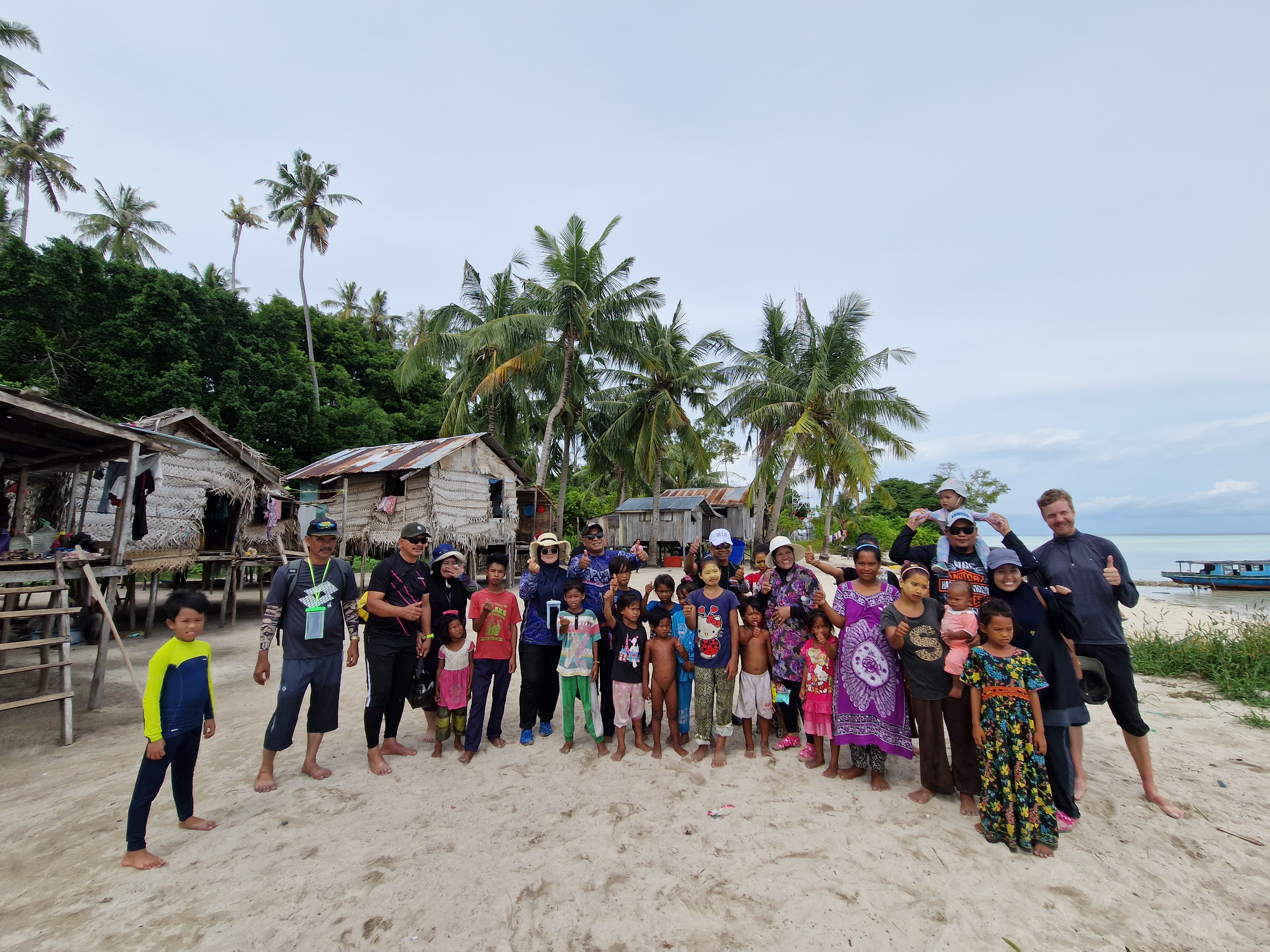


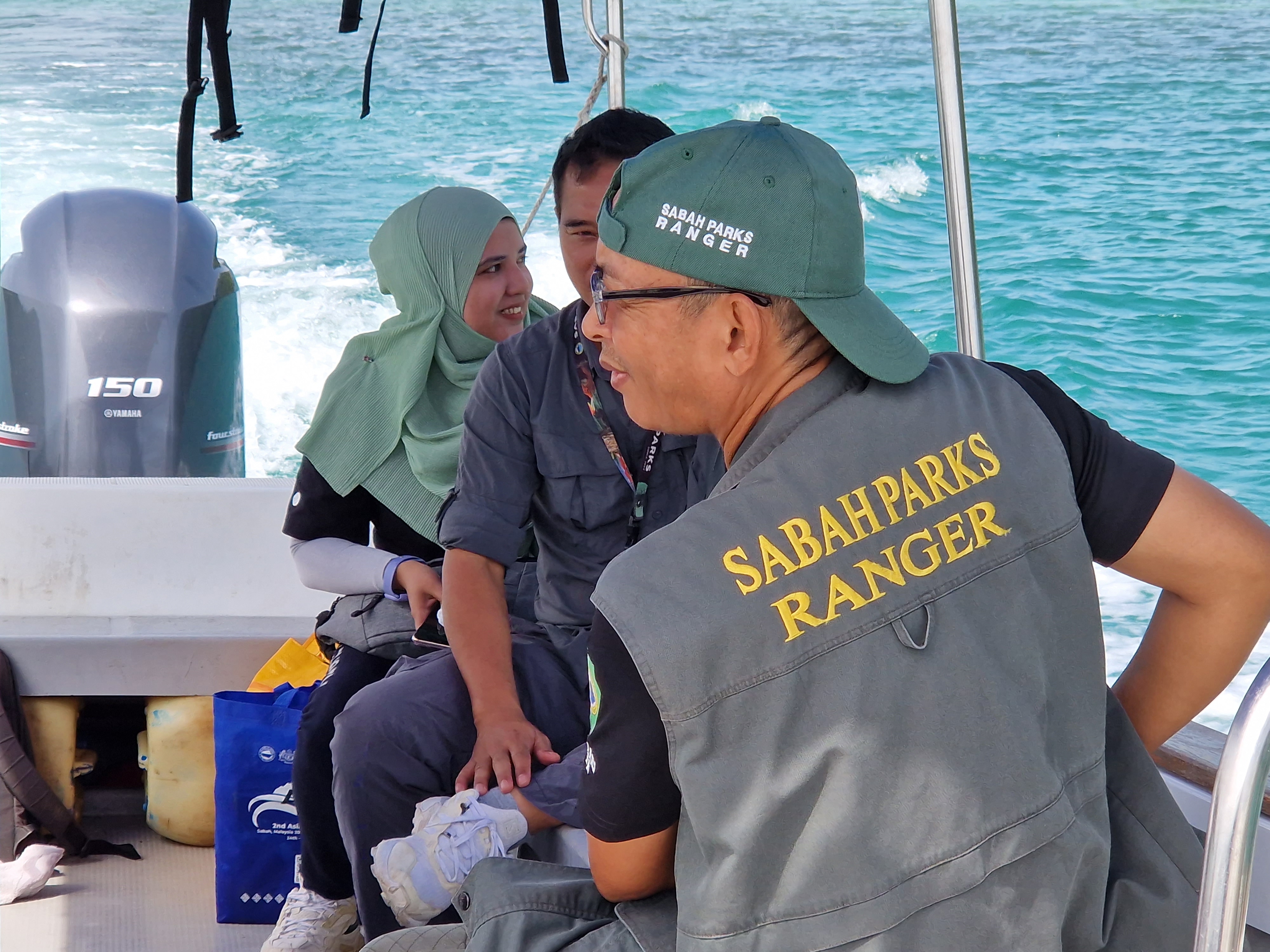

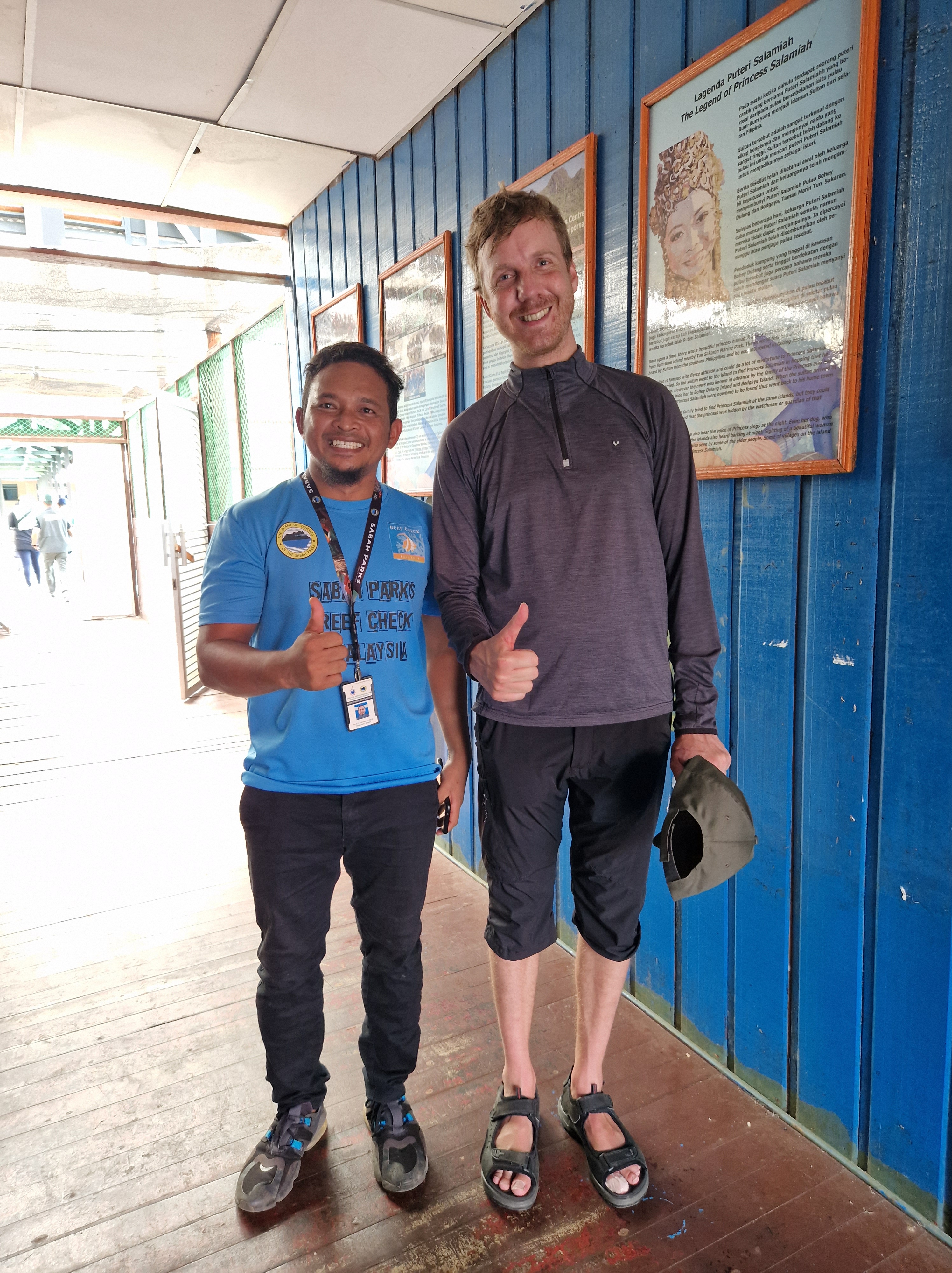

The final stop was the paradise island of Sibuan, home to a small group of Sama Dilaut, Malaysian soldiers, and Sabah Park rangers. On Sibuan, we stumbled upon a Photo Safari session. Two overly talkative and enthusiastic interpreters, who were themselves Sama Bajau, urged all the Sama Dilaut children to line up. A group of tourists from the Malaysian mainland then handed out snacks to the children. Afterwards, mandatory photography ensued, and I was invited to participate.
Following Terence on a Busy Work Day
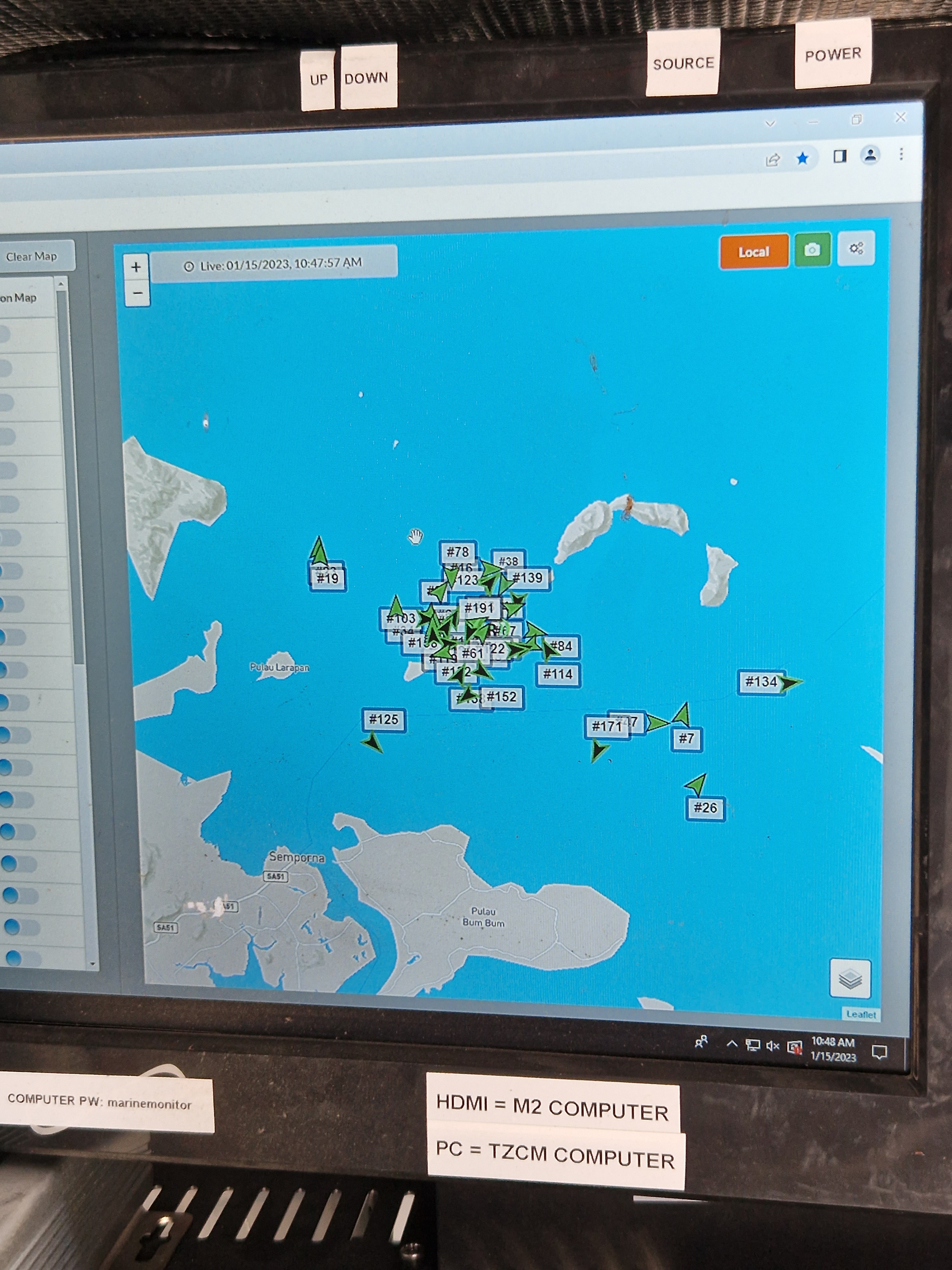
While in Semporna, I joined Terence, who had come down from Kota Kinabalu, on a day trip to check on his bomb-detecting sensors scattered throughout the area. Stop Fish Bombing Malaysia has over 10 sensors covering a large part of the sea. Terence explained that the number of explosions had dramatically decreased, especially near Bum Bum Island. However, some sensors had been bombed by fishermen who opposed the initiative. We also checked on a radar installed on Sanlakan Island, which helps track boats involved in fish bombing.




Visit to Bangau Bangau
One day, I visited Bangau Bangau, home to many Sama Dilaut who arrived from Sitangkai in the Philippines in the 1960s. Most villagers now have Malaysian Identity Cards, but many who came later remain undocumented. Some of the residents have become middlemen in the fishing trade or taken on regular jobs, with their cars parked next to the water bridges, while others continue as traditional fishermen.
I reconnected with an old friend, Si Wanti, a former boat driver who had taken me out to sea many times in the past. Now, he makes a living from small-scale net fishing. I gave him shark and coral fish posters in Sinama, which fascinated many of the elders. An old man living in the same compound as Wanti was particularly happy to see the shark poster. When I read out the names of the sharks to him, he was amazed that I even knew their names. He looked at the collage for a long time, identifying the sharks one after another. He was impressed that all the sharks had been put together in one photo and remarked that the person who took the photos must be very brave.
Reflections and Key Takeaways
Throughout my trip, I learned more about the fish value chain. For instance, moray eels are bought for 5 RM per kilo and sold for 15 RM per kilo in Tawau, representing a 200% increase in value. It’s clear that the Sama Dilaut are not adequately compensated for their hard work. They dive and fish under harsh conditions, only to sell their catch for a pittance, benefiting middlemen and end consumers who enjoy seafood at low prices. Industrial fishing forces down prices, leaving subsistence fishermen and the environment to pay the ultimate price.
People are constantly pushed to their limits, driven by physical needs and market forces. While only those higher up the value chain may become wealthy, the majority must keep pushing themselves and their environment daily. Despite the hardships, the Sama Dilaut have a deep fascination and love for the sea. They cherish moments of peace with their loved ones, swaying with the waves and watching the sunset after a fulfilling meal. However, their constant struggle for survival amidst harsh conditions places them in the grip of structural violence.


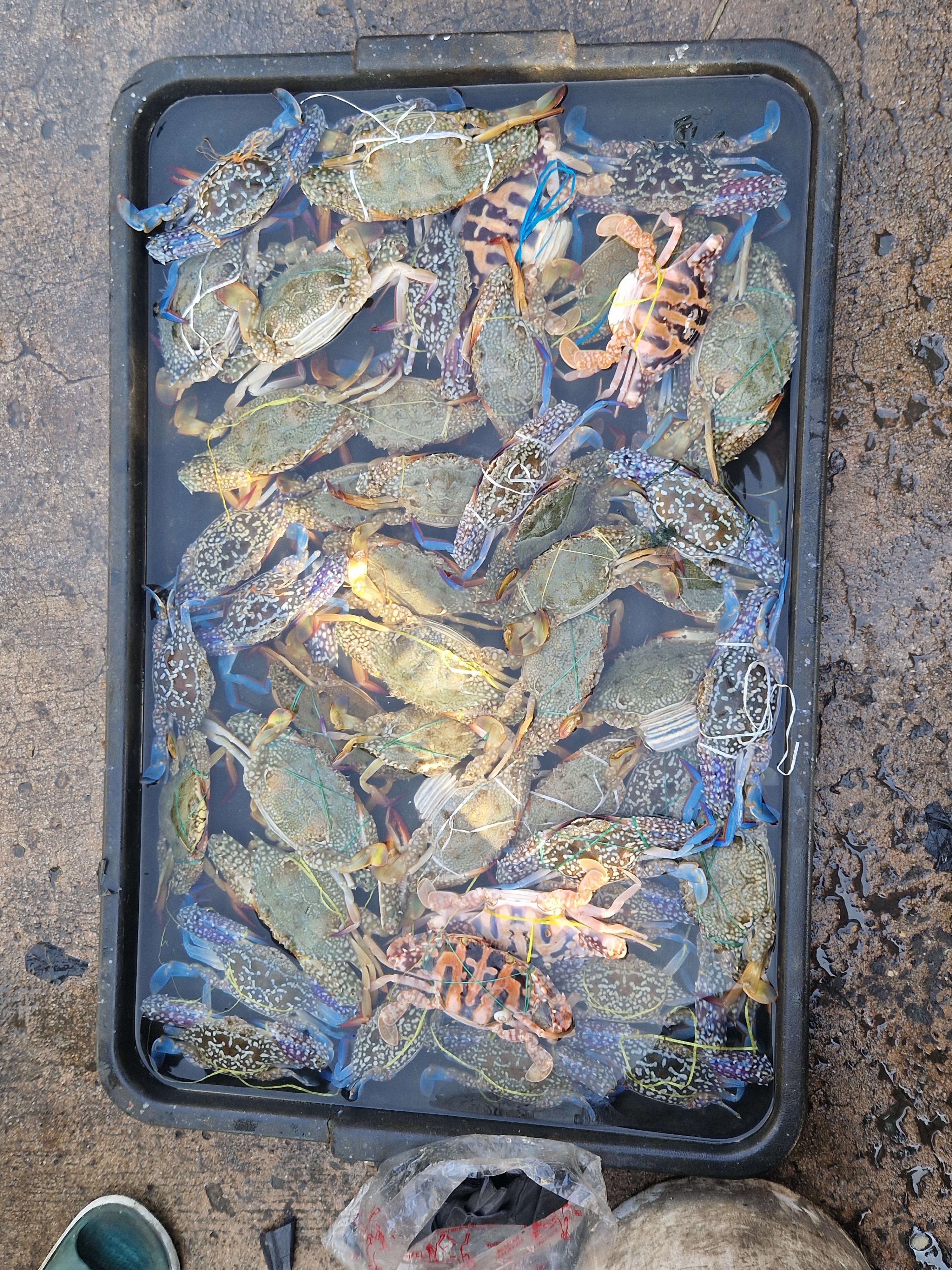


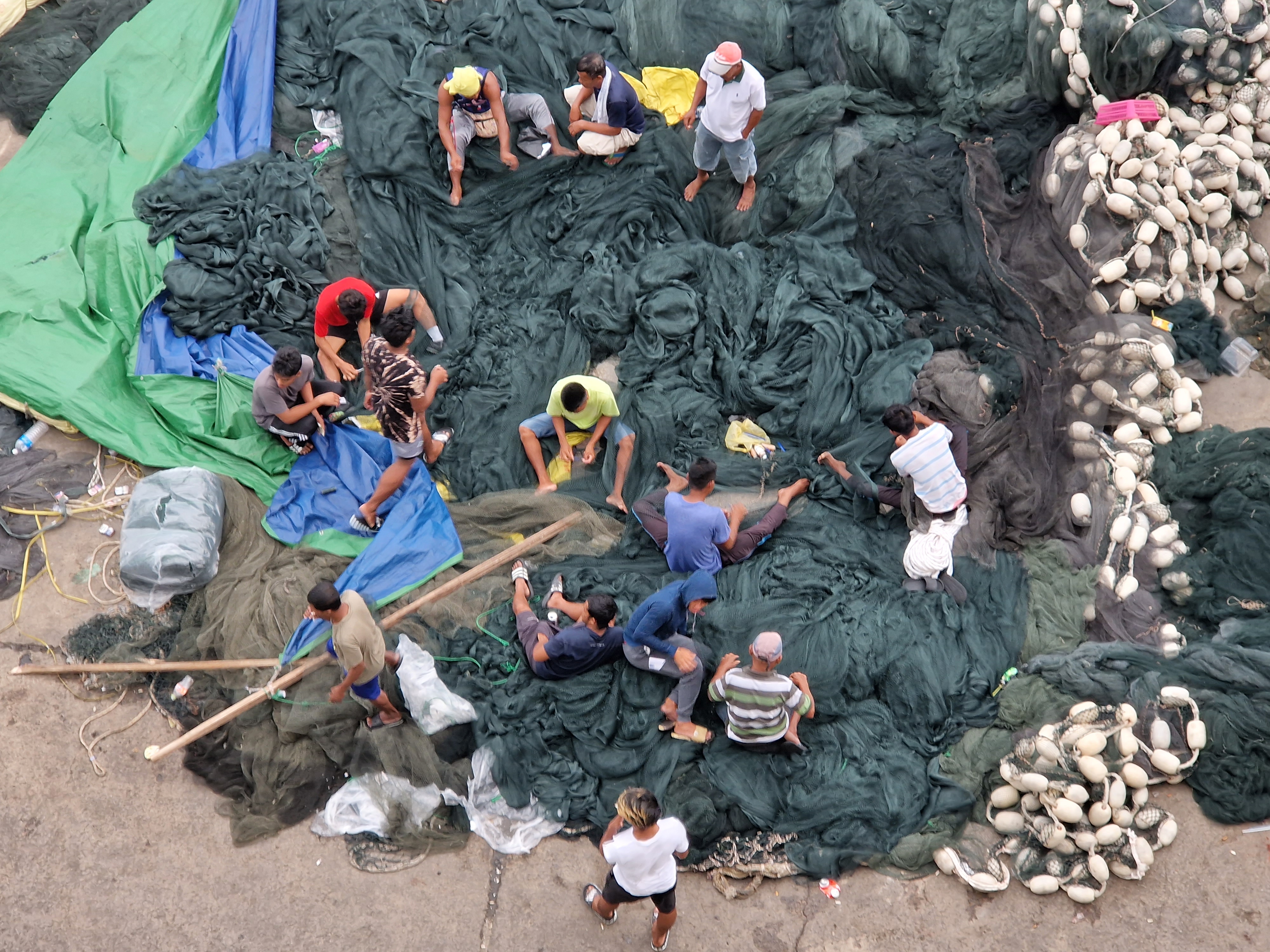
Fish serve as a lens through which we can explore important issues such as conservation, destructive fishing methods, and the structural violence faced by the Sama Dilaut. Despite their hard work and fishing skills, the Sama Dilaut continually struggle with capital and opportunities, often losing out in the economic trade. Most Sama Dilaut today live near marine national parks like Tun Sakaran Marine Park in Semporna and Tun Mustafa Marine Park in Kudat. These areas prohibit large-scale fishing, creating a niche for Sama Dilaut and other groups.
However, competition is intense, and resources are limited. Coral bleaching is already a concerning development in the area, threatening the delicate marine ecosystems that the Sama Dilaut depend on for their livelihood. Their resilience and deep connection to the sea highlight the need for greater support and sustainable practices to preserve their way of life and the marine environment they depend on. Ensuring the sustainability of these ecosystems is crucial not only for the Sama Dilaut but for the broader health of our oceans.
The resilience and deep connection to the sea exhibited by the Sama Dilaut, despite the immense challenges they face, underscore the urgent need for greater support and sustainable practices. By preserving their way of life and the delicate marine environment they depend on, we not only honor their rich cultural heritage but also safeguard the health of our oceans for future generations. Their story is a powerful reminder of the intricate bond between humans and nature, and the critical importance of fostering both community and environmental sustainability.
Sama Dilaut of Semporna: Fish Bombers or Peaceful Nomads?
For more than one month I have been living in Semporna, in Sabah, where I have visited remote islands and several Sama Dilaut (Bajau Laut) communities. I have talked to sea nomads, been diving, attained a wedding and continued to learn the basics of Sinama.
One thing that surprises me is the life pulse and energy I always feel when I visit a Sama community. Even if I go to Semporna or remote parts of Mindanao I always get the same feeling.
Hundreds of sea nomads
In Semporna hundreds of house boats have their moorage, either close to one of the many islands in the region or simply in Semporna town close to the Sama Dilaut communities Kampong Halo and Bangau Bangau. They make their living entirely from the sea: they are net fishing, hook-fishing, spear gun fishing and dive for sea cucumber and pearls. During low tide they also go along the shallow corals and collect sea shells. It is fascinating to see the water adaptation of the Sama – an adaptation that starts in early age. A child learns to swim when it is 2-3 years old, it learns how to paddle a boat at five and dive at the age of six.


Dynamite Fishing
Unfortunately, some of the Sama Dilaut fishermen are also involved in dynamite fishing and compressor diving. Fish bombing is, of course, devastating for the marine life as it completely destroys the corals. But as one fisherman told me: “when I go hook fishing I must wait a long time for a catch, but if I throw a bomb I will get plenty of fish in seconds!” Of course, bomb fishing is highly illegal and leads to imprison and big fines. I met one pregnant woman with small children whose husband and oldest son had been caught bombing fish, which left the family without livelihood.
It is important to note, however, that it is unusual that boat living Sama make a living from dynamite fishing. It is much more common among more settled, house-dwelling Sama Dilaut fishermen.
Refugees from Philippines
Nearly all Sama Dilaut in Sabah are refugees from the Philippines. Many of them lack Identity cards and passports. A majority doesn’t even have a birth certificate. Without ID you have no right to get medical support (it costs 50 RM, approximately 17 USD without ID for a medical checkup and only 1 RM if you are a Malaysian citizen) and schooling. However, many Sama Dilaut have a “lepa passport” (a houseboat passport) authorized by the local government which gives them right to stay in the waters of Sabah.
Probably, the reason behind Sama Dilaut’s partly devastating fishing methods is linked to the fact that they are not recognized as legal – as a matter of fact many Sama Dilaut do never set their foot on land because of fear of deportation. Hence, if you are living there illegally and don’t get any support from local authorities, you might be tempted to get involved in devastating fishing practices.
Ethnic discrimination
When I talk to the Sama Dilaut they all tell me one thing – they are afraid of the Tausug people of the Sulu – which have ruled the area for centuries. Today many Tausug are armed and some of them have been in part of the creation of the Abu Sayyaf guerilla. For decades they have been fighting against the Philippine government in order to establish a free Muslim state in southern Philippines. Recently, a peace agreement were settled which has calmed the overall situation, but single Sama individuals are still under huge threat (see: Philippines peace deal is far from a done deal for more information). Their catch and their machines are taken under night. Young women are forced to marry which make them escape in the middle of the night. Bombs have been thrown into their houseboats.
In Philippines, the police don’t do much to ease the situation for Sama Dilaut. In Malaysia, however, the police and military are very active, and thousands of tourists are arriving every year, which make the situation calm.
Have they always been nomads?
It is estimated that the nomadic lifestyle of Sama Dilaut is more than 1000 years old, but I have wondered if the present day sea nomads always have been living in the boat, or if they till recently have been living in houses? During my first month of stay with Sama Dilaut I have been asking many nomads about their history. As a matter of fact, some of the present day sea nomads have actually quite recently been living in houses in Philippines, but they resurrected their forefathers way of living when they came as refugees to Malaysia. It is still unclear how many of the nomads that have been nomads for generations, and that is one question I would like to figure out during my six month long stay in Southeast Asia.
In one week I am going to Philippines where I will visit the Sama Dilaut community in Matina Aplaya, Davao City. Here many people are living entirely on spear-gun fishing and they use no compressors and no dynamite. I am really looking forward to come back to Mindanao!


 The Aquatic Ape