For a Living Ocean

Latest

Living with Sea Nomads 2012-2013

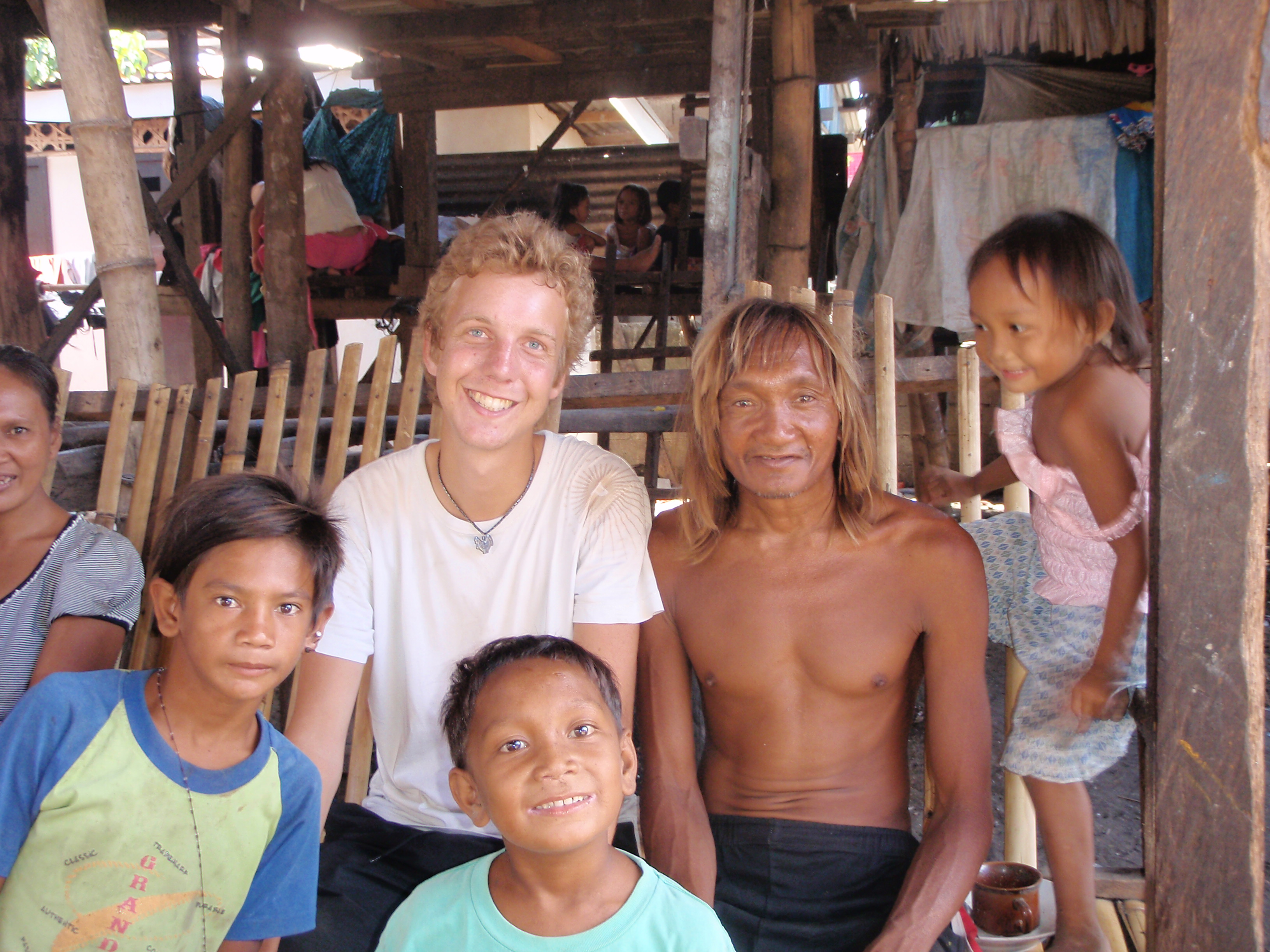
On October 18th,  I am heading towards Southeast Asia for a six months long stay with Bajau Laut – The People of the Sea.

My first stop will be on Borneo, Malaysia, where I will live among Bajau Laut sea nomads. Still, more than hundeds of people spend their entire lives on boats. Here I will gather material for my Master Thesis on dynamite fishing and make a short movie about Bajau Laut’s maritime lifestyle. Thanks to Barnens Stipendiefond that has given me a grant for making the film!

During the journey I will also spend time in southern Philippines, where I will visit a Bajau Laut community in Davao City – where I have lived for several months.

In the beginning of next year I am also heading towards Sulawesi, Indonesia, where I will live among Bajo people (they are relatives of Bajau in Malaysia and Philippines, but speak a different dialect).

Throughout the journey I will also collect diving statistics for professor Erika Schagatay at the Mid-Sweden University. I am bringing three logging devices that will measure how deep the Bajau fishermen dive and for how long they stay under water. The most interesting data is, though, their underwater working time during a longer period of diving.

I will make continuous updates on the blog during the journey.

Tribal Olympians

To celebrate the 2012 Olympic games, Survival International reveals some of the astonishing skills of the world’s tribal peoples, from the Awá archers of the Amazon to the Bajau divers of Borneo: Tribal Olympians.

“Scientists have discovered that the Bajau are submerged for up to 60% of the time they spend in the water, which is nearly as long as a sea-otter”. The source of this information comes from a research made by Erika Schagatay, Angelica Lodin-Sundström and Erik Abrahamsson during 2010 and 2011.  You can find the article here: Underwater working times in Ama and Bajau Divers

From the Survival International article: “Swifter, higher, stronger was the motto that Pierre de Coubertin, founder of the International Olympic Committee, coined for the Olympic Games. How far can a Hamar man jump; how deep can a Bajau pearl-hunter dive?

The astonishing skills of tribal peoples are not only a measure of just how swift, high and strong we can be as humans – where our physical and mental limits lie – but an indicator of the extraordinary diversity of mankind.

In short, they show us – just as the Olympians will in the London 2012 Games – what it is to be human”.

Mysteries of the Seafloor – The Great Barrier Reef visualized in new Project

Google Ocean, which was launched in 2009, is now starting a new project, Catlin Seaview Survey which will focus specifically on the Great Barrier Reef – the largest coral reef in the world. The project is a joint venture between Google, the University of Queensland and the Catlin Group.

Tens of thousands of 360-degree, high-definition panoramas of underwater forests, grasslands and crags will be taken by robot camerasvand made available on the internet. You can read more about the project in this ain The Guardian: Virtual diving: underwater panoramas of the Great Barrier Reef – in pictures.

Google Ocean has made it possible for any Internet user to explore the under water world, in what has been called “virtual diving” . Here you get the possibility to explore the ocean – which contains 99% of the biosphere.

Google Ocean contains information from leading scientists and oceanographers. Individual divers do also contribute – who knows what Bajau Laut would depict if they were getting a camera in their hands?

Bajau and Moken kids with Great Underwater Vision

In the end of Decmber we visited Bajau Laut in Davao City, Philippines, where we went fishing and diving at the coast of Samal Island. The Bajau children in Davao learn how to dive in an early age. They have a superb underwater vision and learn how to fish with a harpoon in the age of ten.

This slideshow requires JavaScript.

The researcher Anna Gislén at Lund University has studied the underwater vision of Moken children at the southern coast of Burma. She found that they have the capacity to maximally constrict their pupils and therefore focus on small objects under water. She has also shown that all children have the potential to see clearly under water – but they will have to practise for weeks. You can find the study here: Superior Underwater Vision in a Human Population of Sea Gypsies

Here you can also see a short BBC-movie about Moken’s ability to see clearly under water:

Article on Indigenous People’s Diving Skills

Swedish scientists have studied the diving skills of Ama in Japan and Bajau Laut in Philippines. The result is fascinating: the divers in both groups stay in general more than 50% of the working time under water while spearfishing or sea harvesting. Erika Schagatay, professor at the department of engineering and sustainable development at Mid Sweden University, has lead the study.

The study gives strong support to the idea that repeated diving has played an important role in the human evolution. Read the article here: Underwater working times in Ama and Bajau. The article was published in March 2011 in Diving and Hyperbaric Medicine.

New Book about the Aquatic Ape Theory

Recently a new book on the Aquatic Ape Theory was published: Was Man more aquatic in the past? – Fifty years after Alister Hardy. A large number of scientists from different fields have contributed to the impressive book. More and more the AAT-proponents seem to agree on that a maritime lifestyle have been shaping our physical and mental characteristics all the way to Homo Sapiens, ant not only at the time of the divorce from the forefather of the chimpanzee.

I hope that this book will make anthropologists as well as other scientists and the general public more at ease with the idea of a great maritime impact on the human evolution.

Sea Bed Hunter in Semporna, Borneo

Back to the Boats!

In Semporna, Borneo, you can probably find the highest concentration of houseboats in the world. The nomadic lifestyle does also seem to be flourishing, as some of the new houseboats are  more robust than many of  the stilt houses.

Back in Malaysia I visited Danawan island where more than 100 houseboats are anchored from time to time. Danawan is one of the most isolated islands in the region and just one hour boat ride from the Philippines; a country which is frightening many people.

“We all come from the Philippines”, one of the Bajau boat dwellers said. “But we can’t live their anymore; some pirates threw fish bombs in to our boats”. In Semporna the Bajau Laut remain their nomadic lifestyle, traveling from island to island or city to city in search for fish and buyers. “We use to travel between Lahad Datu and Semporna”, one man said. “Some of my friends also go to Indonesia”. When I asked if they prefer to stay on the boat instead of in a house, they generally say yes. “We can move freely on the boats”, one woman said, “but we have to avoid the strong waves”.

This slideshow requires JavaScript.

The Bajau Laut generally have a very good health. They eat cassava, sea vegteblaes and fish – a diet which can be recognized as “indigenous”. More or less everyone is slim and they seldom get sick.

But the truth is that they can’t afford to be sick – as health care is very expensive for non-Malaysian citizens. “In Malaysia we have security, but we have no support from the government”, the woman said. Without identity card it is impossible to get education and health care. Bajau Laut are literally ignored by the Malaysian government. They can freely dwell in the Malaysian water due to their status as indigenous people, but they have no possibility to gain from the social system. Even if they have stayed there for 10-15 years they can’t get a Malaysian citizenship, as they have no birth certificate and no money.

Still, Semporna can be seen as a heaven for Bajau Laut. Here the fishing is good and water is clean – making the spearfishing and dwelling to an ideal lifestyle. Actually they are living in a symbiosis with the thousands of tourists that  every year visit Semporna, for diving and recreation. The Malaysian government wants to preserve the fish populations and they know that tourists love the beautiful islands and the exotic stilt houses. Therefore, house building on the islands are more or less impossible, if you don’t get a very expensive permission. But the Bajau Laut, on the other hand, can build as many houses they want – if they keep it small.  The waters of Semporna is, hence, both a free state for Bajau Laut and a paradise for the tourists.

The houseboat communities live in co-existence with land bounded Bajau communities. Most nomads don’t speak any other language than Sinama and they depend on trade to get cassava and, more recently gasoline. But most fresh water and dry wood can be brought from nearby islands, like Danawan.

Bajau Laut are facing discrimination from the surrounding society. They are looked down upon by other Bajau groups who have been in school, learned Malay and adapted to the Malaysian society. “I don’t have any ‘Pala’u’ friend”, one woman in Danawan islands said. “They don’t take a bath for a week”, she explained. In general Bajau Laut have darker skin than other Bajau people and bleached hair, due to the many hours on sea – making their status even lower.

Bajau Laut know how to survive and have done so for centuries. But they are put aside by governments and discriminated by their neighbors. They are also increasingly facing problems due to over-fishing and climate change, and who knows what their future will look like. But maybe, as water level rises, their nomadic lifestyle will have a renaissance. Back to the boats!

Short Documentary in Swedish Radio

Here comes a link to a reportage in the Swedish Radio and the programme P3 Planet, in Swedish: “De dyker djupare och djupare tills det spricker”. (They dive deeper and deeper till the eardrums rupture). The reportage is about Erik Abrahamsson’s stay with Bajau Laut in the Philippines.

20 years later …

How much has a Bajo village changed in 20 years? It was one thing that I wanted to find out when I went to Topa in southeast Sulawesi.

Erika Schagatay, a professor in Human Physiology at the Mid-Sweden University, was there for 20 years ago when she documented the diving skills of Bajo fishermen.

I brought some pictures from her last trip, and when I arrived to the village they were really excited to the see the old photos. They told me that I was the third visitor in 20 years (an Australian tourist had been there for a couple of years ago), and the children were afraid of me in the beginning, but became soon used to the strange foreigner.

So, what about Topa? Actually very little seems to have changed over the last 20 years. Most houses are still of traditional style, nearly every family make their living from the sea, and most children spend half day in water.  But of course, some of the inhabitants have mobile phones and many houses has an electricity source.

“We came here 60-70 years ago”, the community leader said. “Before we lived on boats, which we had done for centuries before that. We are Sama Asli” – the ‘genuine’.

I spent some intensive days in Topa before I started the long journey back to Malaysia. The children became more and more confident with my presence and we went swimming several times. And as you can expect – they are great divers!