For a Living Ocean

Latest

Photo Book: A Visual Journey Through the Lives of the Bajau Laut

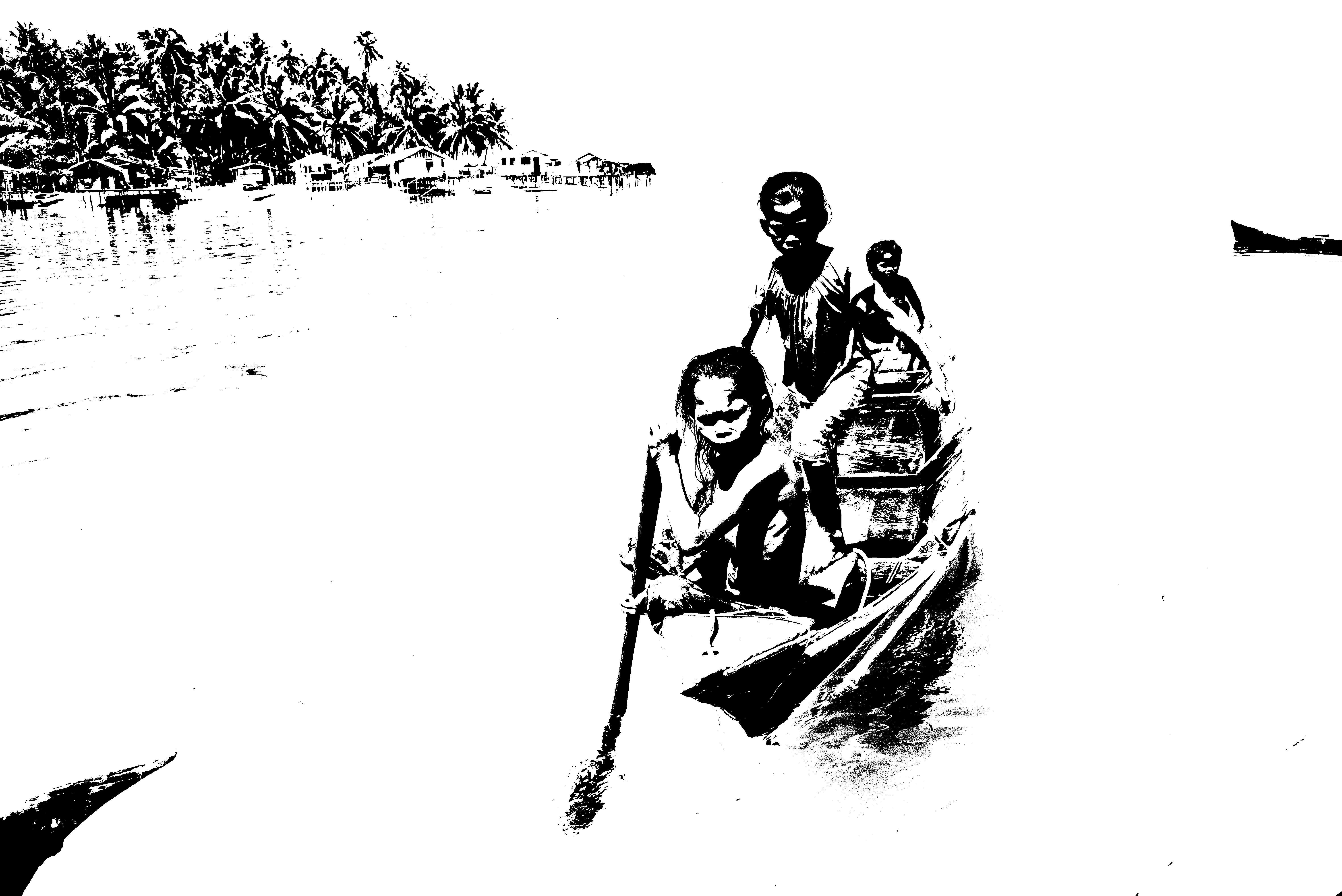
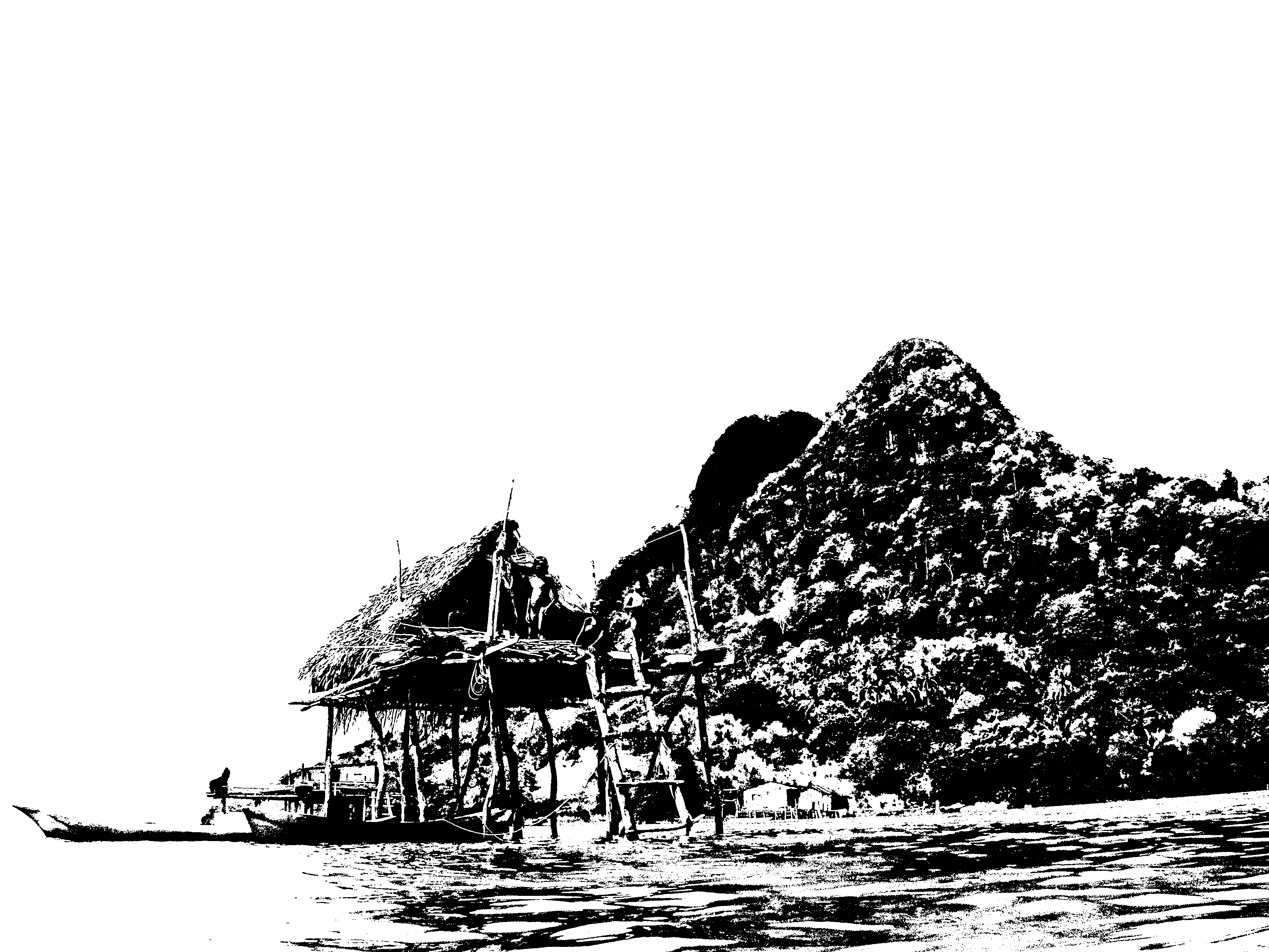
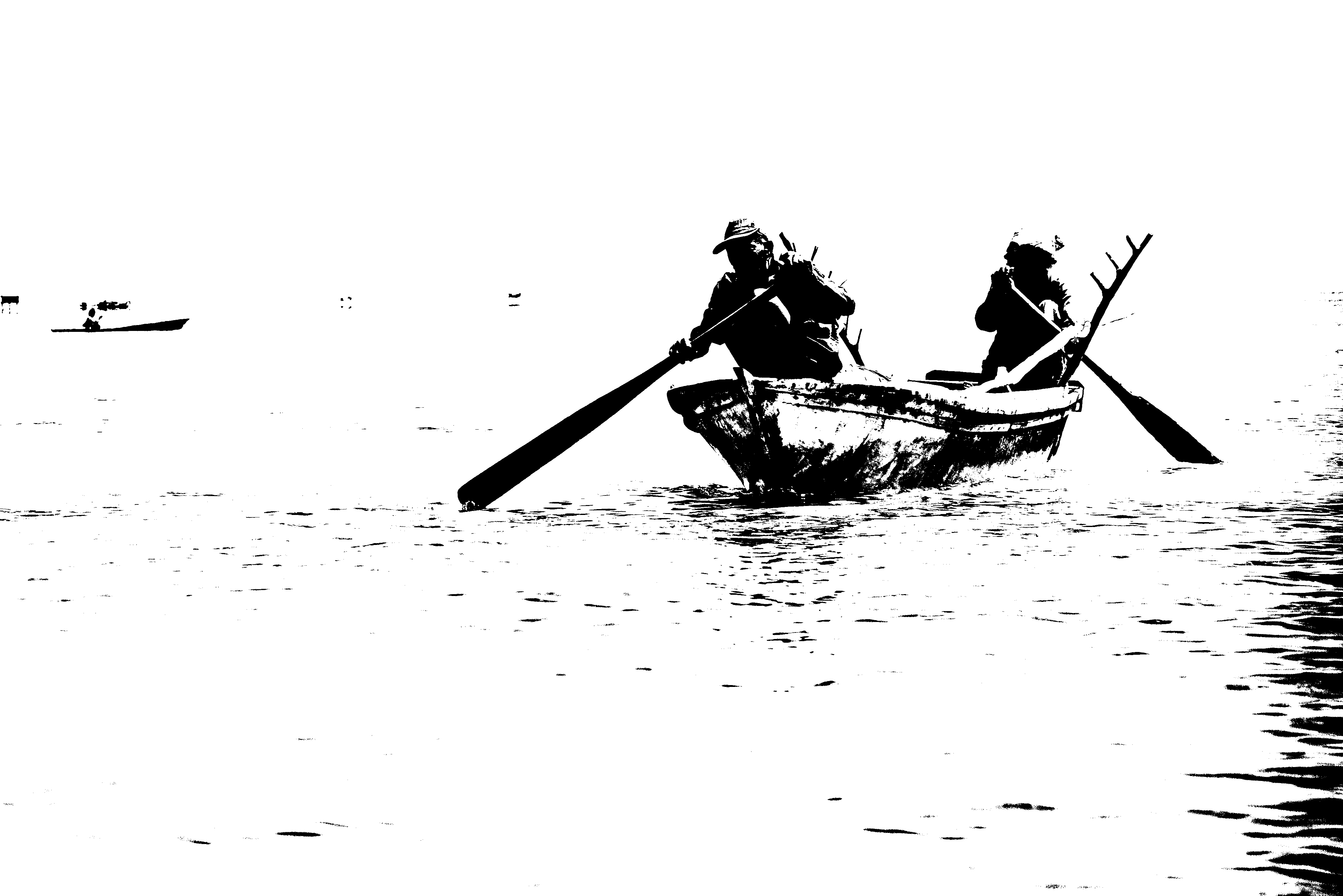
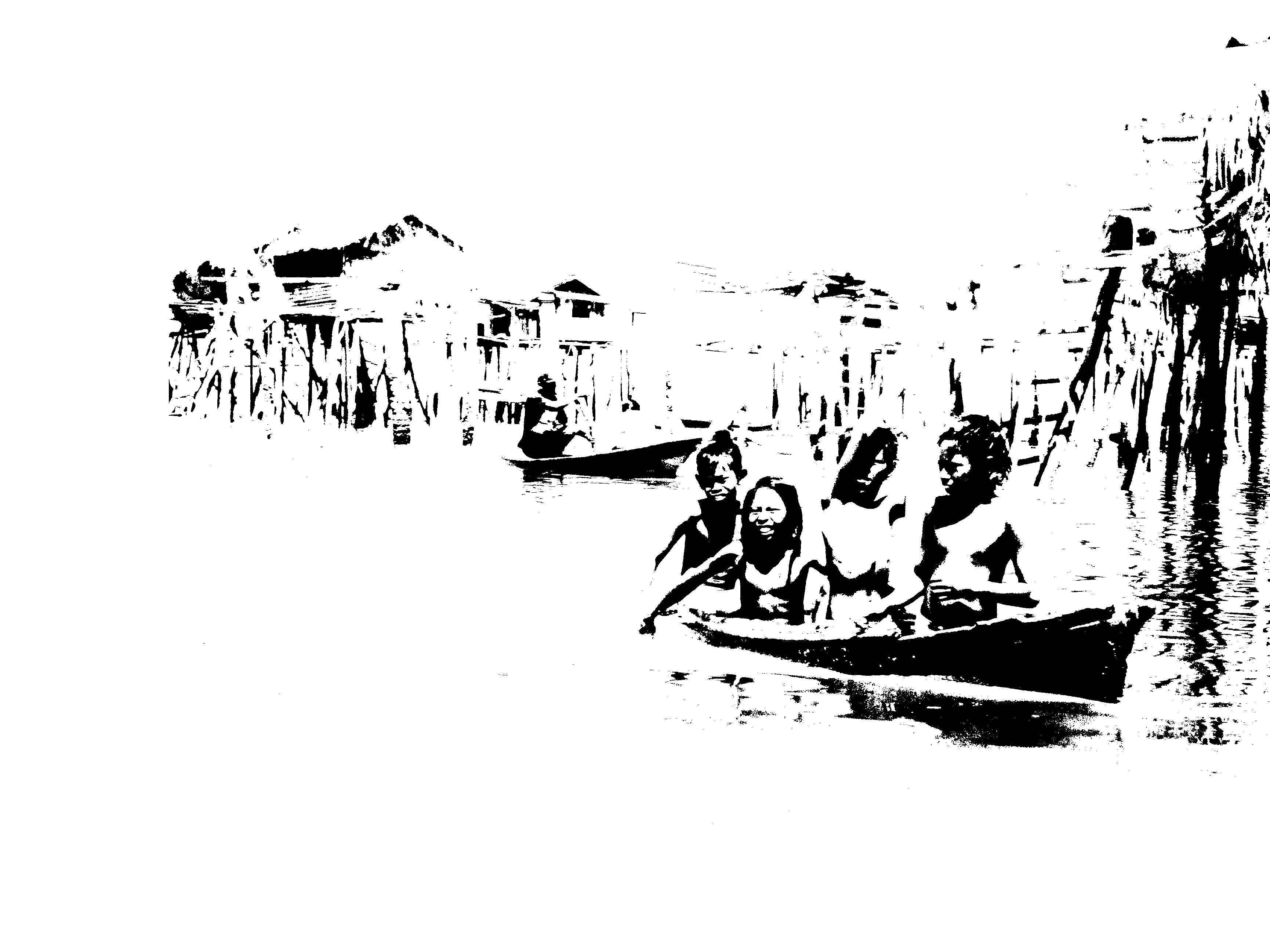
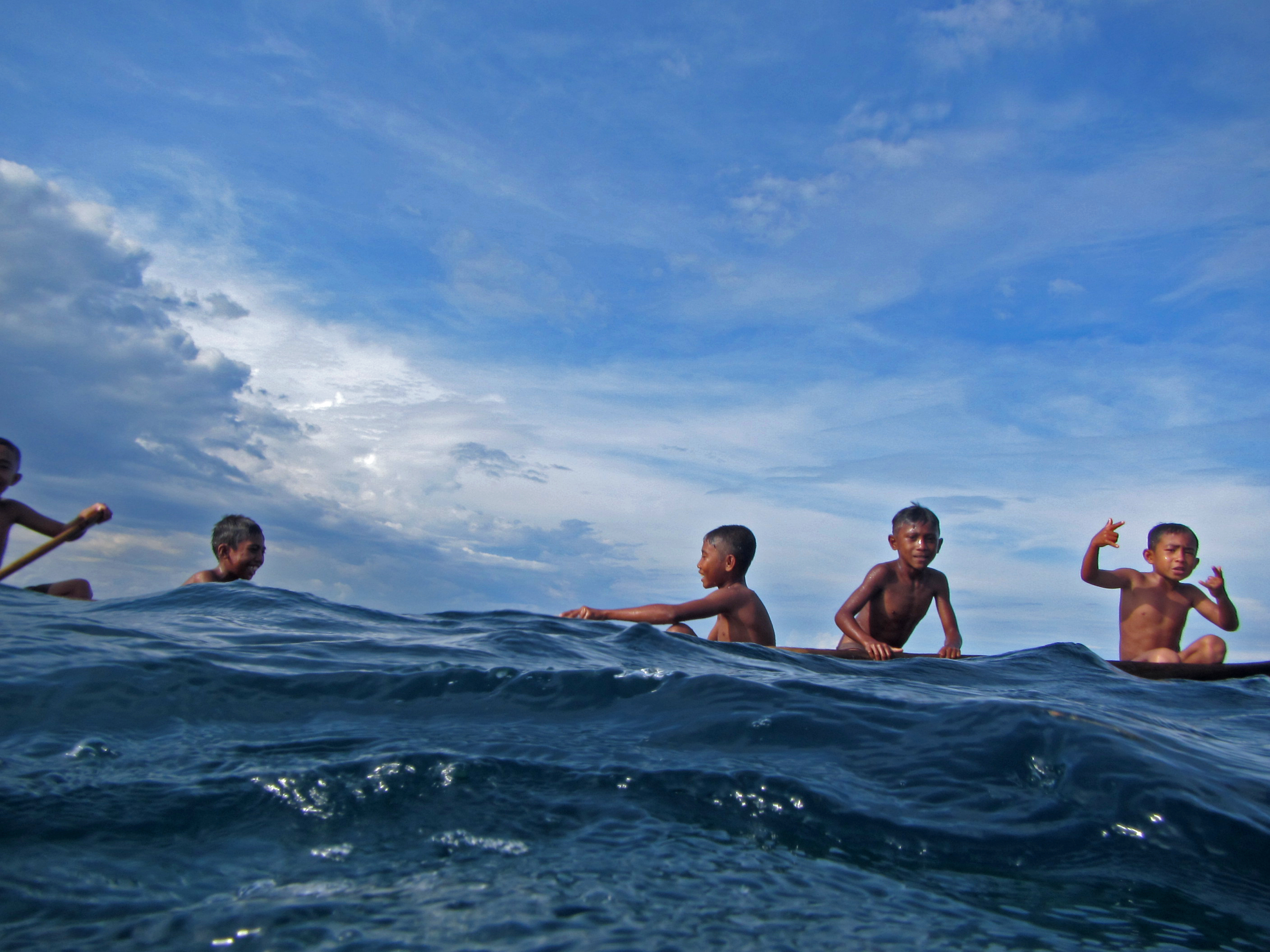
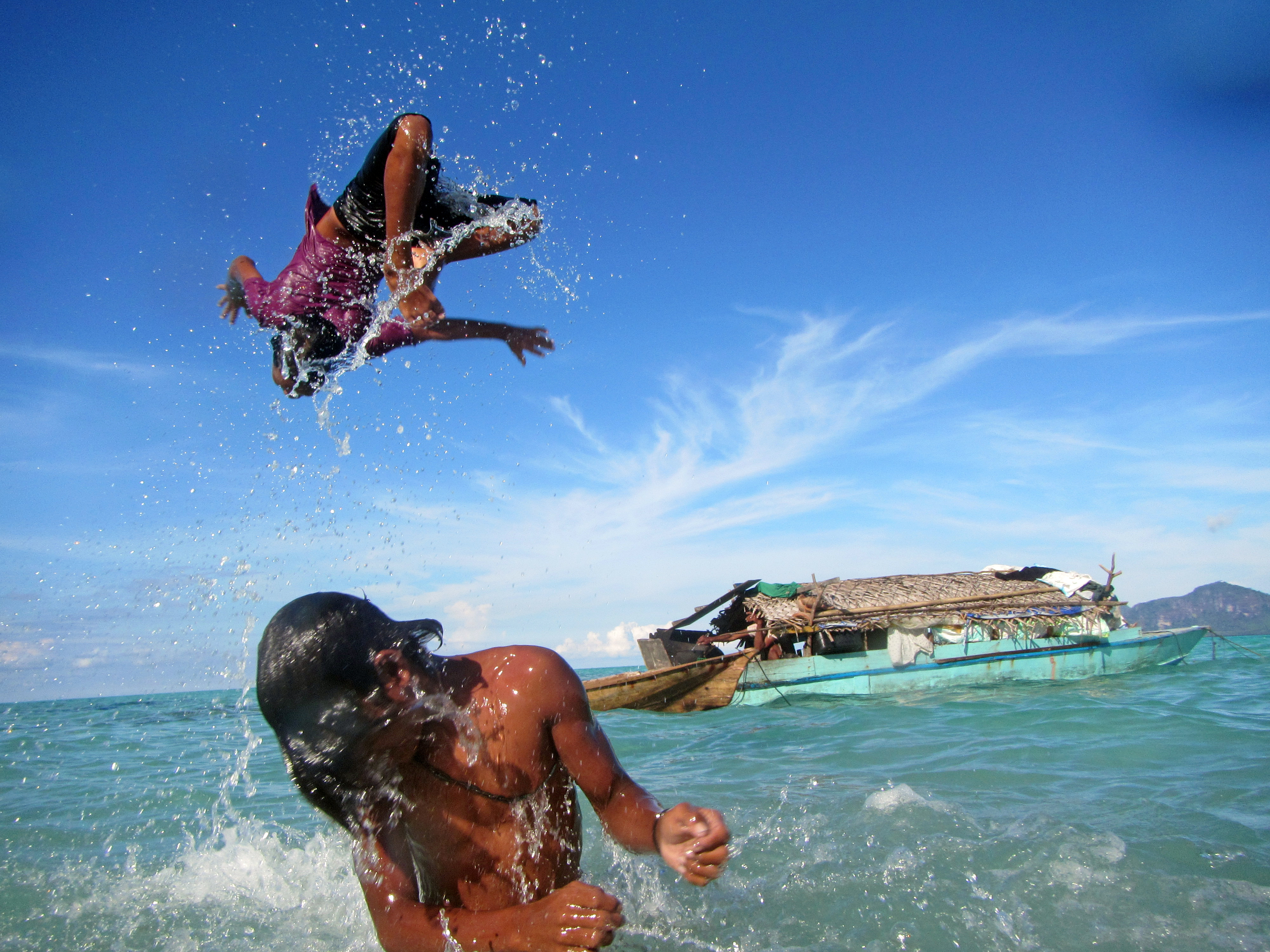
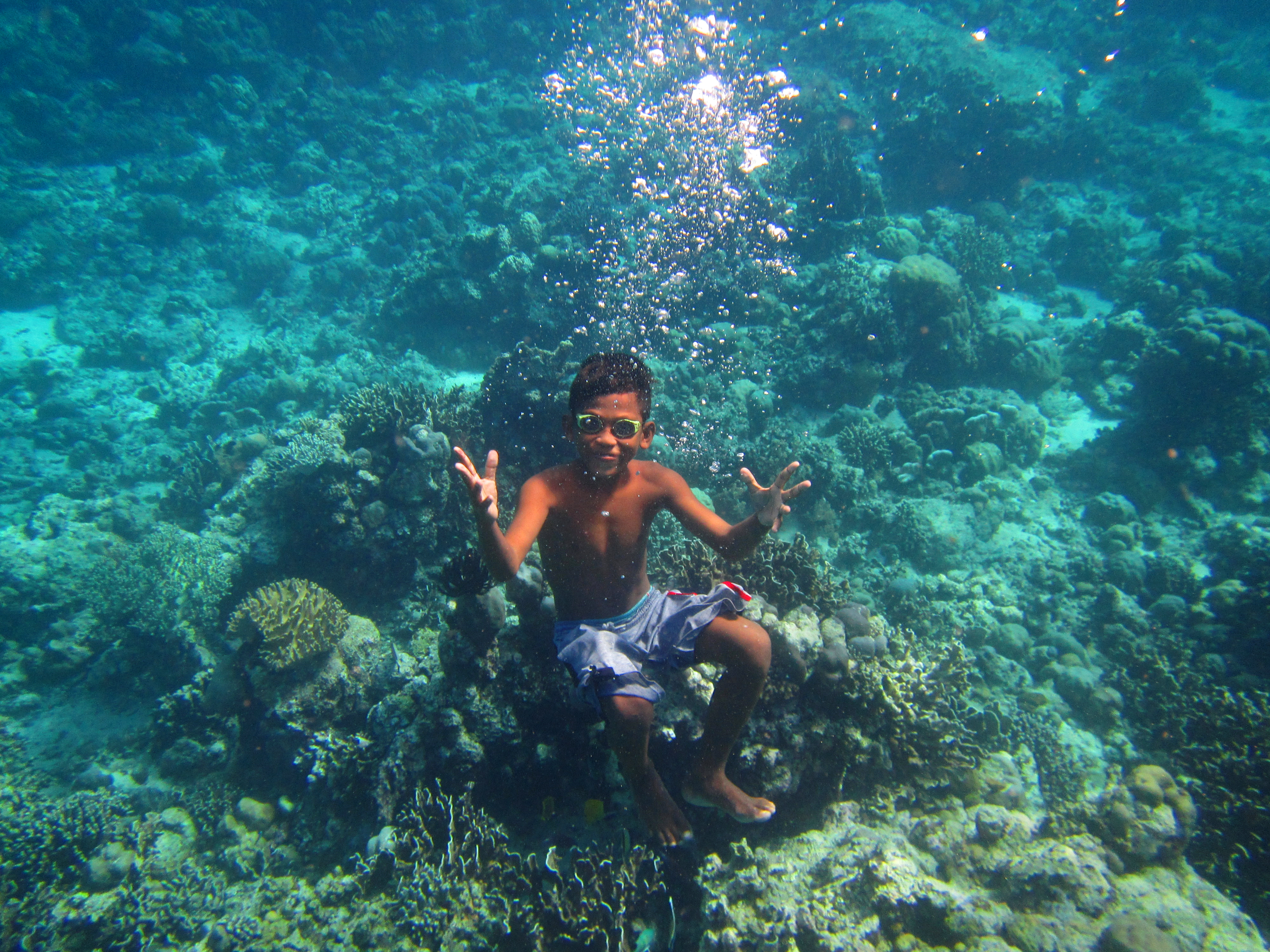
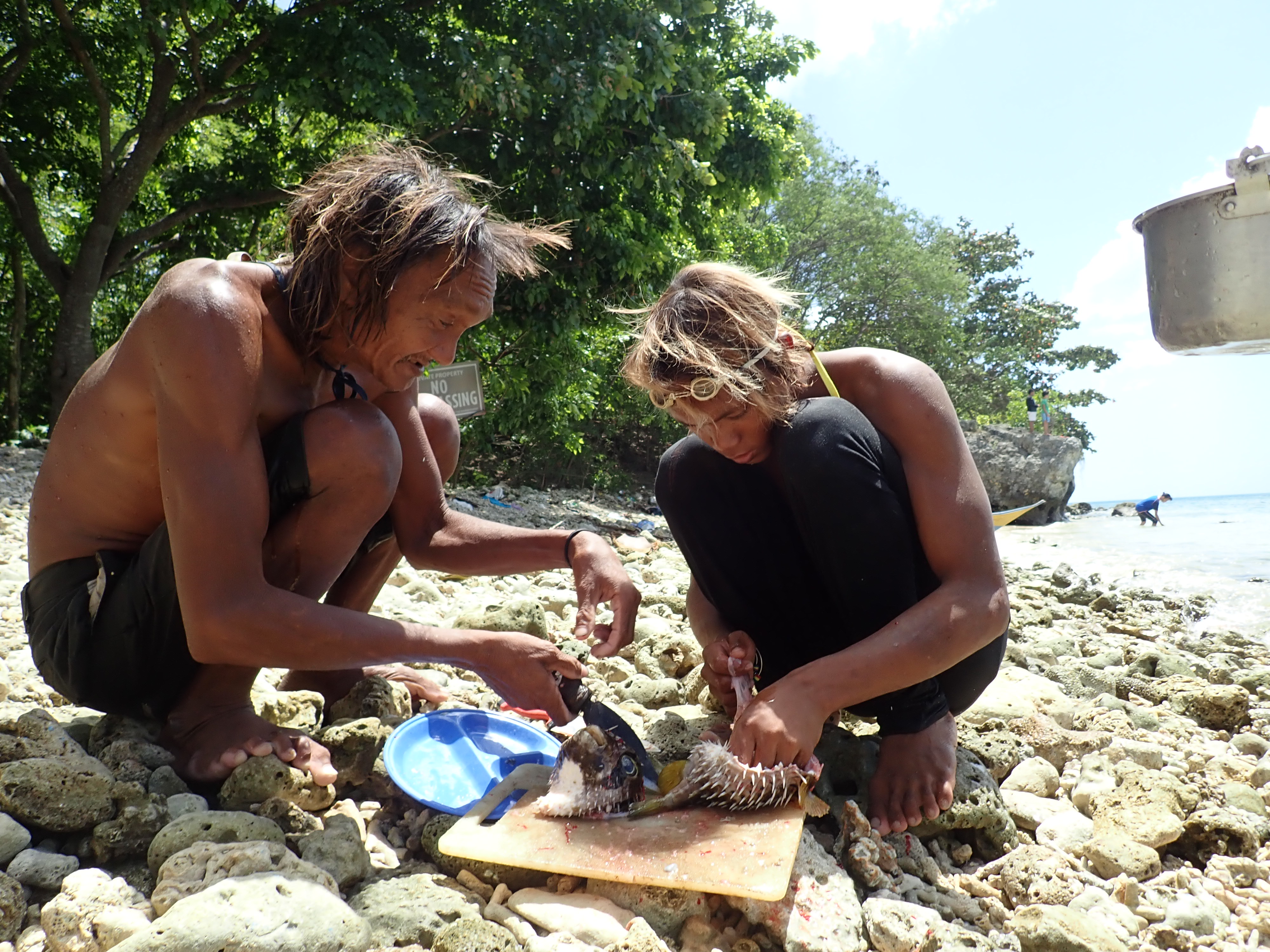
I am excited to release my latest photo book, which takes you through the captivating world of the Bajau Laut. Through a blend of vivid photography and engaging narrative, this book aims to bring you closer to the Bajau Laut — their everyday beauty, stark realities, rich culture, challenges, and their intimate bond with the ocean.

In this photo book, my goal is to offer more than just images; I strive to tell a story, convey emotions, and illuminate the unique cultural and environmental context of the Bajau Laut. Through my lens, you’ll experience the day-to-day life, the struggles, and the incredible resilience of these sea-faring people.

You can find the PDF version of the book below. Whether you’re a lover of photography, culture, or stories of human endurance and spirit, I hope you find this book both enlightening and inspiring.

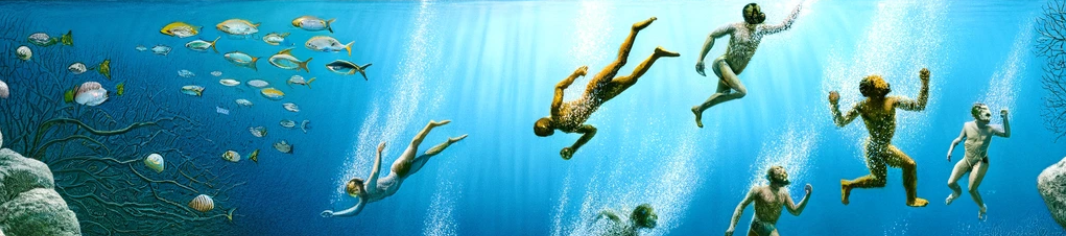
Photo book: Waves of Being – a Phenomenological Journey with the Bajau Laut

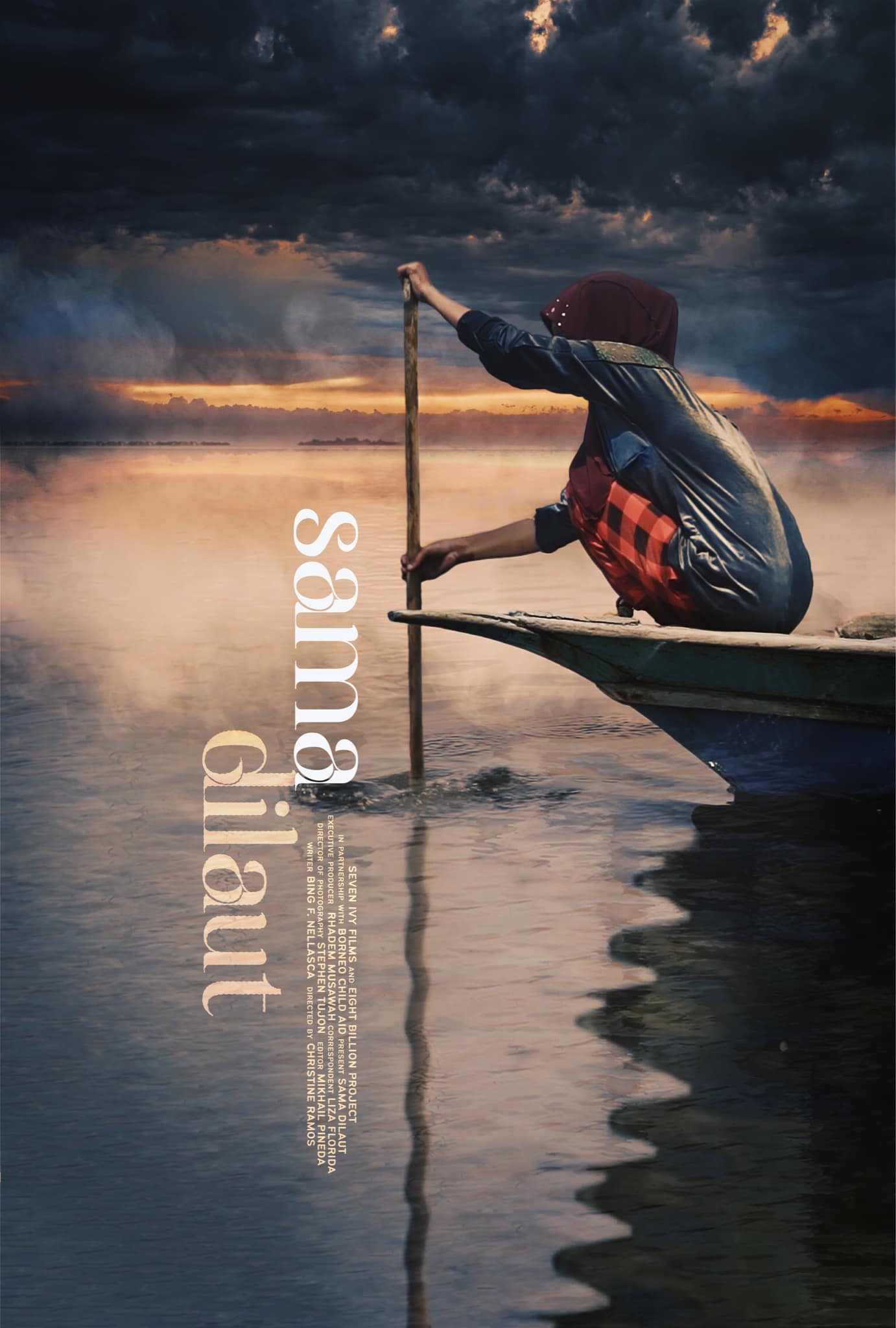
Sama Dilaut Documentary Screenings: A Wake-Up Call

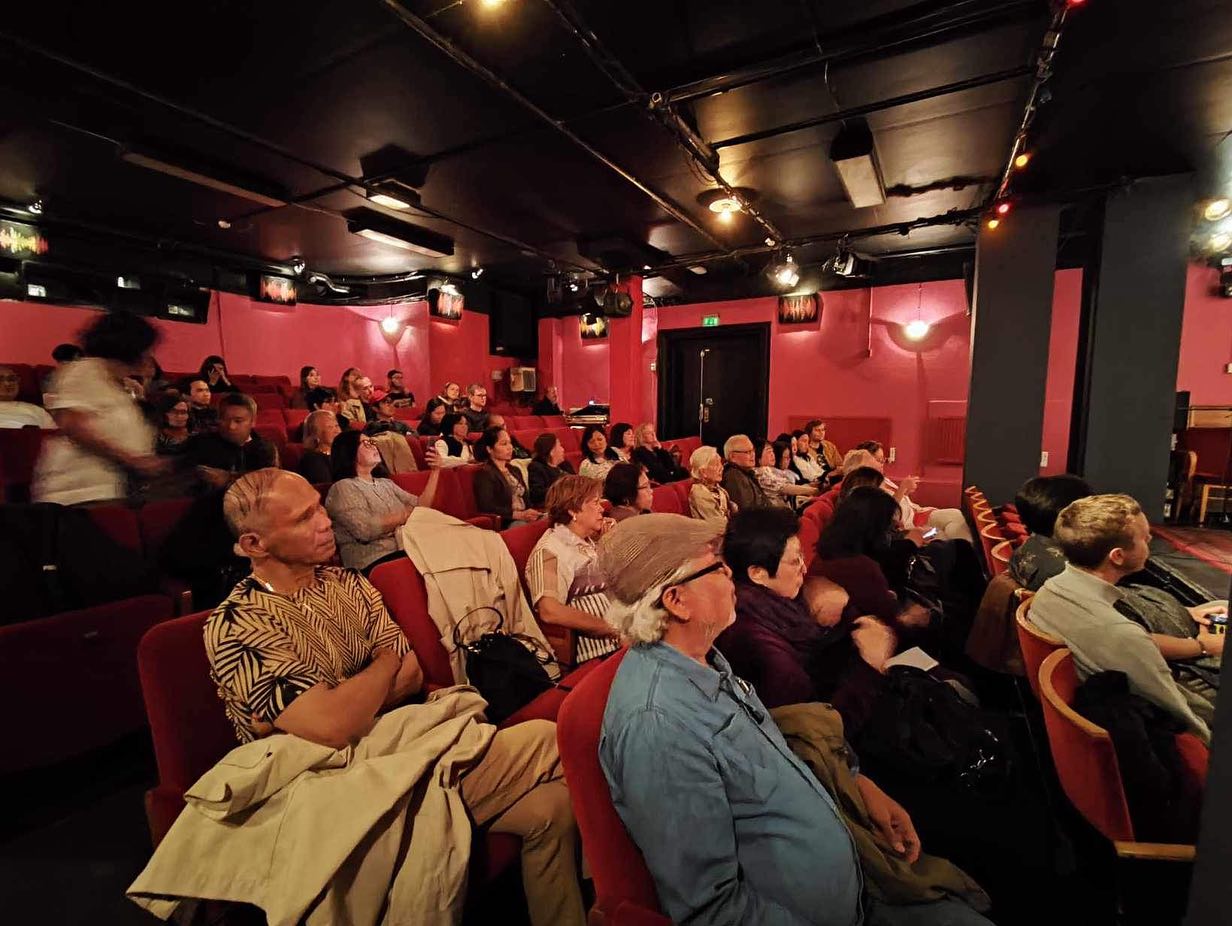
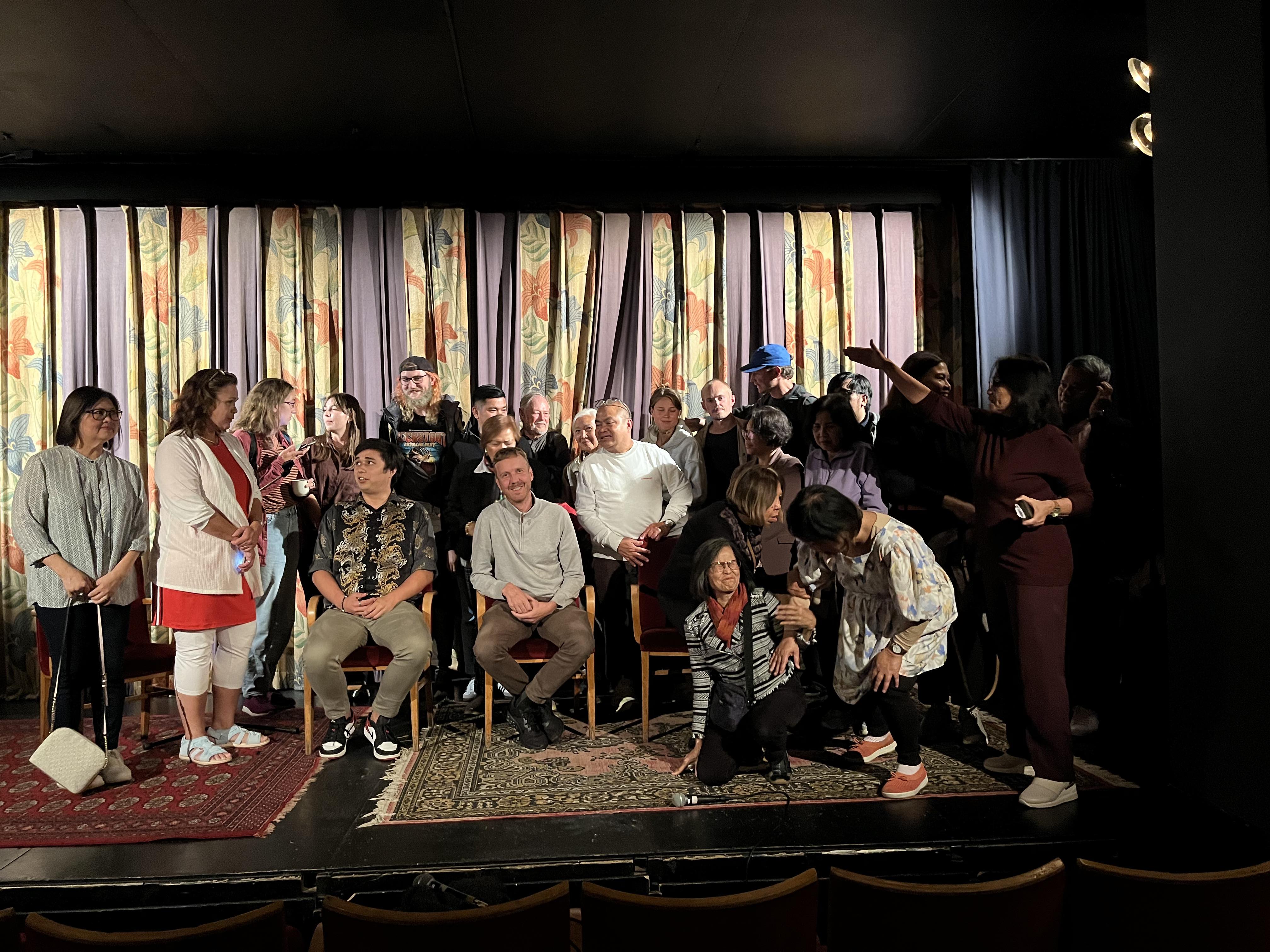
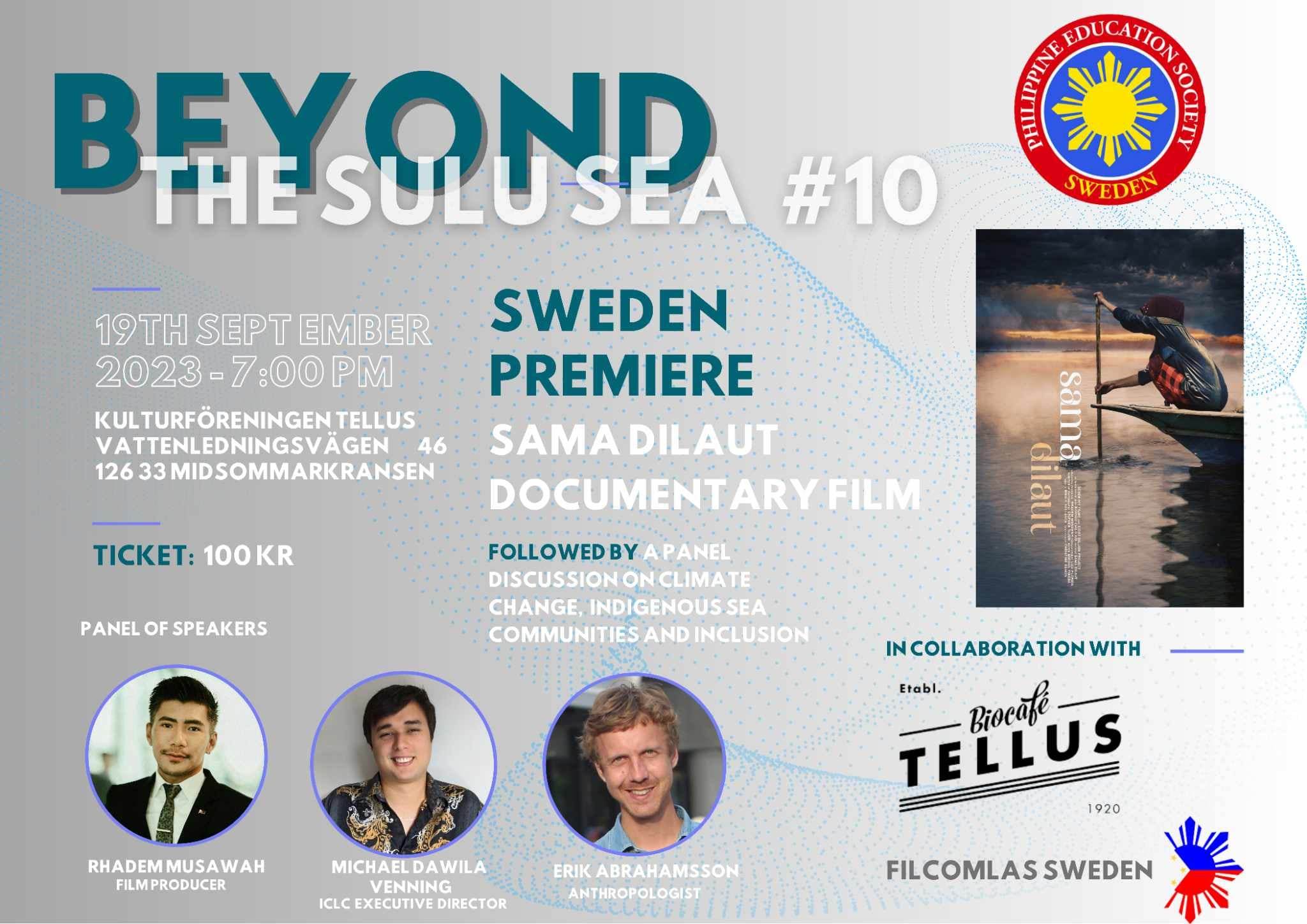
In August and September, I, had the opportunity to participate in two screenings of the documentary Sama Dilaut, held at Copenhagen Biocenter and Kulturföreningen Tellus in Stockholm. Alongside the film director Christine Ramos, filmmaker Rhadem Musawah, ICLC director Michael Dawila Venning, and other panelists, I joined a post-screening discussion to explore the struggles faced by the Sama Dilaut.

The film gives an emotional glimpse into the day-to-day lives of the Sama Dilaut in Tandu-Owak, a coastal village on southern Sibutu Island in the southwestern Sulu Sea. Here, the Sama Dilaut, along with the Tausug and other Sama communities, struggle to make ends meet. Seaweed farming is an important livelihood, but fluctuating prices and a significant cut taken by middlemen make it difficult to sustain. The film also includes footage of the boat-dwelling community in Lahad Datu, which was dispersed several years ago.

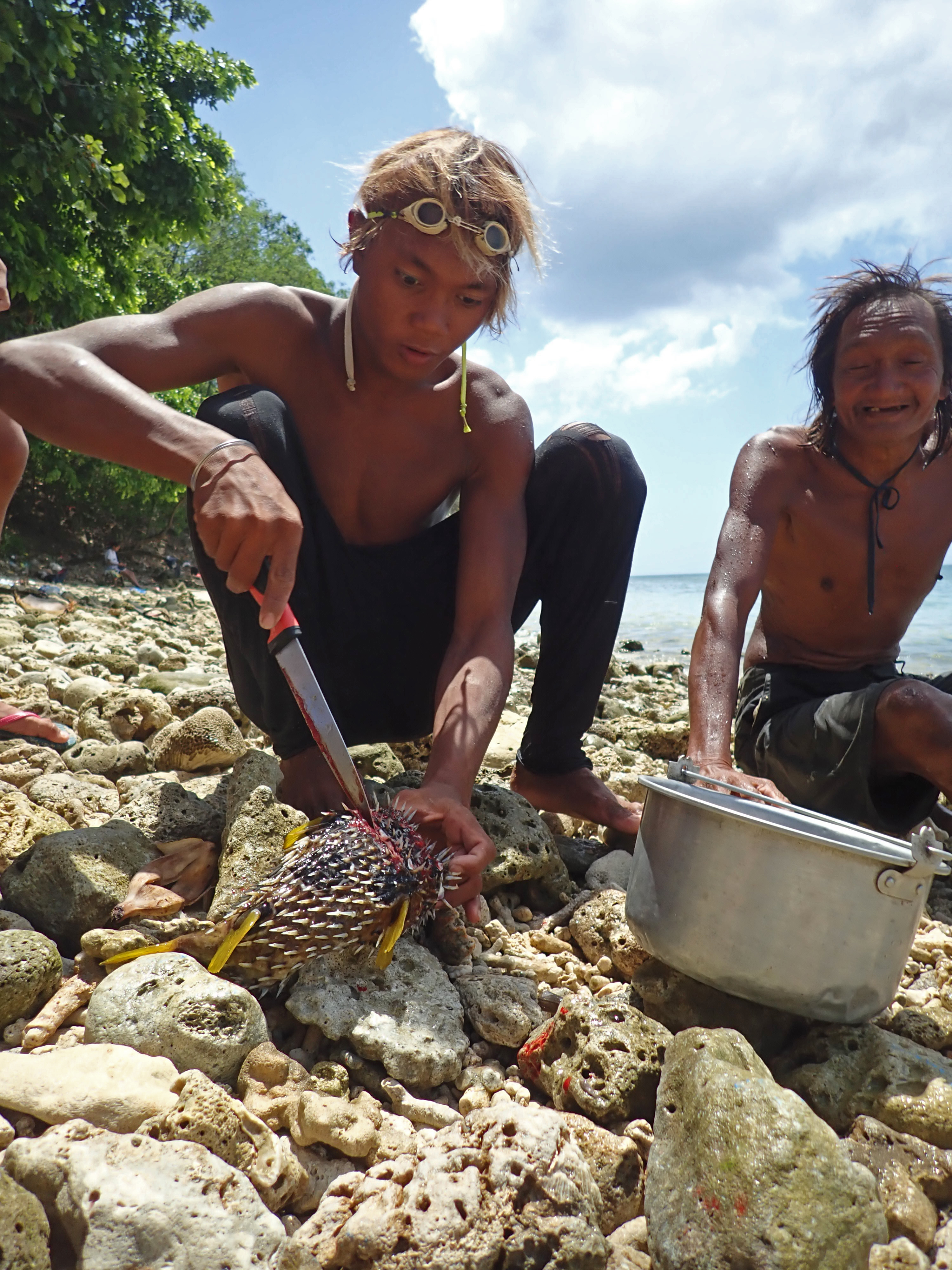
The Sama Dilaut have traditionally viewed the sea as an endless source of life, a place where fish are plentiful for those willing to work hard and explore. However, over the years, this belief has been shaken by the reality of declining fish stocks, driven by overfishing, climate change, and destructive fishing methods such as trawling, dynamite fishing, and cyanide fishing.

The film has been screened in several European cities during the summer and autumn of 2023. It is a powerful way to highlight the challenges of the Sama communities, illustrating how climate change is already transforming the oceans and threatening the lives of the people who depend on them.

Exploring Human Evolution: Visit at The Max Planck Institute in Leipzig

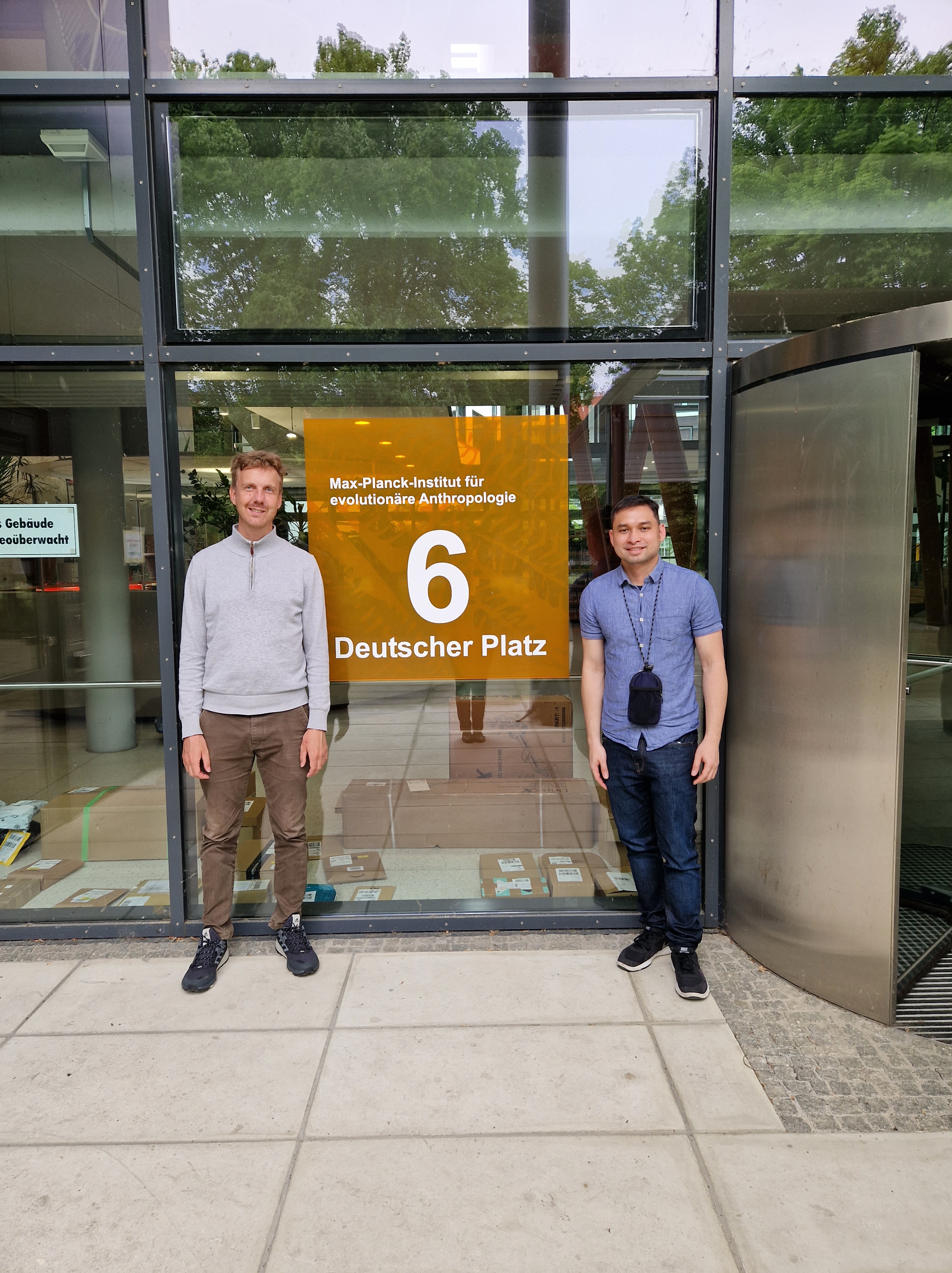
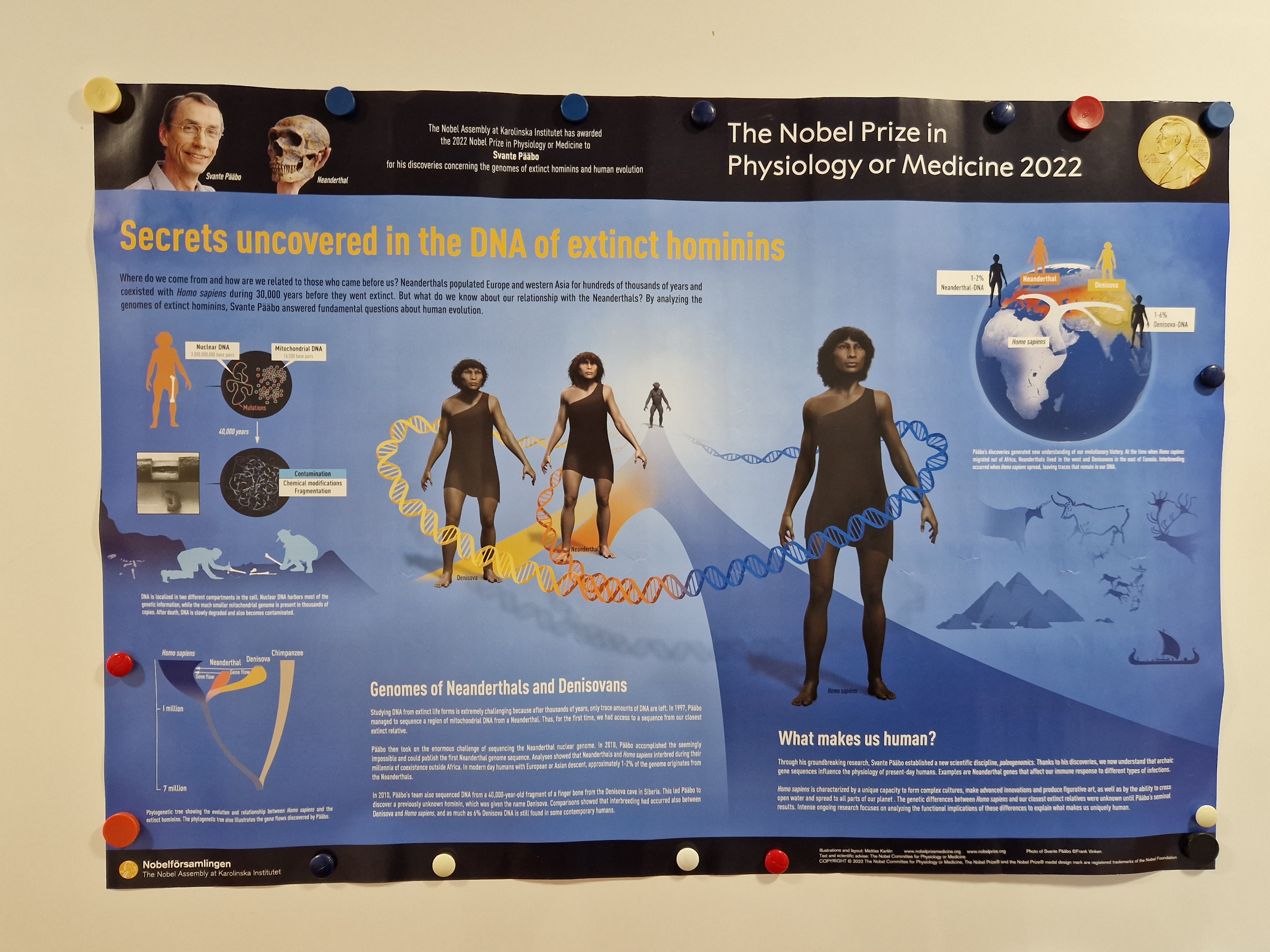
From May 22nd to May 24th, I had the opportunity to travel to Leipzig, Germany, where I visited the Max Planck Institute for Evolutionary Anthropology and met with PhD student Jae Rodriguez. This visit was both educational and inspiring, offering insights into the world of evolutionary anthropology and the fascinating research being conducted at this renowned institution. Only six months before my visit, Svante Pääbo, the director of the Department of Evolutionary Genetics at the institute, had been awarded the Nobel Prize in Medicine for his groundbreaking work on Neanderthal genomes (Nobel Prize, 2022).

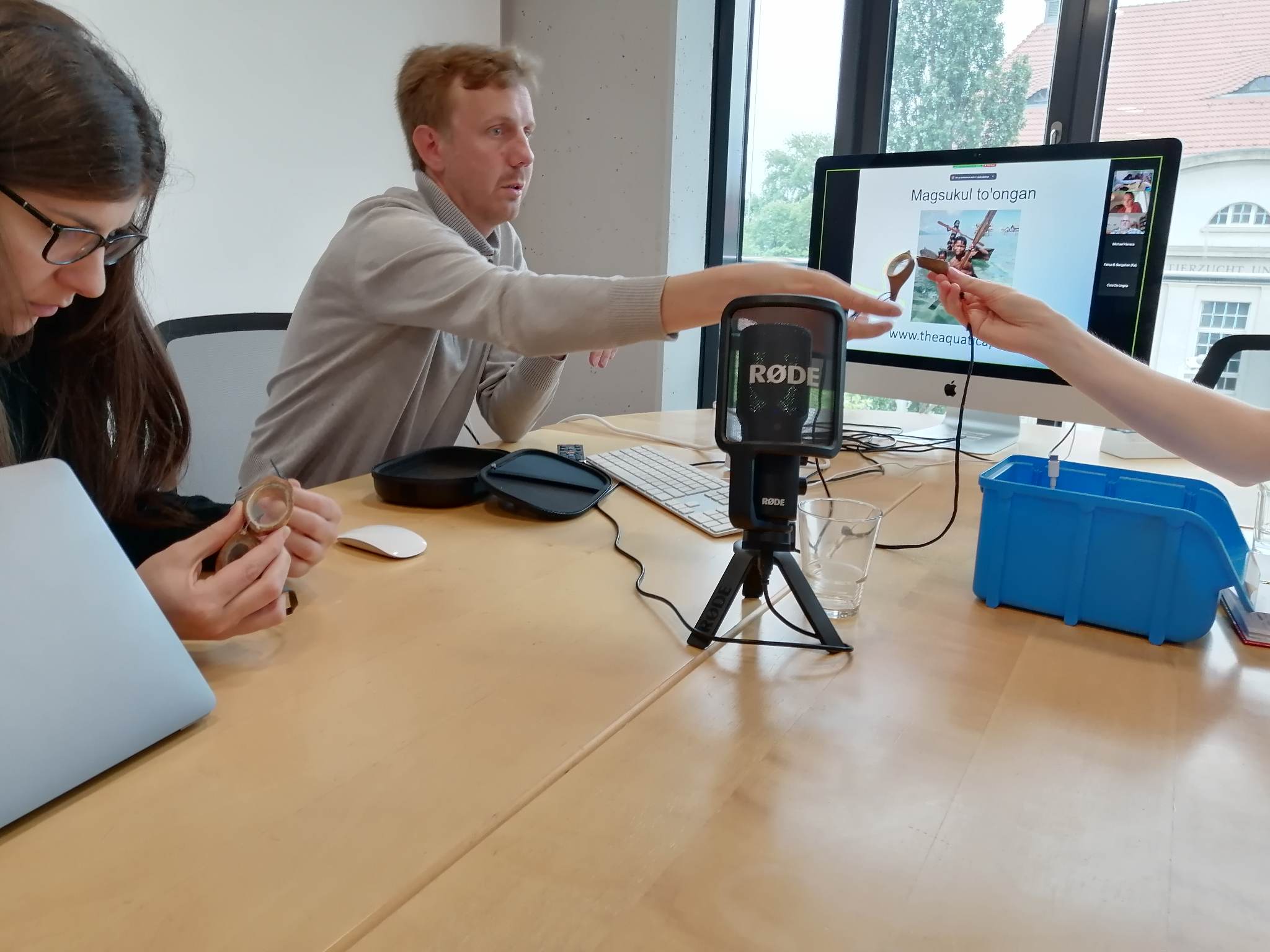
During my stay, I gave a presentation on the Bajau Laut titled “Sama Bajau: Lifestyle, History, Evolution” to a group of students, postdocs and senior scientists as part of their “Ocean’s Meeting” series. In my presentation, I delved into their rich history, cultural significance, and the political factors influencing their way of life. Additionally, I explored the physiological aspects of their connection to the sea, such as their remarkable sense of well-being while living on the water. Scientific studies support this connection, showing that the rocking of waves improves sleep quality (Perrault et al., 2019), natural water sounds enhance relaxation (Gould van Praag, 2017), consuming marine food improves sleep quality (St-Onge, 2016), and more.

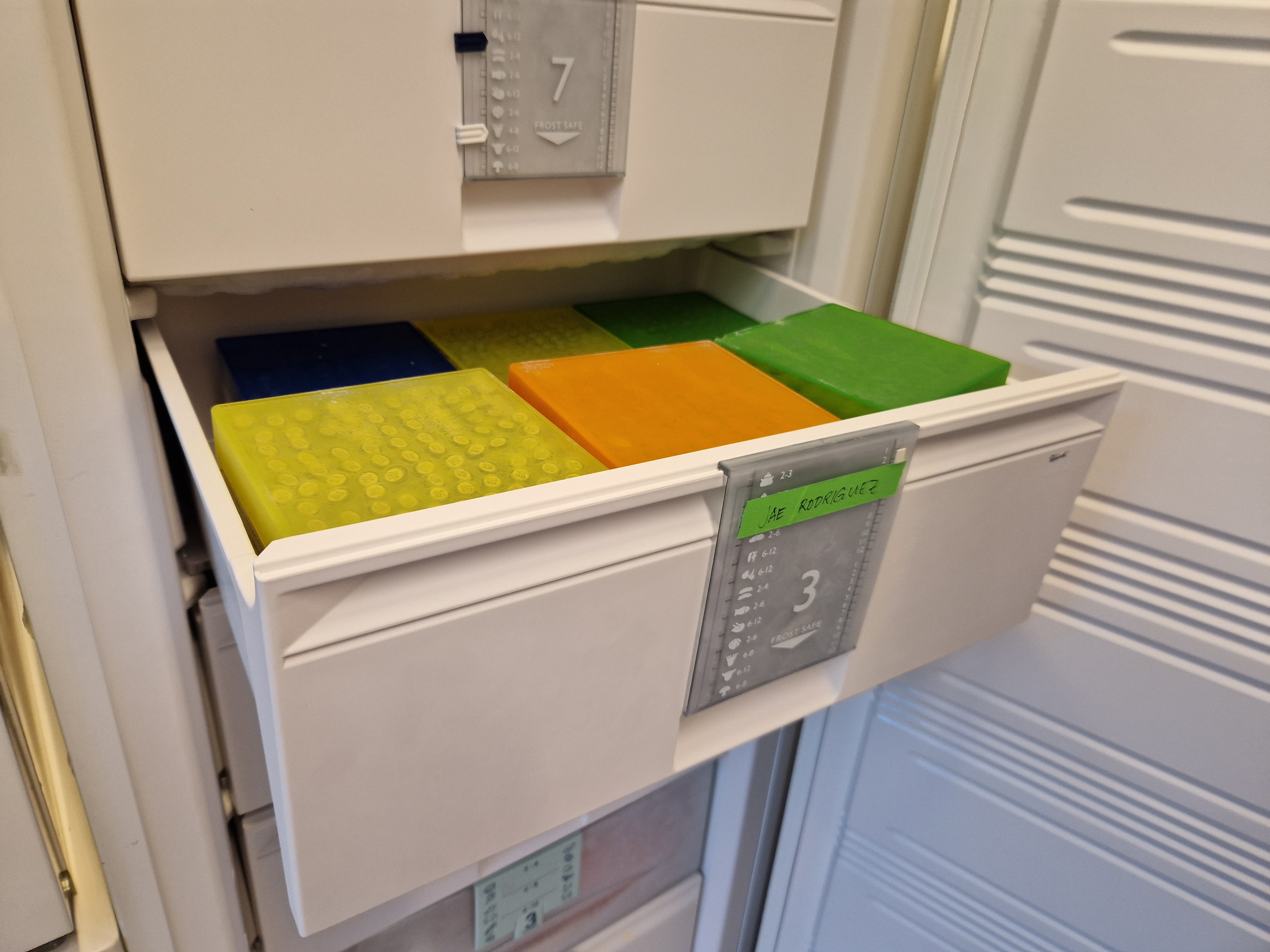
Jae Rodriguez, the PhD student who hosted me, focuses his research on the genetic origins and adaptations of the indigenous inhabitants of the Sulu Archipelago in the Philippines. A significant part of Jae’s research involves samples from over 2,000 Sama Bajau individuals in the southwestern Philippines, particularly around Tawi-Tawi, which are carefully stored in one of the institute’s labs. This material is crucial for mapping the Sama Bajau’s history and gaining a broader understanding of their genetic adaptations and unique lifestyle. It would be fascinating to delve deeper into the genetic sequences related to spleen size that Melissa Ilardo studied when she researched Bajau Laut divers in central Sulawesi, Indonesia. She found that the Bajau Laut in the area had undergone natural selection for larger spleens over at least a few thousand years (Ilardo et al., 2018).

I first met Jae Rodriguez at a conference in the Philippines in 2015, and we have kept in touch since then. It was a true pleasure to meet up with Jae in Leipzig and discuss the Bajau’s history, lifestyle, evolution, and future challenges, as well as other aspects of human evolution.

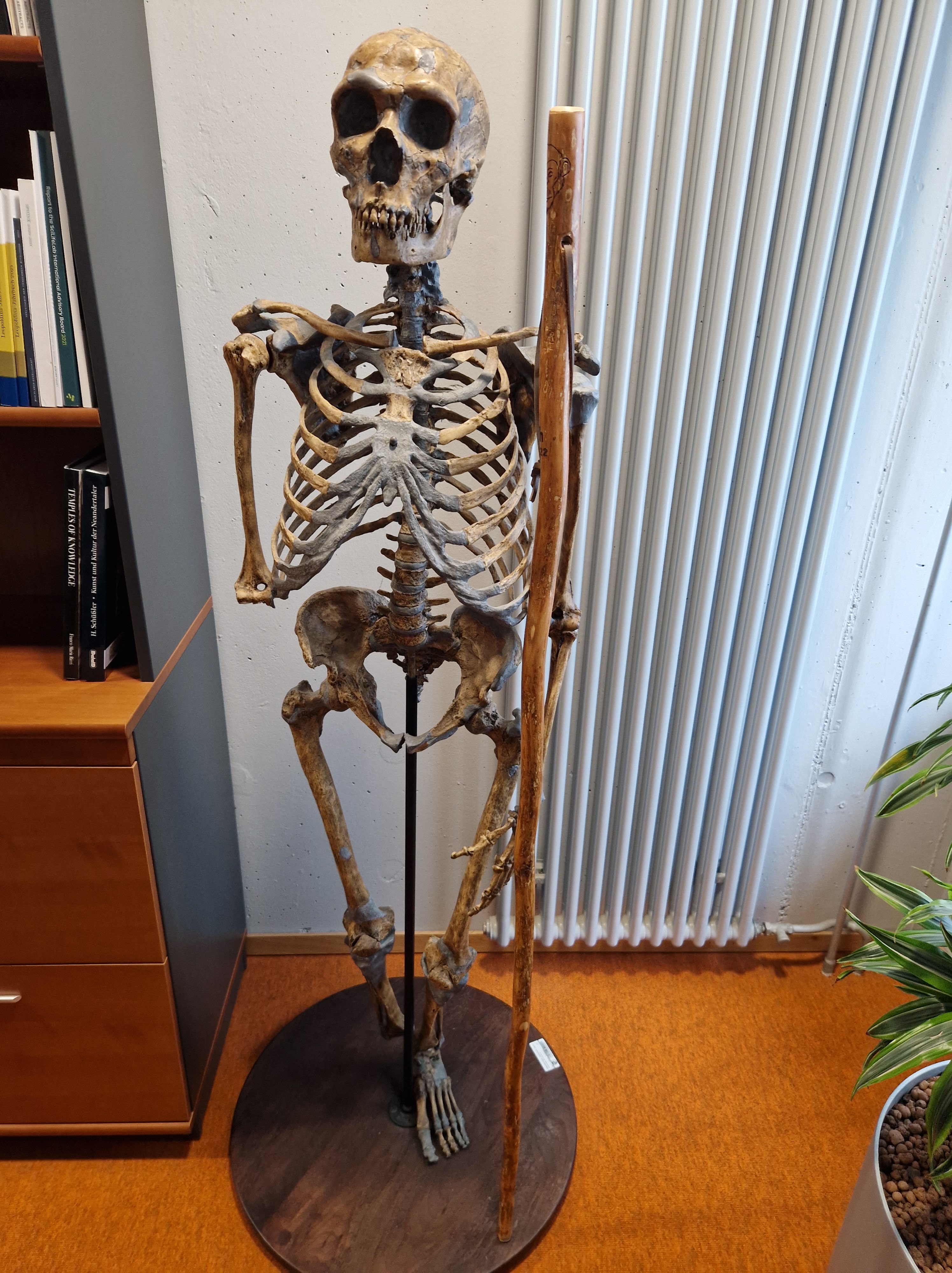
Jae also gave me a tour of the Max Planck Institute, including an exhibition on the ground floor about human history. I was looking forward to meeting Svante Pääbo, who also hails from Sweden, but despite his office being wide open, he was not around at the time. Outside his office, a Neanderthal skeleton was on display. Pääbo was the first scientist to sequence the entire genome of a Neanderthal, proving that Homo sapiens and Neanderthals had shared offspring, which has medical implications still today (Pääbo et al., 2010). A few years later, he also sequenced Denisovan DNA, revealing genetic traces in modern humans, particularly in Southeast Asian island populations, where up to 5% of some groups’ genes come from Denisovans (Reich et al., 2011). These discoveries have changed our understanding of the complexity of human evolution and made us realize how similar we are to our closest cousins who live on within us.

The institute itself is a dream destination for anyone interested in human evolution. It brings together scientists from diverse fields, including natural sciences and humanities, to investigate human history through interdisciplinary research. Their work includes comparative analyses of genes, cultures, cognitive abilities, languages, and social systems of both past and present human populations, as well as primates closely related to humans. The institute also hosts young doctoral students from around the world who delve into historical and genetic research from their own regions (Max Planck Institute for Evolutionary Anthropology).

My visit to the Max Planck Institute for Evolutionary Anthropology was a remarkable journey into the depths of human history and genetics. The opportunity to share my research on the Bajau Laut, explore cutting-edge scientific work, and connect with passionate scholars made this trip an unforgettable experience. As the field of genetics rapidly develops, new methods for analyzing ancient fossils will hopefully emerge. These new findings will reveal that even more populations have contributed to who we are today, making us even more humble about our origins and who we are.

References

Gould van Praag, C. D. et al. (2017). “The Influence of Natural Sounds on Attention and Mood.” Scientific Reports. Retrieved from nature.com.

Ilardo, M. A. et al. (2018). “Physiological and Genetic Adaptations to Diving in Sea Nomads.” Cell. Retrieved from cell.com.

Max Planck Institute for Evolutionary Anthropology. “About Us.” Retrieved from eva.mpg.de.

Max Planck Institute for Evolutionary Anthropology. “Prof. Dr. Svante Pääbo.” Retrieved from eva.mpg.de.

Nobel Prize. “The Nobel Prize in Physiology or Medicine 2022.” Retrieved from nobelprize.org.

Pääbo, S. et al. (2010). “A Draft Sequence of the Neandertal Genome.” Science. Retrieved from science.org.

Perrault, A. A. et al. (2019). “Rocking Promotes Sleep in Humans.” Current Biology. Retrieved from cell.com.

Reich, D. et al. (2011). “Denisova Admixture and the First Modern Human Dispersals into Southeast Asia and Oceania.” American Journal of Human Genetics. Retrieved from cell.com.

St-Onge, M. P. et al. (2016). “Fish Consumption and Sleep Quality.” Journal of Clinical Sleep Medicine. Retrieved from jcsm.aasm.org.

Vanishing Traditions: The Struggle of the Sama Bajau in a Changing Ocean – Insights from Sampela, Indonesia

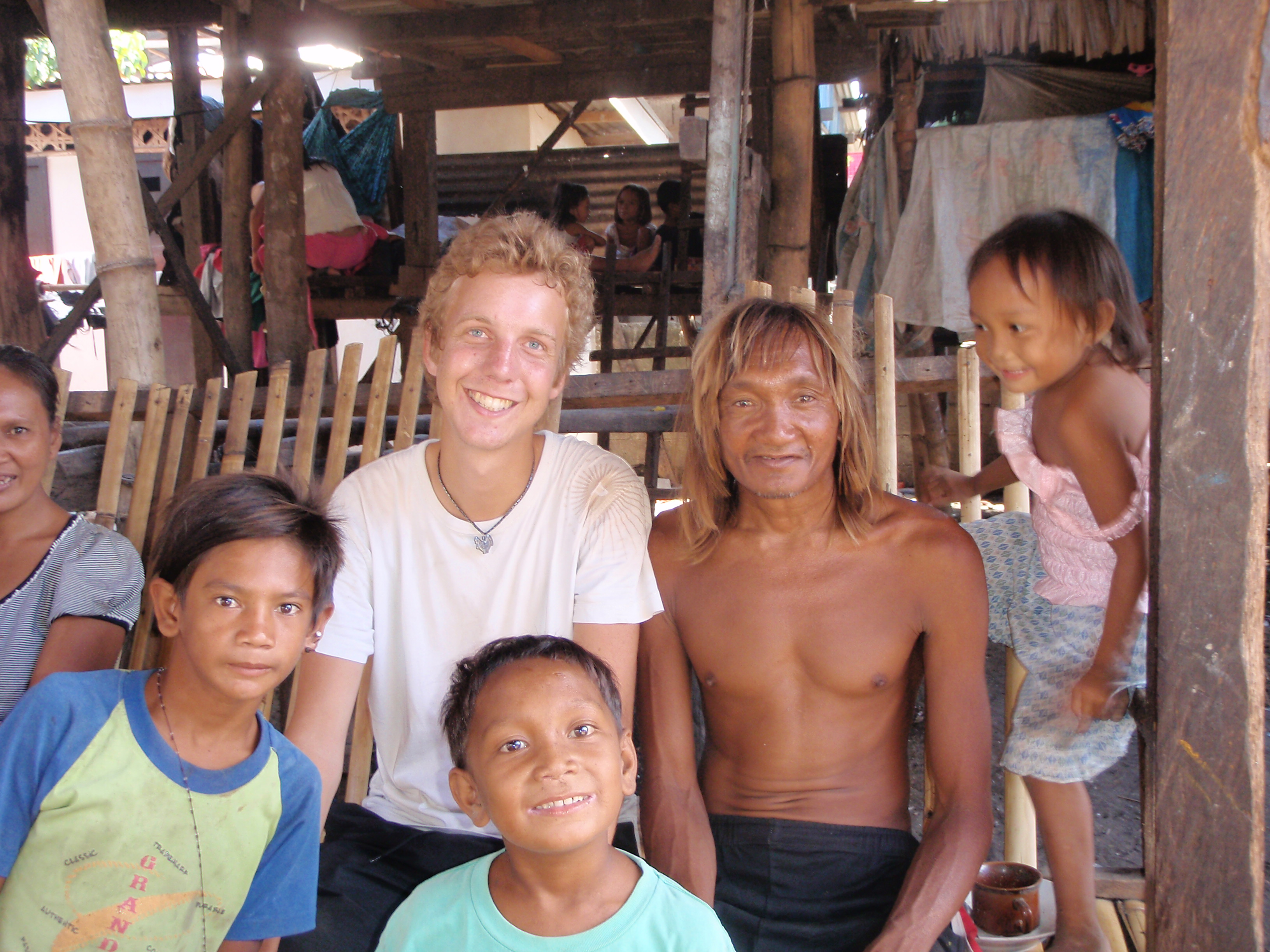
In April, I made a trip to Indonesia along with Eric Mulder, a doctoral student at the Department of Health Sciences at Mid-Sweden University. He is researching increased safety in free diving to prevent blackout. We went to Sampela in Wakatobi, a place I first visited in 2011 and have re-visited several times. Post-COVID, no airlines operate on the main island Wangi Wangi, so it took us three days to reach Sampela from Makassar.

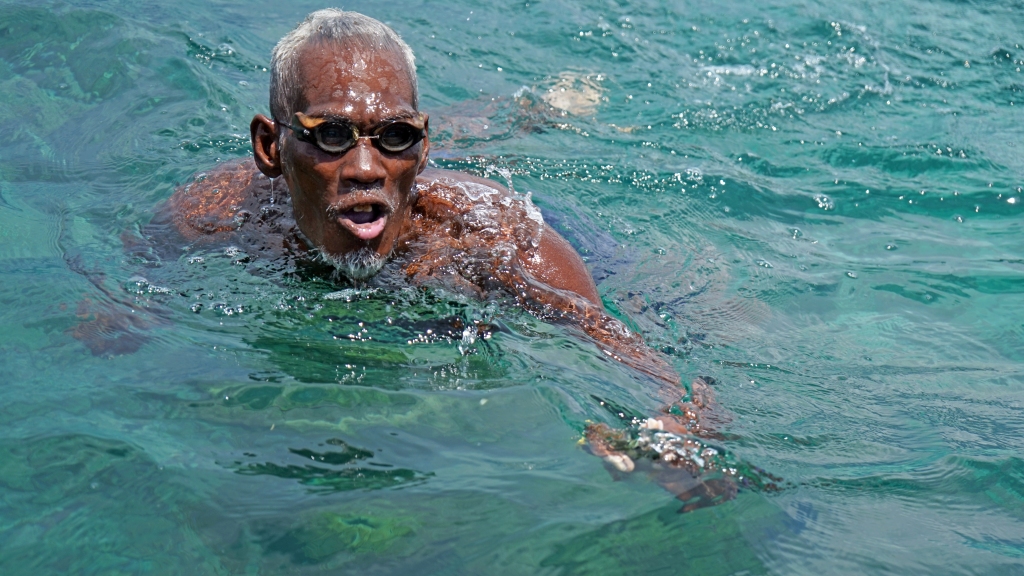
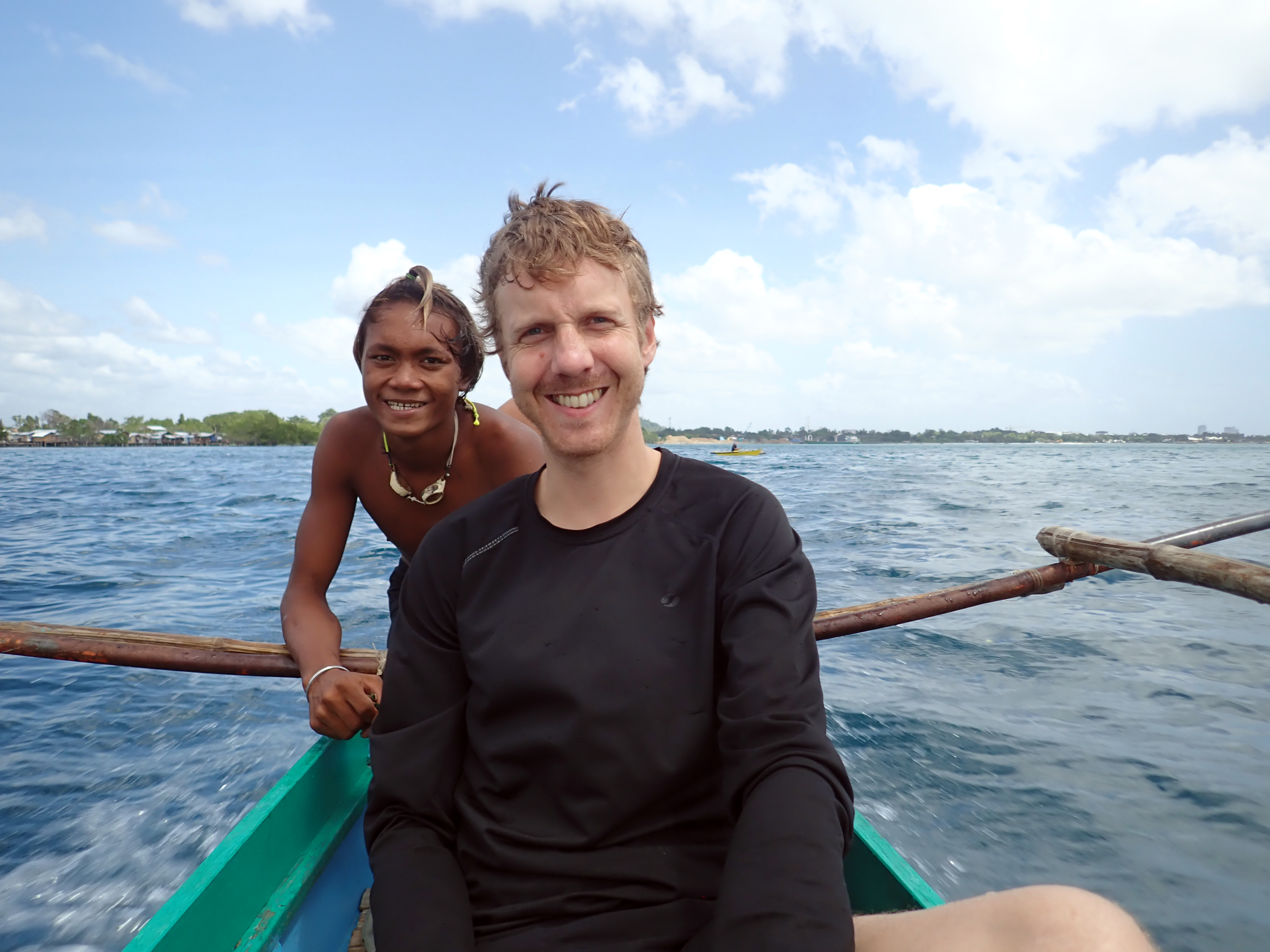
“Half of Sampela live abroad,” my host Pondang said. “Many inhabitants have moved to other parts to Indonesia, as for example Johor, to make a living”. Some of the better fishermen were away, while others had returned. The fisherman Jahajudin who caught a barracuda back in 2016 had just come back from working on a plantation in Kalimantan. In 2012, he was photographed during a fishing trip by Al Jazeera, posing proudly and calmly on his boat. Now, he lacked swimming goggles but borrowed a pair before accompanying us on one of our daily fishing trips with Pondang. “Fishing isn’t as good anymore,” he explained when I asked why he wasn’t fishing as much as before. “The small fish don’t get a chance to grow.” I remembered how, in 2011, he had been part of a net fish drive (ngambai) team and how he had thrown small fish back into the water.

Catching Octopus with a Fake Lure

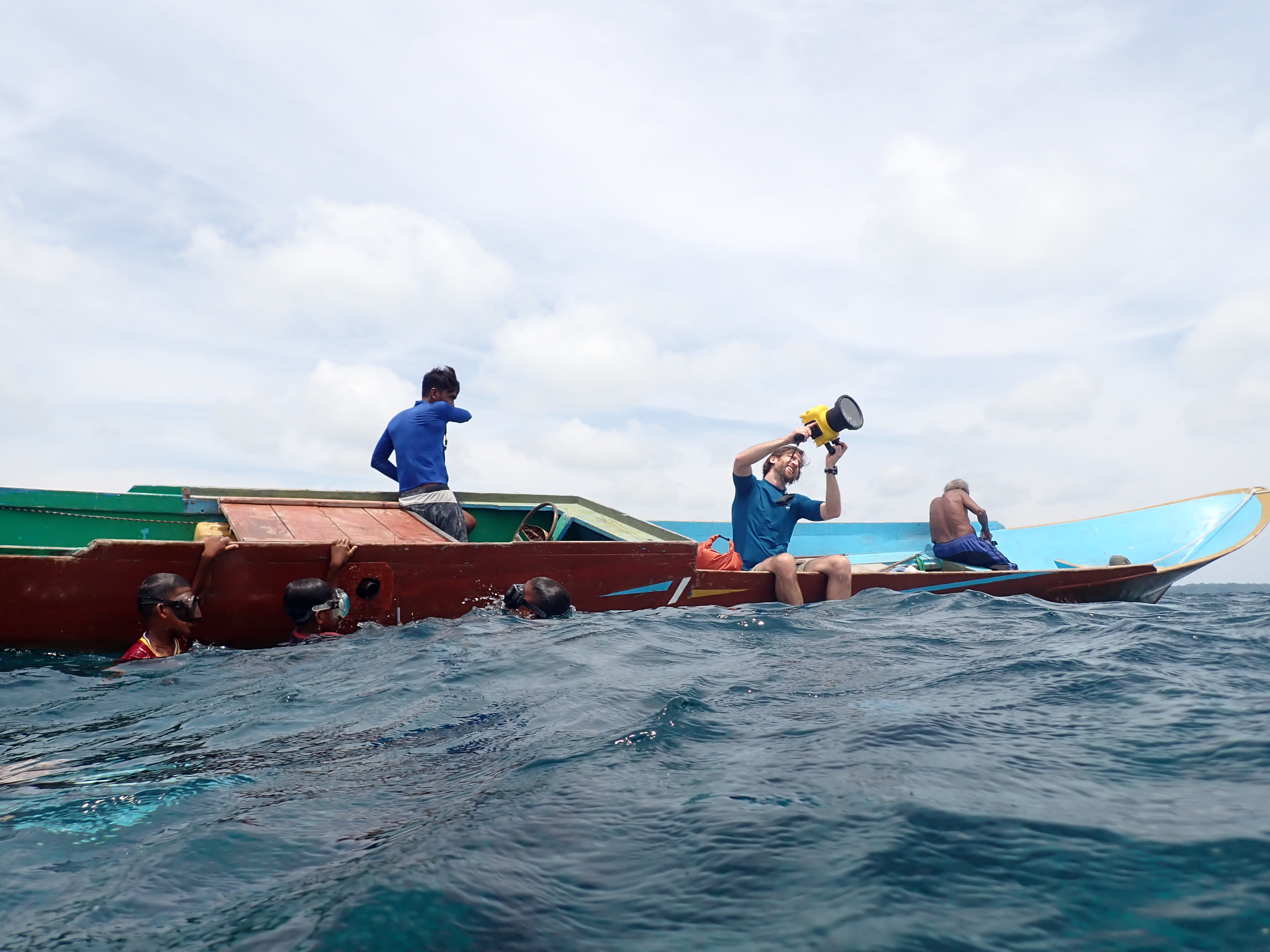
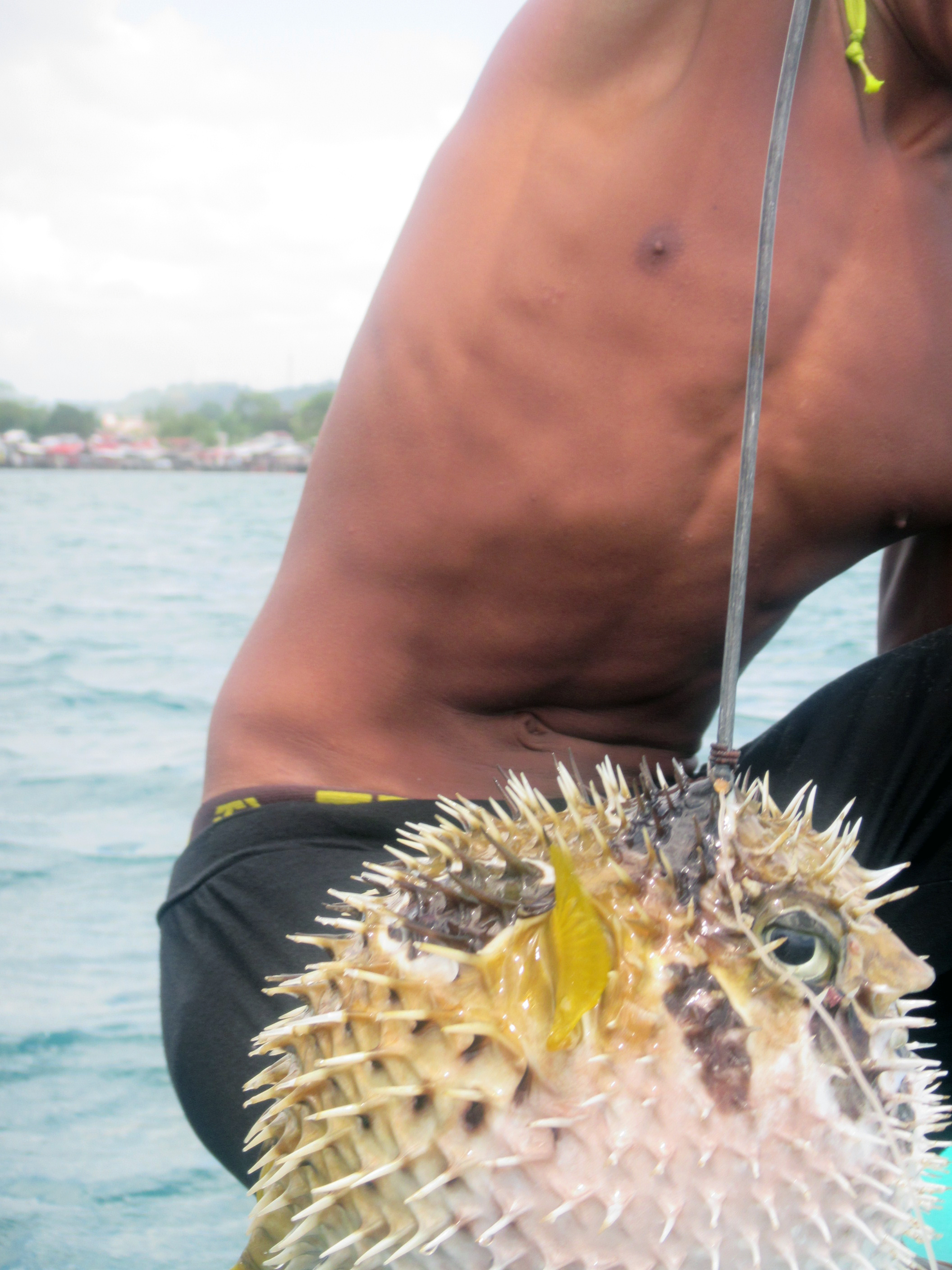
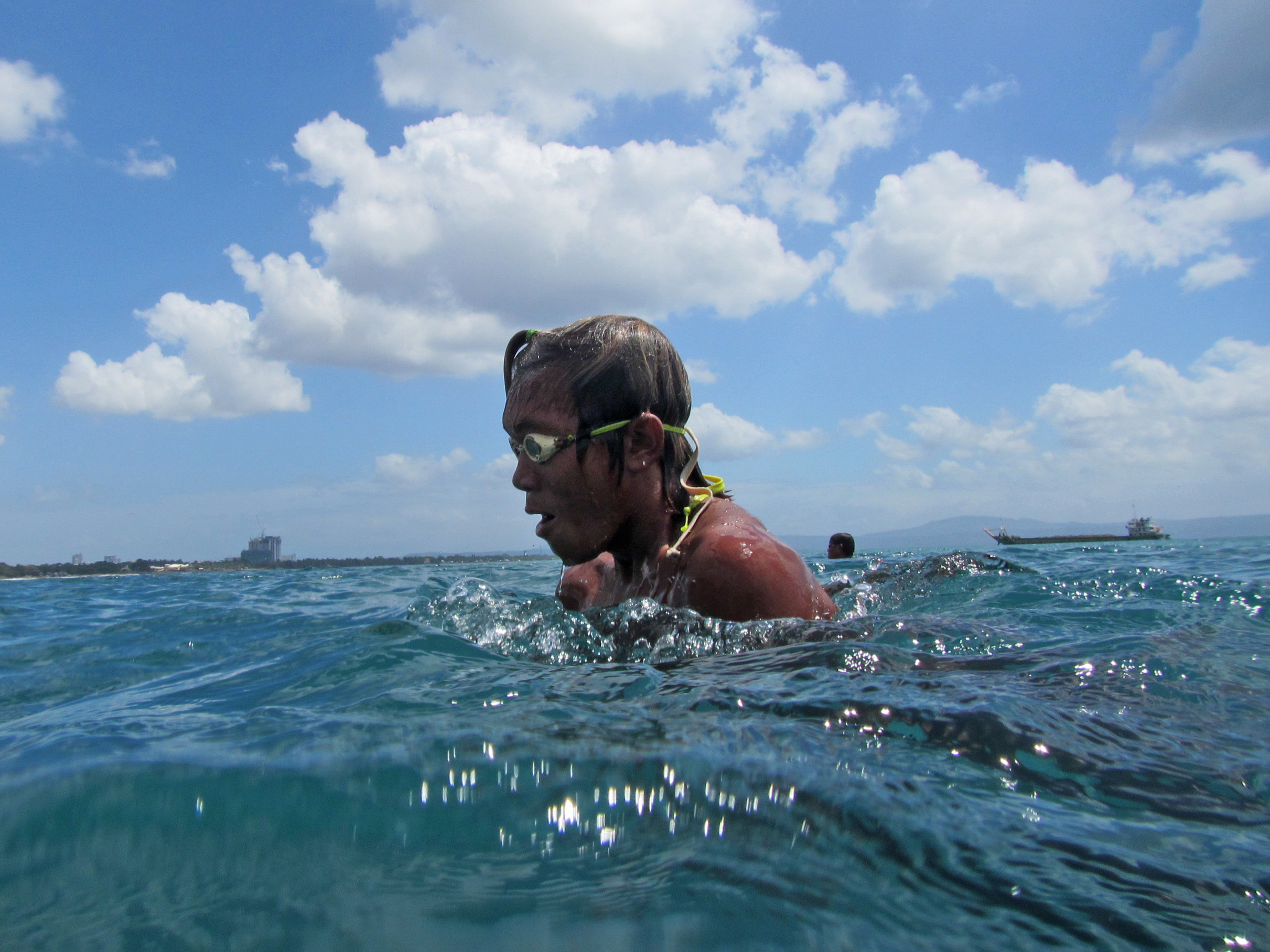
In the community, we made several daily trips with ten of the best local speargun fishermen. Eric has been involved in developing a pulse oximeter that can be used during active diving, which the Sama Bajau fishermen wore during our fishing trips. A pulse oximeter measures heart rate and peripheral oxygen saturation (often abbreviated as SpO2), an indicator of how much oxygen is being transported by hemoglobin in the blood to the body’s peripheral parts, such as fingertips, earlobes, and toes. If saturation is low, it can lead to a blackout.

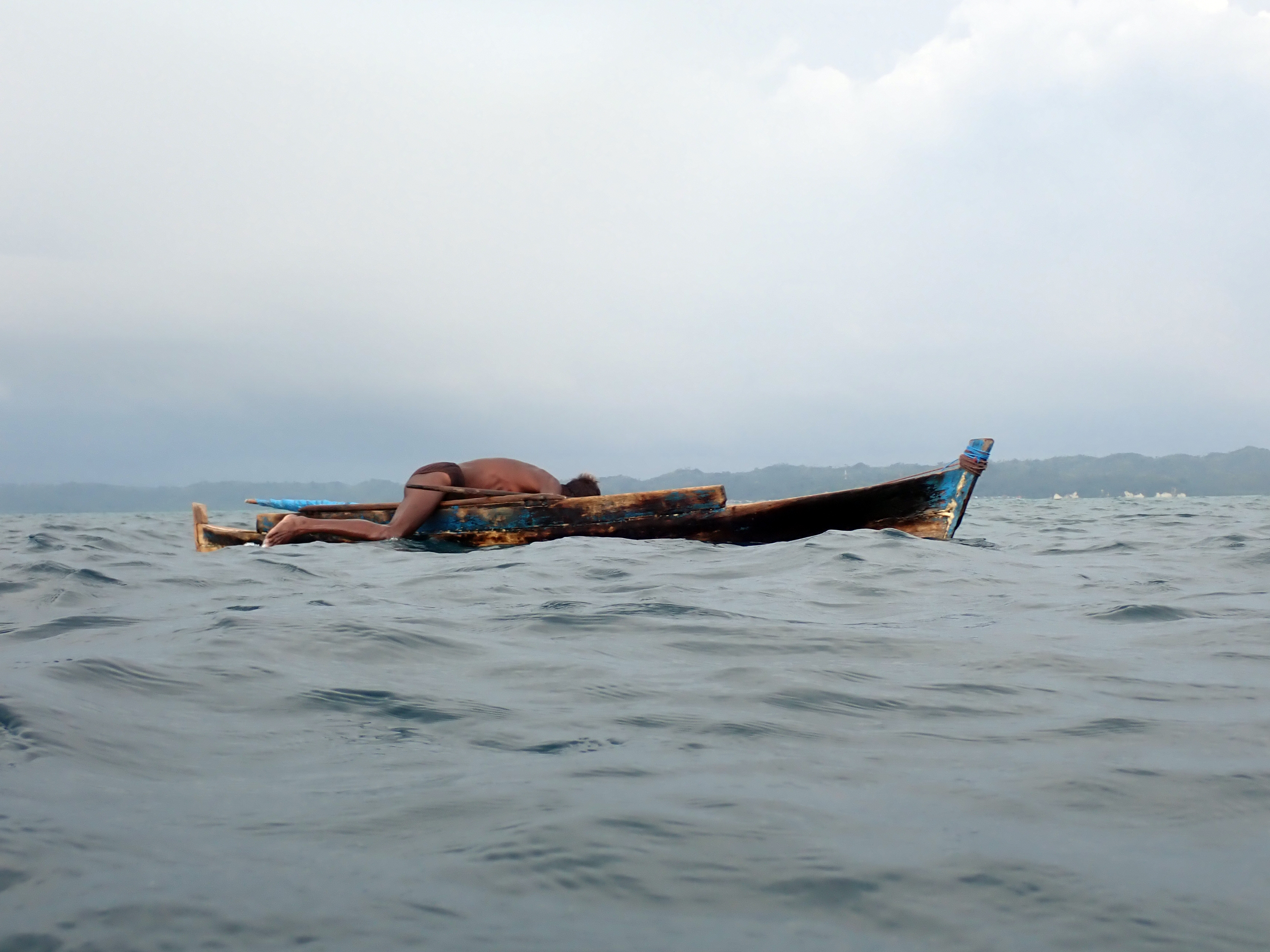
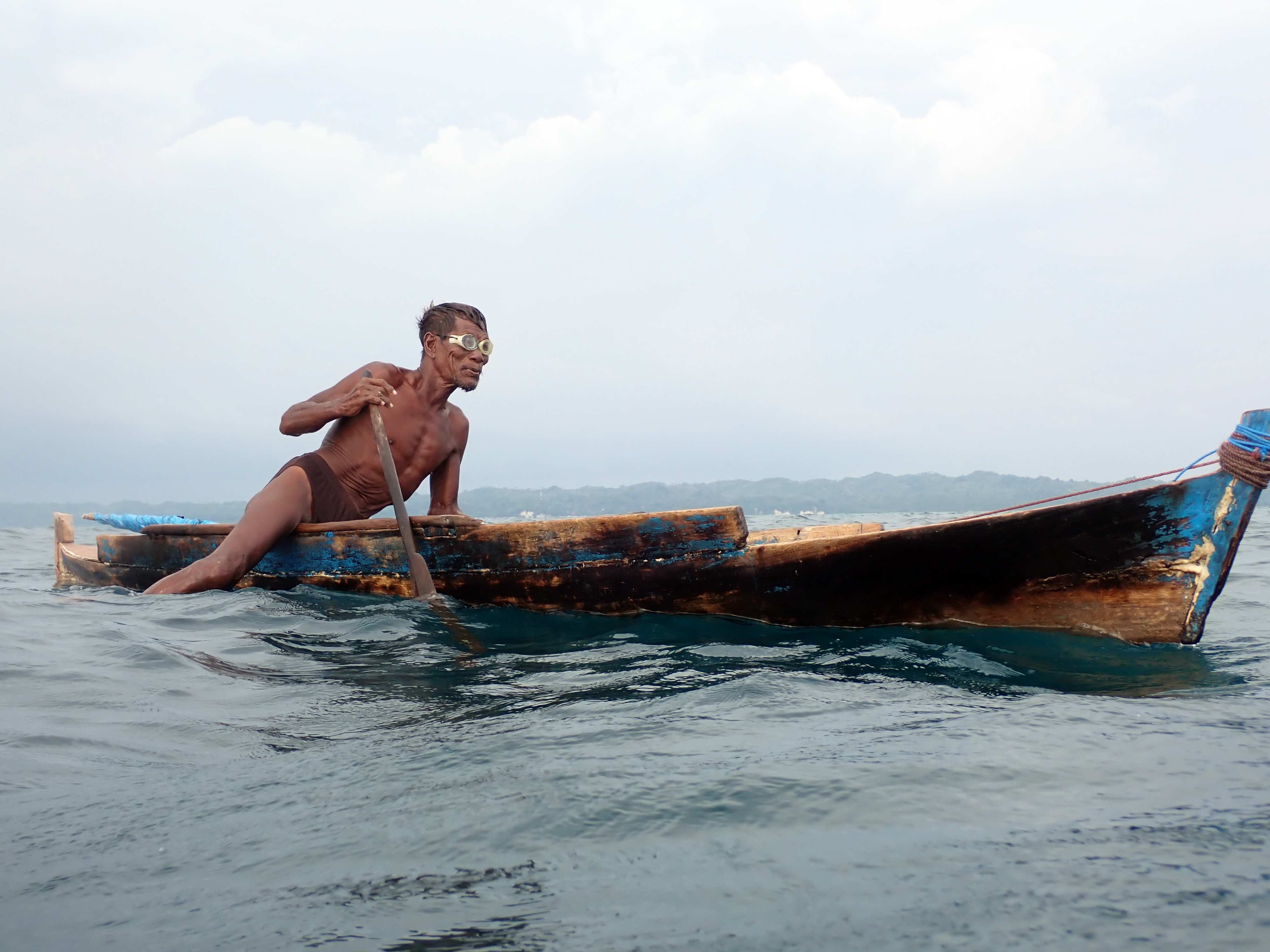
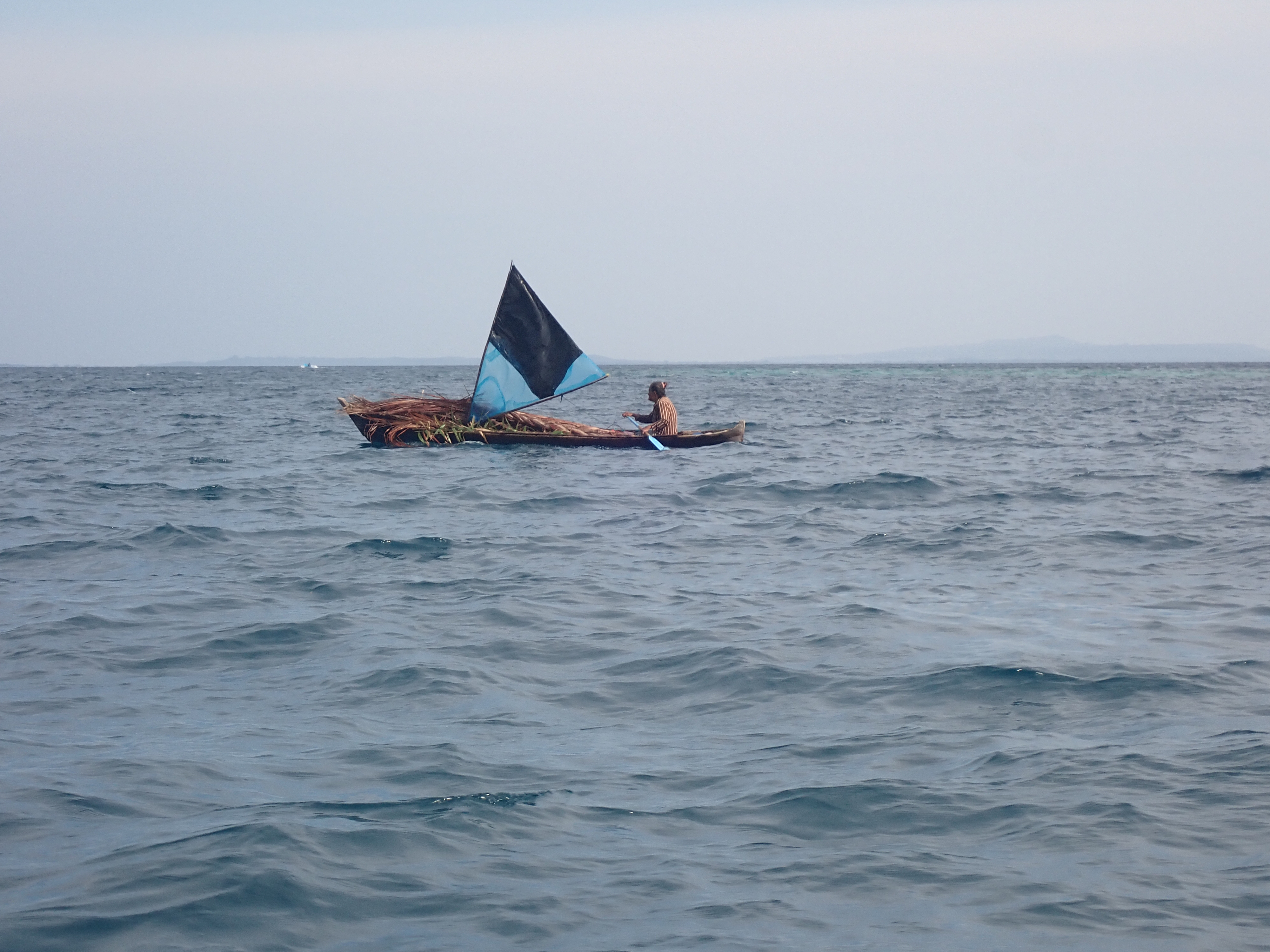
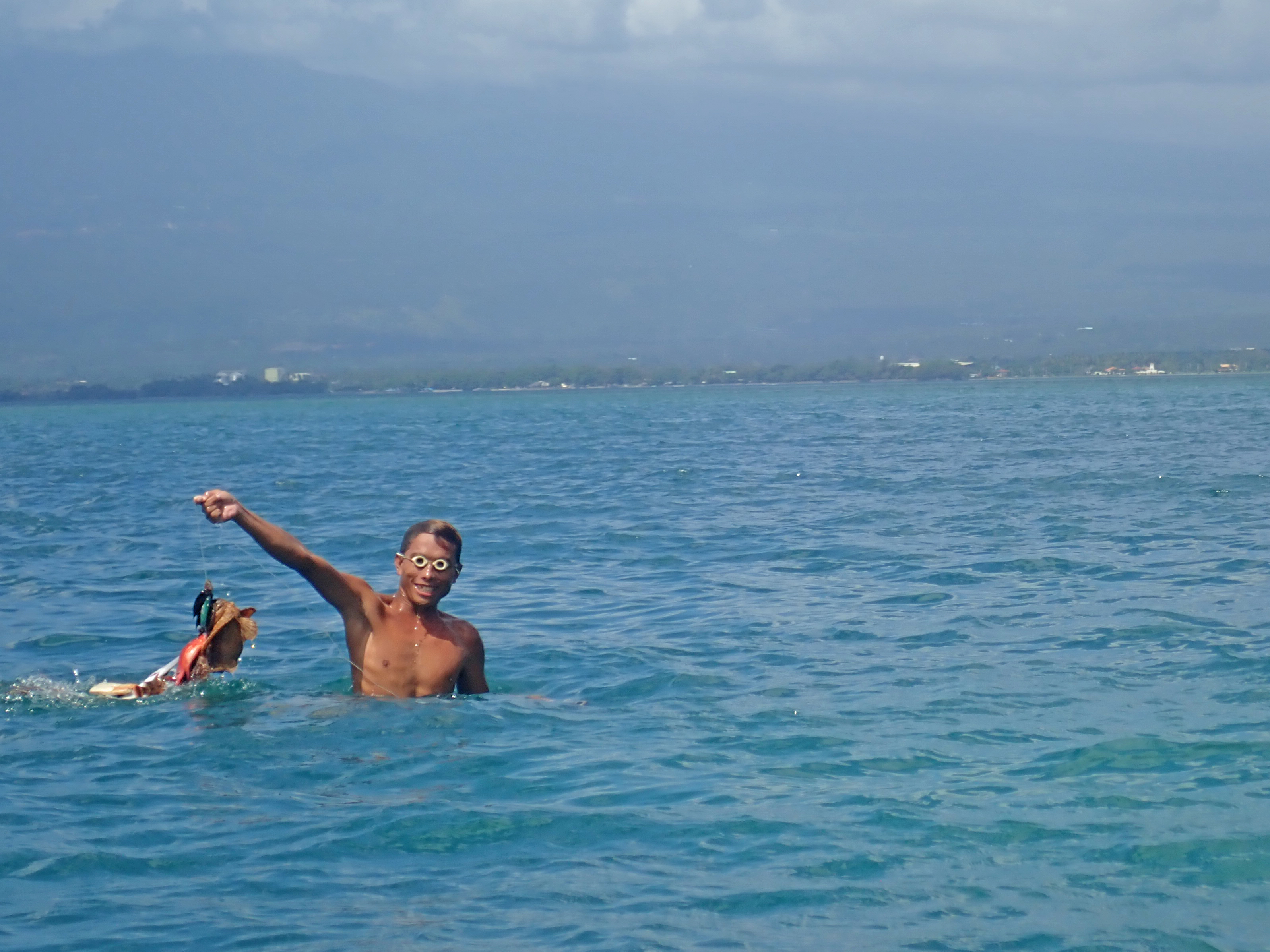
During one of our daily fishing trips, we met an old man named Laharumu on a small boat. He had paddled all the way from Sampela, bringing a small sail with him. He lay flat with his face under the water surface, holding a line leading to a fake octopus, which he used to lure potential octopus prey. “When he catches an octopus, he bites it between the eyes,” Pondang explained, just like many Sama Bajau do in Kabalutan, central Sulawesi, which I had the opportunity to film in 2017.

On our way back, Laharumu came paddling again, showing us a small octopus he had caught despite a long day on the sea. I felt sorry for him – here was an old Sama Bajau fisherman using no motorized vessel, paddling for miles, and luring octopuses by mimicking their behavior. This type of fishing is much less harmful than the practices used by other Sama Bajau and the larger Indonesian community. His way of living is quickly disappearing due to the rapidly deteriorating environment and accelerating ocean heat. In sharp contrast, one fisherman from the community asked if I could bring him a sonar fish finder next time I visit the village.
Remembering Tadi – A Speargun Fisherman Throughout His Life

Tadi, another well-known man in the community and the father of several good fishermen, both men and women, had recently passed away. Even in his late age, he sustained himself solely from speargun fishing and was well aware of marine life and potential dangers at sea.

I remembered one occasion when he was sitting outside his house holding a poisonous sea snake between his fingers. “Ngei njeke” (it doesn’t bite), he said when I asked about the snake.

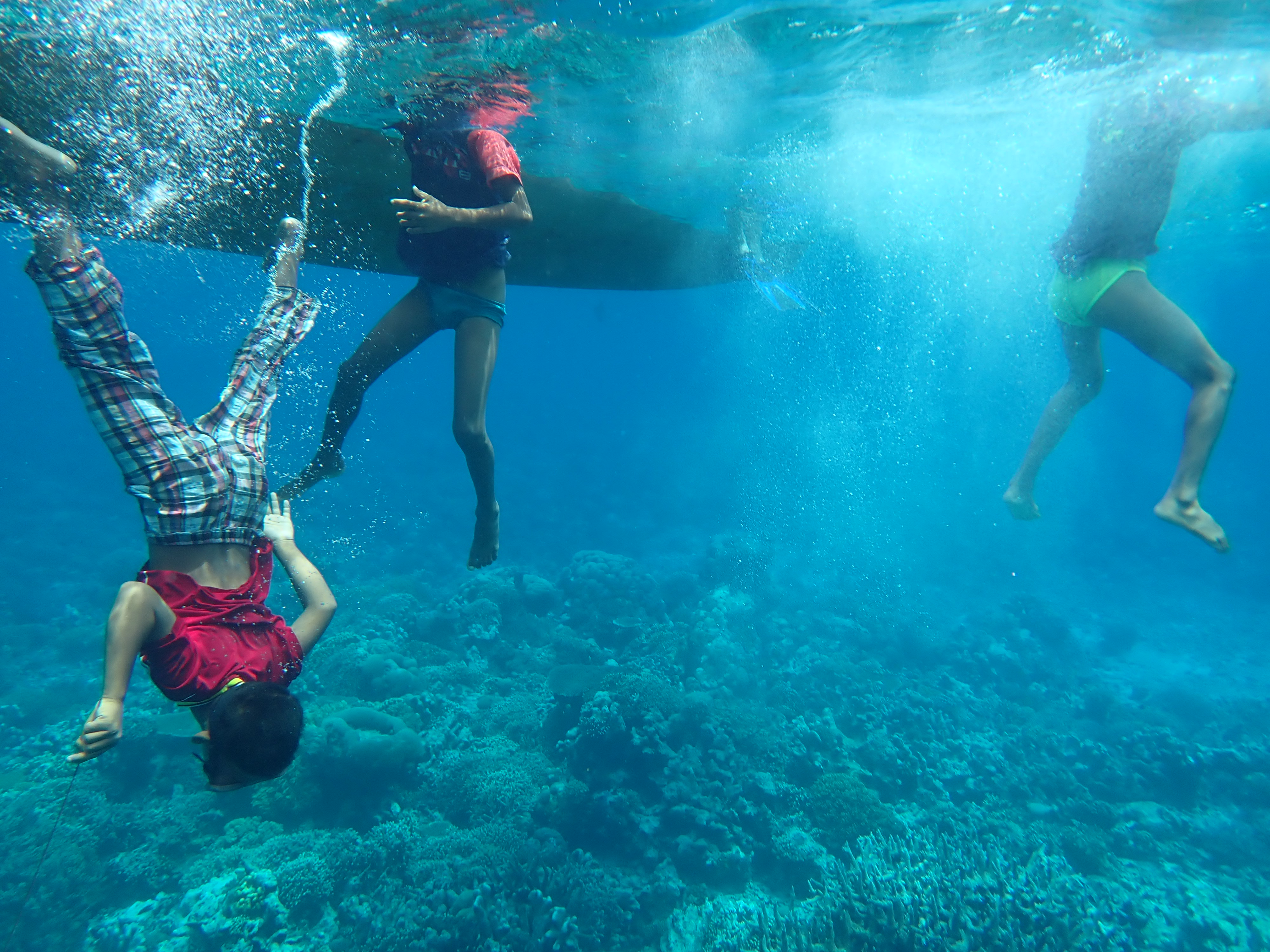
One day, when the fishermen were taking turns in the water wearing the pulse oximeter, Kabei, the son of Tadi, who was featured in the BBC’s production “Hunter of the South Seas” from 2015, shot fish while standing up in the boat with his speargun. First, Pondang’s son threw in bait from a parrot fish that lured fish, and when the fish came close to the surface, Kabei shot them. On one occasion, he shot two fish to the delight of the rest of us.

Sampela: A Community Under Pressure

Sampela is located inside Wakatobi National Park, which consists of four major islands where only small-scale fishing is permitted. The park also has a small core no-go zone. Even so, fish are on the decline in the area. Just outside of Kaledupa, there are extensive reefs, but large fish are becoming sparse.

This time, I could not see any sea urchins in the vicinity of Sampela which before had been in abundance – most likely because of consumption. I also saw fishermen net fishing small fish that feed on waste from the community under the stilt houses. Both these observations indicate increasingly tight living conditions in the area.

Tradition and Modernity in Sama Bajau Communities

One day, we traveled to the opposite side of Kaledupa, where another Sama Bajau community, Mantigola, is located. Compared to Sampela, Mantigola is very silent and less busy even though it is the oldest Sama Bajau community in Wakatobi. “Many people have become rich here,” Pondang explained. “Many of them have completed Haji, which only few people in Sampela have.” While walking on the bridges, we could see some wealthy buildings and very few people. The cheerful greetings that are very common in Sampela were largely absent.

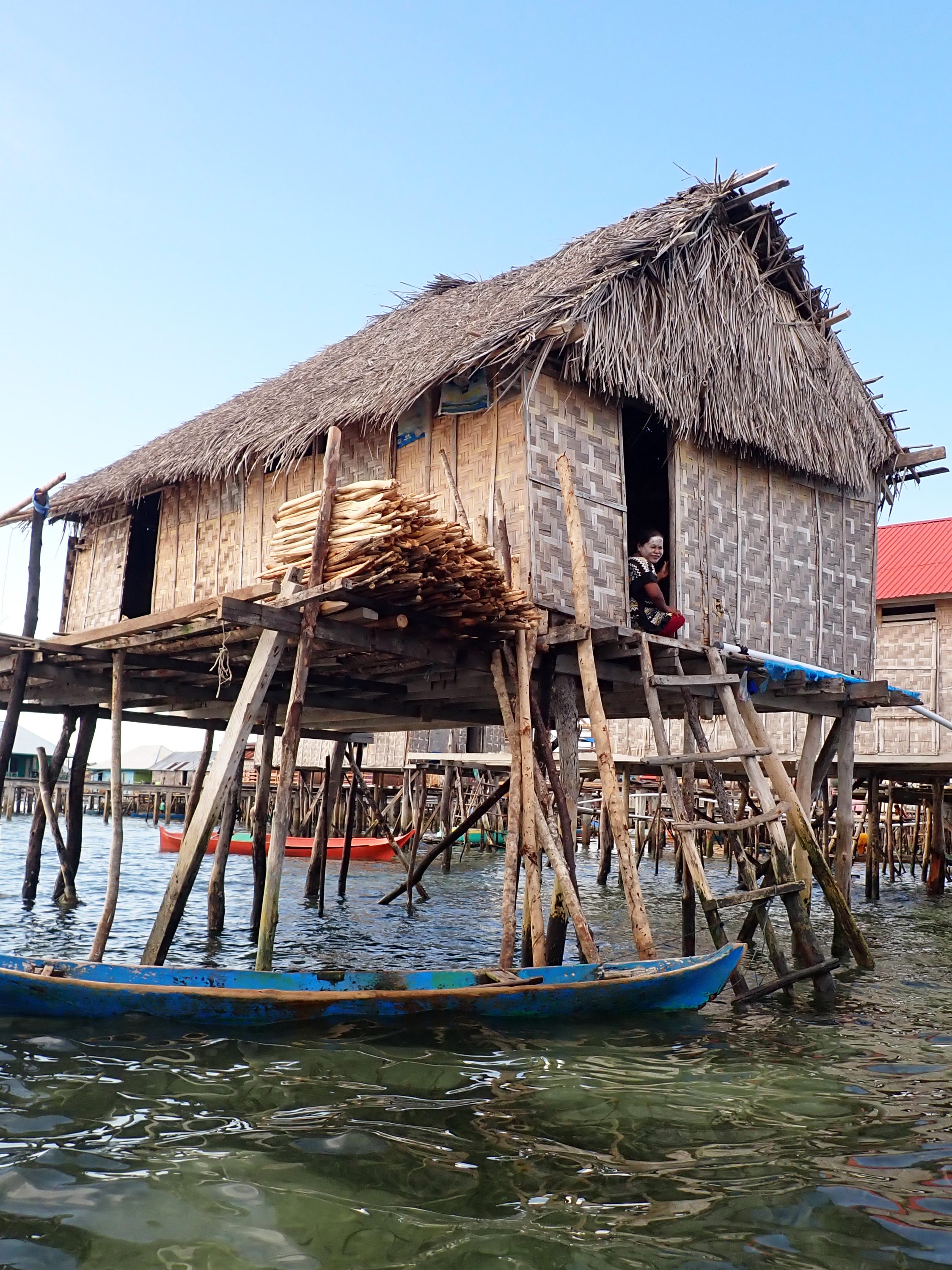
In Sampela and other Sama Bajau villages, different parts of the village have distinct characters; some areas are more adapted to modern ways while others maintain traditional lifestyles. Some residents hold on to traditional beliefs, which can be described as a syncretism of Islam and animism, while others have fully embraced Islam. These differences, along with the various pressures from wider society and traditional norms, can literally be felt as one walks through Sampela.

However, there are also many people from neighboring groups who have fully assimilated into Indonesian Sama Bajau communities. For example, one participant in our diving study was a man whose parents both came from outside the village and were born non-Bajau (or “bagay” as the Indonesian Bajau call them), yet they had integrated fully into the Sama community. It is very common for Bajau to marry neighboring people and become assimilated into Sama culture, and vice versa. After a few decades, there is no visible difference between them and the “original” Sama Bajau. Genetic tests have shown that the Sama Bajau are more closely related to neighboring groups than to other Sama Bajau communities living distantly throughout Indonesia.

Vanishing Traditions

The likes of Laharumu are becoming increasingly rare. With dying oceans, unique and traditionally eco-friendly lifestyles are being lost. The Sama Bajau’s methods of fishing and their deep understanding of marine ecology, honed over generations, are invaluable. These traditional practices, which are less harmful to the environment, could be crucial in the future for sustainable fishing practices.

However, as their environment deteriorates rapidly, the knowledge and lifestyles of the Sama Bajau are also disappearing. Preserving their way of life is not just about saving a culture but also about safeguarding ecological wisdom that might be vital for the future of our oceans. If we lose the Sama Bajau and their traditional ecological knowledge, we risk forgetting valuable lessons in eco-friendly fishing methods and sustainable living.

Exploring the Lives of the Sama Bajau: A Field Report from Sabah, Malaysia

Amidst the bustling activity of the Philippine night market in Kota Kinabalu, I found myself surrounded by the vibrant energy of fish vendors, children selling plastic bags, men and women in worn-out clothes transporting ice on wheelbarrows, and restaurant owners showcasing mantis shrimp and lobster in front of warm grills. This market, a microcosm of the larger economic struggles faced by the Sama Dilaut, became the starting point of my field trip to Sabah, Malaysia, aimed at collecting data for my thesis on the Sama Dilaut’s role in the economy and fishing industry.

At the turn of the year from 2022 to 2023, I embarked on this journey to delve into the lives and challenges of the Sama. Despite their hard work and exceptional fishing skills, they continually struggle with capital and opportunities, often finding themselves on the losing end of trade. To better understand their plight, I employed the “follow the thing” methodology, as elaborated by Appadurai, focusing on the seafood chain. Fish serve as a lens through which we can explore critical issues such as conservation, destructive fishing methods, and structural violence.

Kota Kinabalu: A Vibrant Market Scene

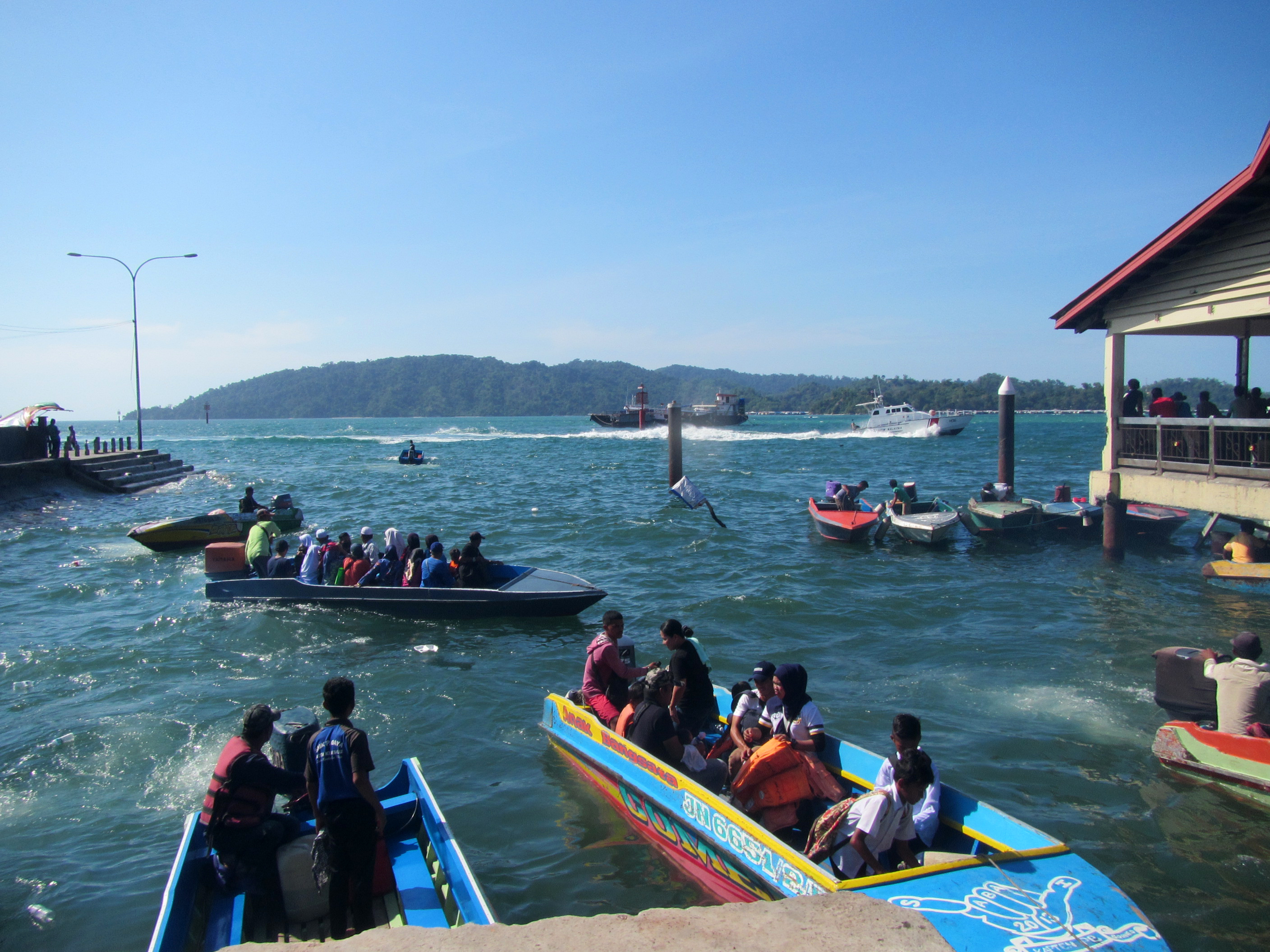
The trip began in Kota Kinabalu, the largest city and tourist hub in northern Sabah. This city hosts a bustling Philippine night market with various Sama Bajau groups from numerous Philippine Islands. The harbor, filled with trawlers, longliners, and shrimp boats, serves as a transit hub for fish trade. Across the water lies Pulau Gaya, home to many undocumented migrants from the Philippines. I engaged with local fish vendors, small seafood restaurant owners, Sama Dilaut children selling plastic bags, fish traders, boatmen, and more. As always, crowds gathered around me when they realized that I speak Sinama, often filming to boost their social media following. Common questions included how long I had been learning Sinama, if I could speak Malay or Tausug, if I was married and how much dowry is in my country.

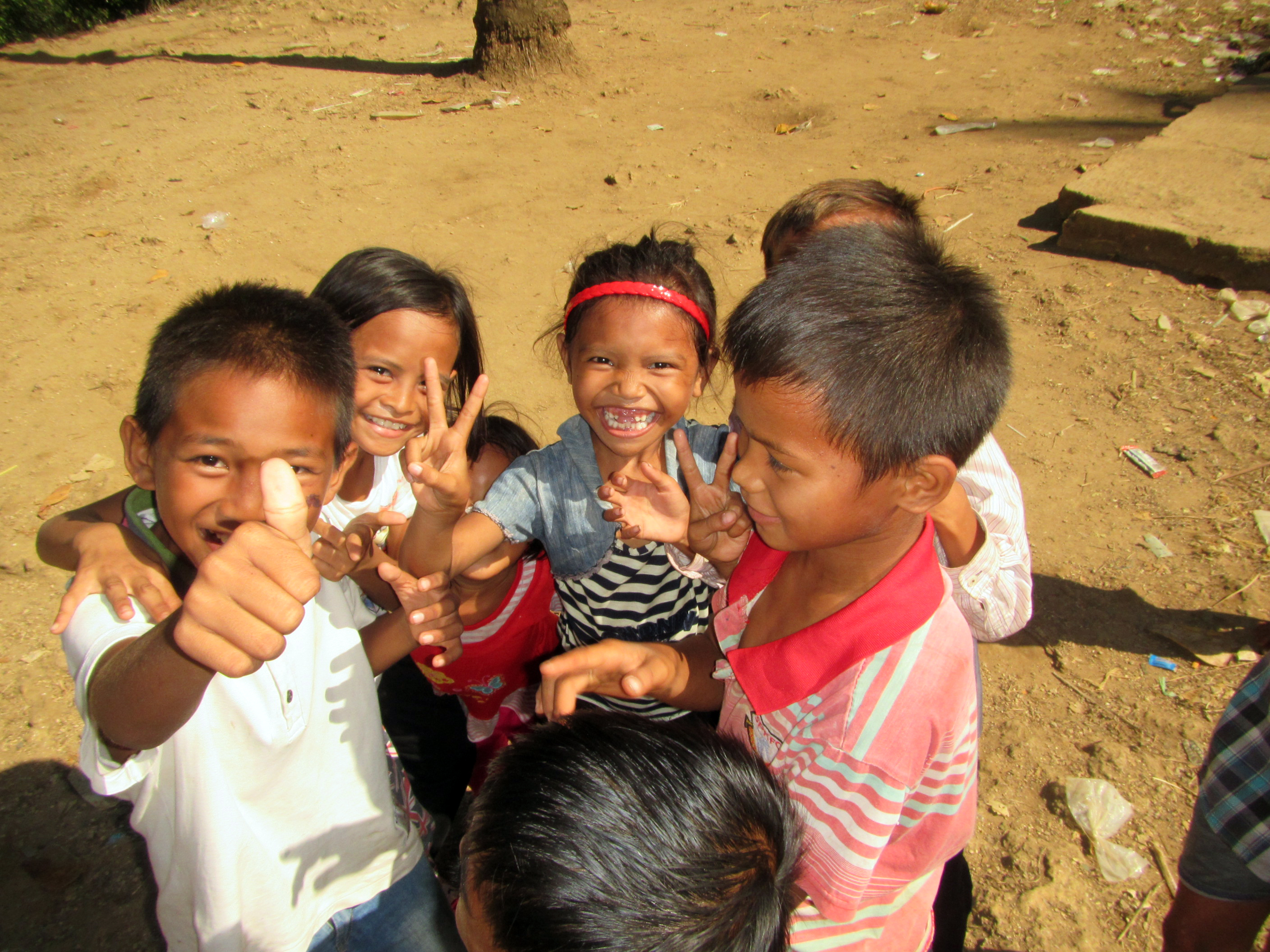
One afternoon, I decided to visit Pondo on Pulau Gaya, which is designated a ‘no-go zone.’ At the informal jetty, I befriended a young Filipino man who helped me cross to Pondo, after carefully evading the Marine Police that controlled the area. We docked at Ridwan’s parents’ stilt house and walked towards the island, surrounded by excitement and friendly questions. A group of children followed us, asking for candy, which I promised to give later to avoid too much fuss. However, due to serious problems with drugs and glue-sniffing, it was unsuitable to stay long. After 30 minutes, we returned to the boat, bought candies for the kids, and headed back to the city.

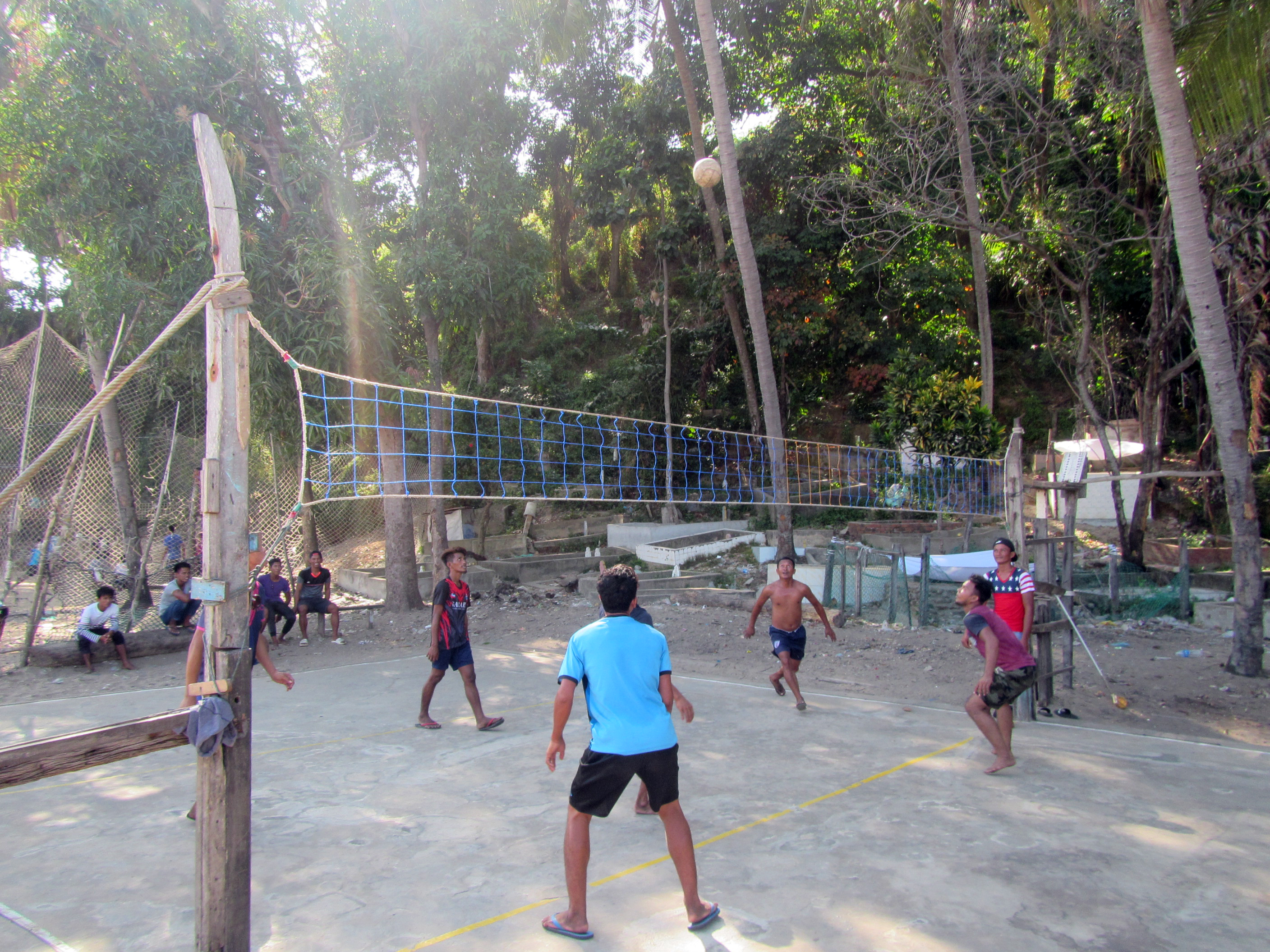
Upon arrival, I found myself amidst a volleyball match between fish traders, who saw me arriving from the sea, leading to a relaxed atmosphere filled with questions and jokes.

Meetings with Stakeholders in Kota Kinabalu

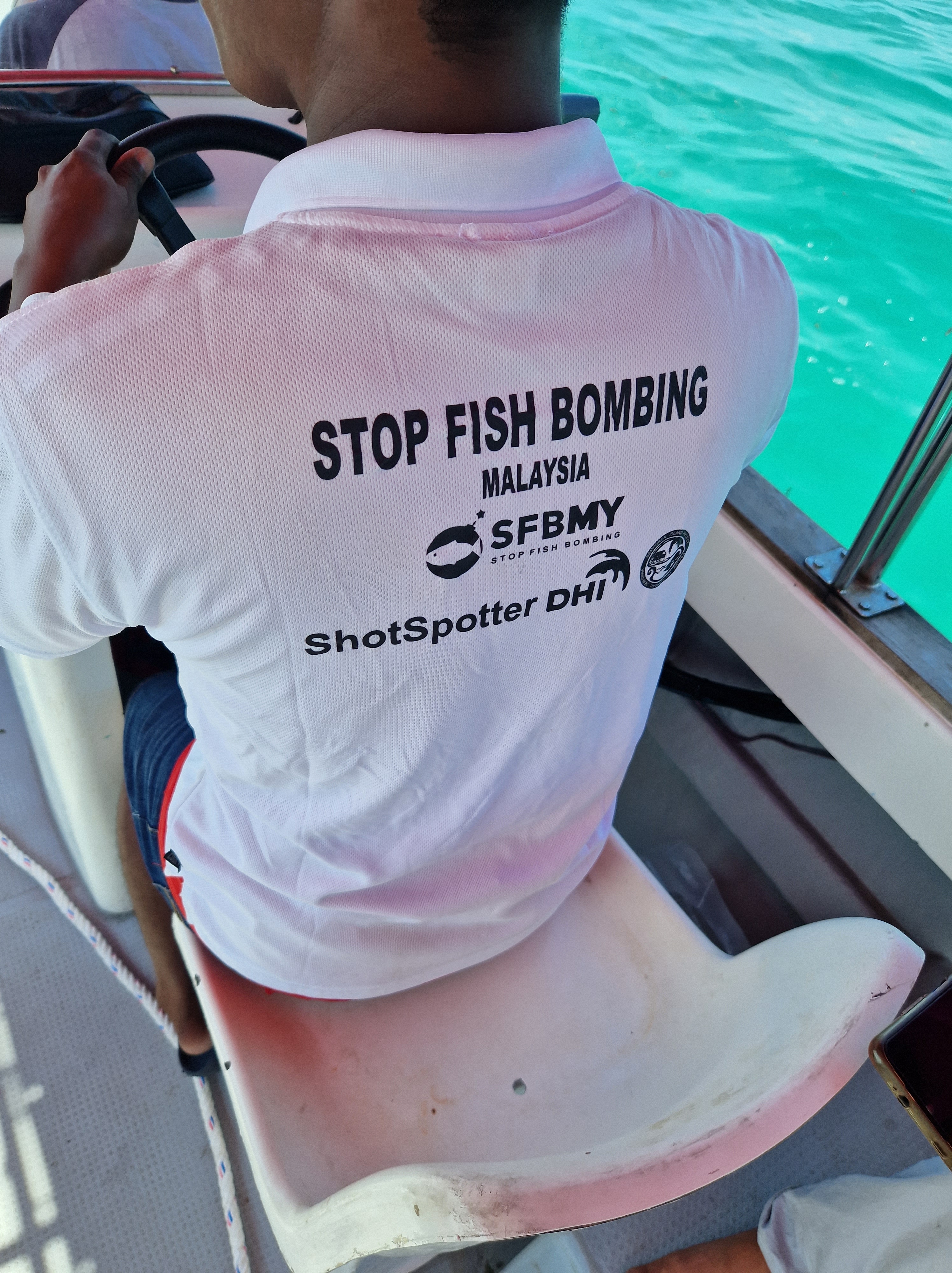
In Kota Kinabalu, I met Terrence Lim, the director of Stop Fish Bombing Malaysia, an organization dedicated to combating destructive fishing methods. He shared insights into fish bombing, cyanide fishing, and the marginalization of the Sama Dilaut community. According to Terrence, “Fish trades can now be settled at sea. Everyone has a phone, and money is being sent online.” However, he explained that the Sama Dilaut cannot register SIM cards and are completely dependent on the informal cash-driven economy.

Terrence also mentioned, “Big fishing boats are using sonars for fishing, and there’s a growing concern about the difficulty of catching big fish, further marginalizing the Sama Dilaut community.” He further explained that the Sama Bajau are often on the losing end of negotiations, having to sell their fish quickly due to lack of storage and their statelessness.

Kudat: Exploring New Horizons

Next, I traveled to Kudat, located in the northernmost part of Sabah. The Tun Mustafa Marine Park is here, though it attracts fewer tourists compared to other popular destinations. My goal was to explore new areas where many Sama Dilaut from Semporna had moved in search of better opportunities. After purchasing ferry tickets—and taking photos with the young female vendors who recognized me from social media posts in Kota Kinabalu—I met the chief engineer, who shared insights about the area’s environmental issues, including pollution and acidification. Upon arrival, I realized that most residents were Ubian, a Sama group from an island near Tawi-Tawi in the Philippines.

I looked for someone to take me to Bankawan Island, east of Banggi, where Terrence had mentioned a recently established Sama Dilaut community. I met a group of older men who helped me find a boatman. Next morning, we drove towards a cluster of three anchored houseboats, and the people on them greeted us warmly with big smiles. One young father, holding his baby boy with a protective amulet around his neck and arm, pointed at me and said “melikan, melikan” while waving happily.

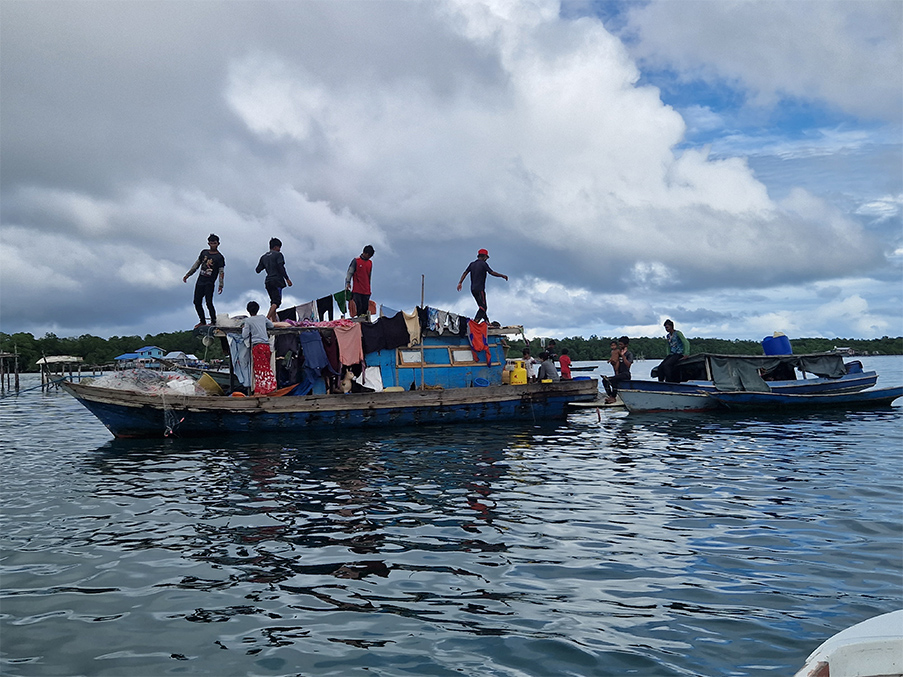
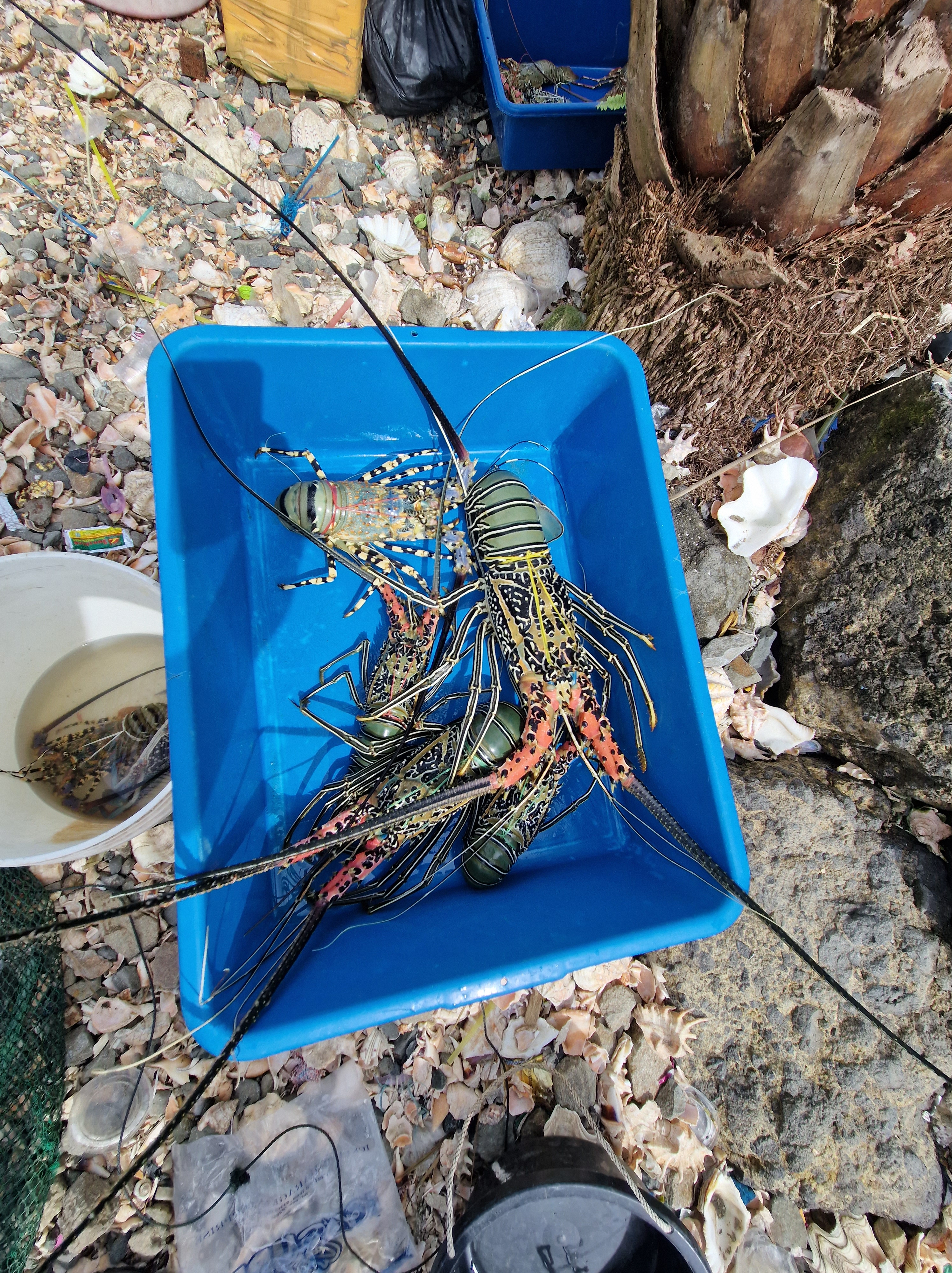
The meeting was full of contrasts. The father continued to socialize with his little child, who had likely seen a white person for the first time. This made it a special occasion for the Sama Dilaut, who generally hold white people in high regard, having had mostly positive experiences with them in the past. We talked about their fishing habits and how long they had been living in the area. The father on the boat said they had been there for a few years and showed me some shellfish and a lobster they were planning to sell in Karaket. A young boy wearing a Neymar Jr. t-shirt was fishing with a hook and line, while a young man standing on the roof of the larger houseboat asked for my phone number, holding up a mobile phone. They told me fishing was better in Kudat than in Semporna and that they didn’t plan to return to Semporna.

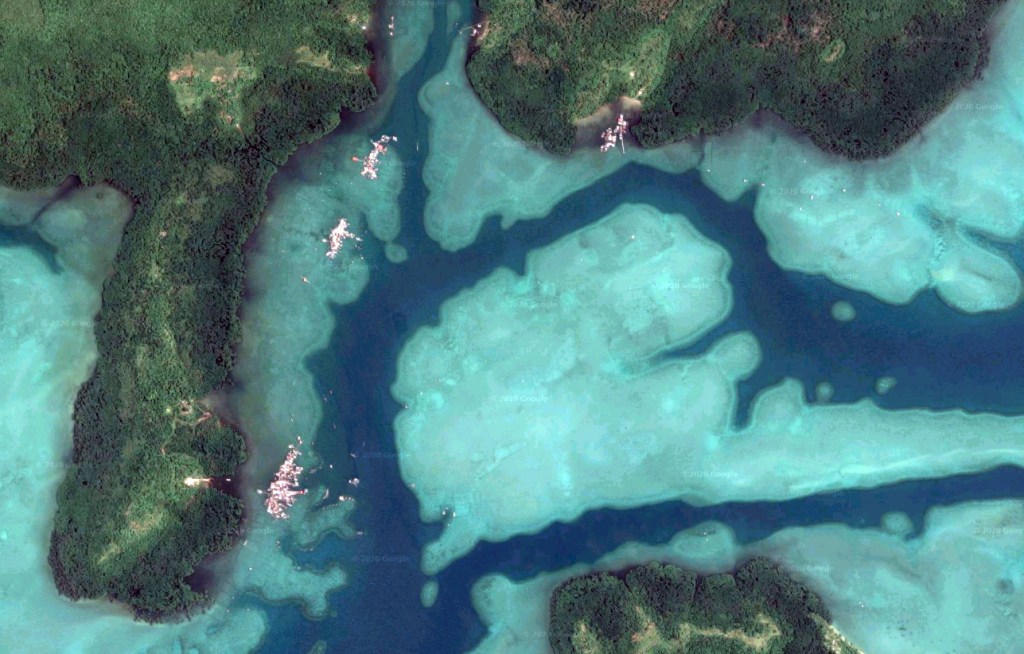
Before leaving, I offered cookies and money. We also spoke to other houseboats, learning about nearby Sama Dilaut communities around the Tun Mustafa Marine Park. We were invited to a water village, clearly visible on Google Earth, where we toured and saw sea cucumbers being farmed. The community consisted largely of undocumented migrants from the Philippines, making their living from fishing and fish farming.

Semporna: A Deep Dive into Local Life

The final destination was Semporna, where I have spent significant time during previous trips to Sabah. Over the years, I have established relationships with various people and places in Semporna, allowing me to gather valuable information. The central market, which had faced years of construction delays due to lack of funds and alleged corruption, was finally completed. However, it was mostly abandoned, with only the fruit and fish markets being utilized. The rest of the trade took place on small tables scattered around sidewalks and walkways, particularly in Kampung Air. Young boys had turned the new central market into a makeshift football field, giving the area an almost ghost-town feel.

Walking through Kampung Air, I noticed the bustling activity with small restaurants, cafes, and stalls selling various goods. The Sama Dilaut who had come to buy staples and sell fish were as always very silent, reflecting the everyday struggles they face, such as racism, poverty, statelessness, and difficulties in making a living at sea. All these challenges can be described as structural violence, a concept originally put forward by sociologist Johan Galtung. This violence has no clear beginning or end, and no single person to blame. It is embedded in the spaces in between—in the market, in the tone of the seller, in the waiting room at the health clinic, and in the long gazes on the street.This was later reflected when I stumbled across a few fishermen from Bangau Bangau who had brought in a sizable catch of cuttlefish. When I asked them how many days they had been out at sea, they replied, “Three days,” at which point the fish trader, who had just started to weigh their catch, said with disdain in his voice, “Sleeping, eating, and pooping on the boat,” whereupon the Sama men fell silent once again.

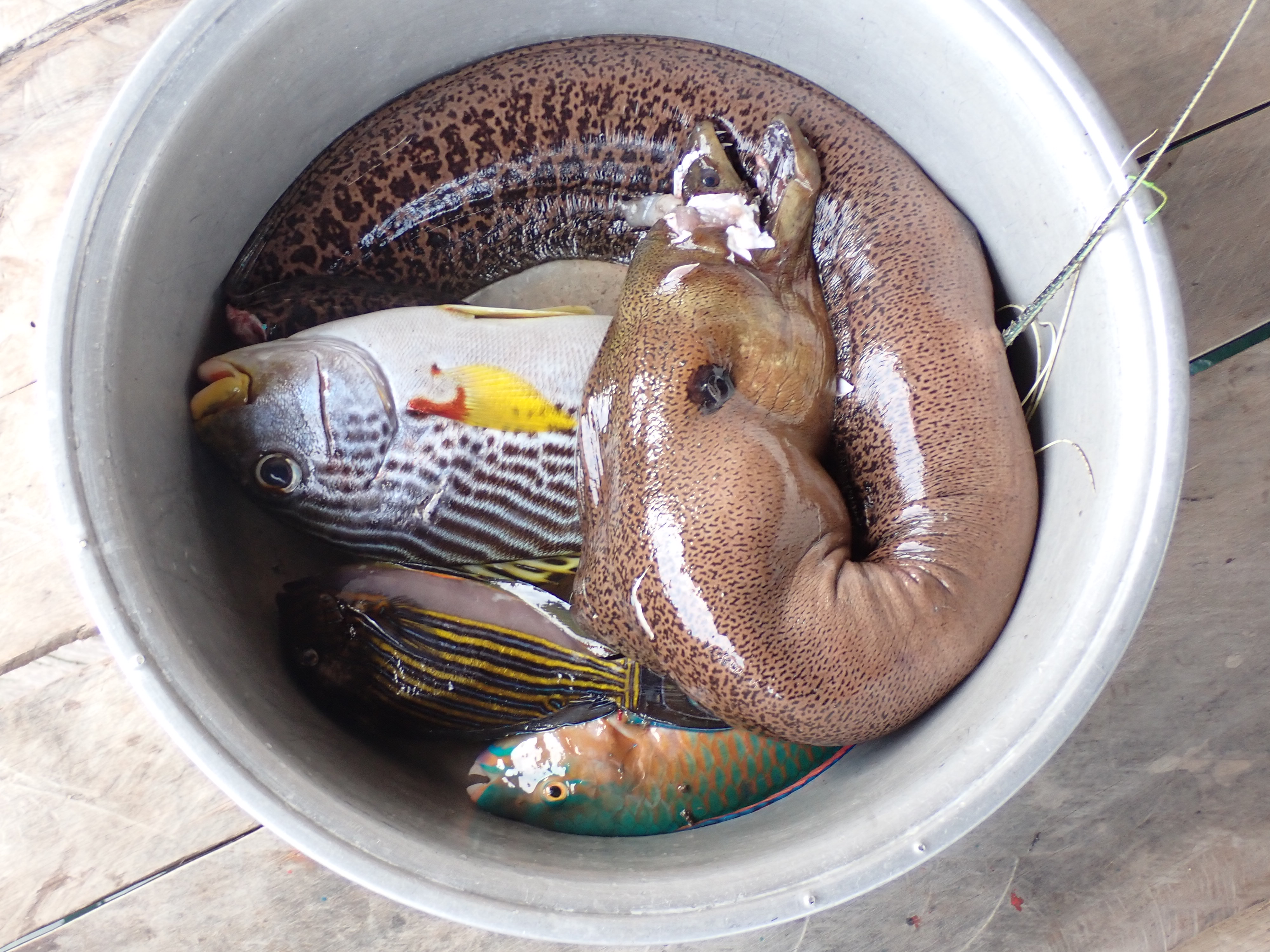
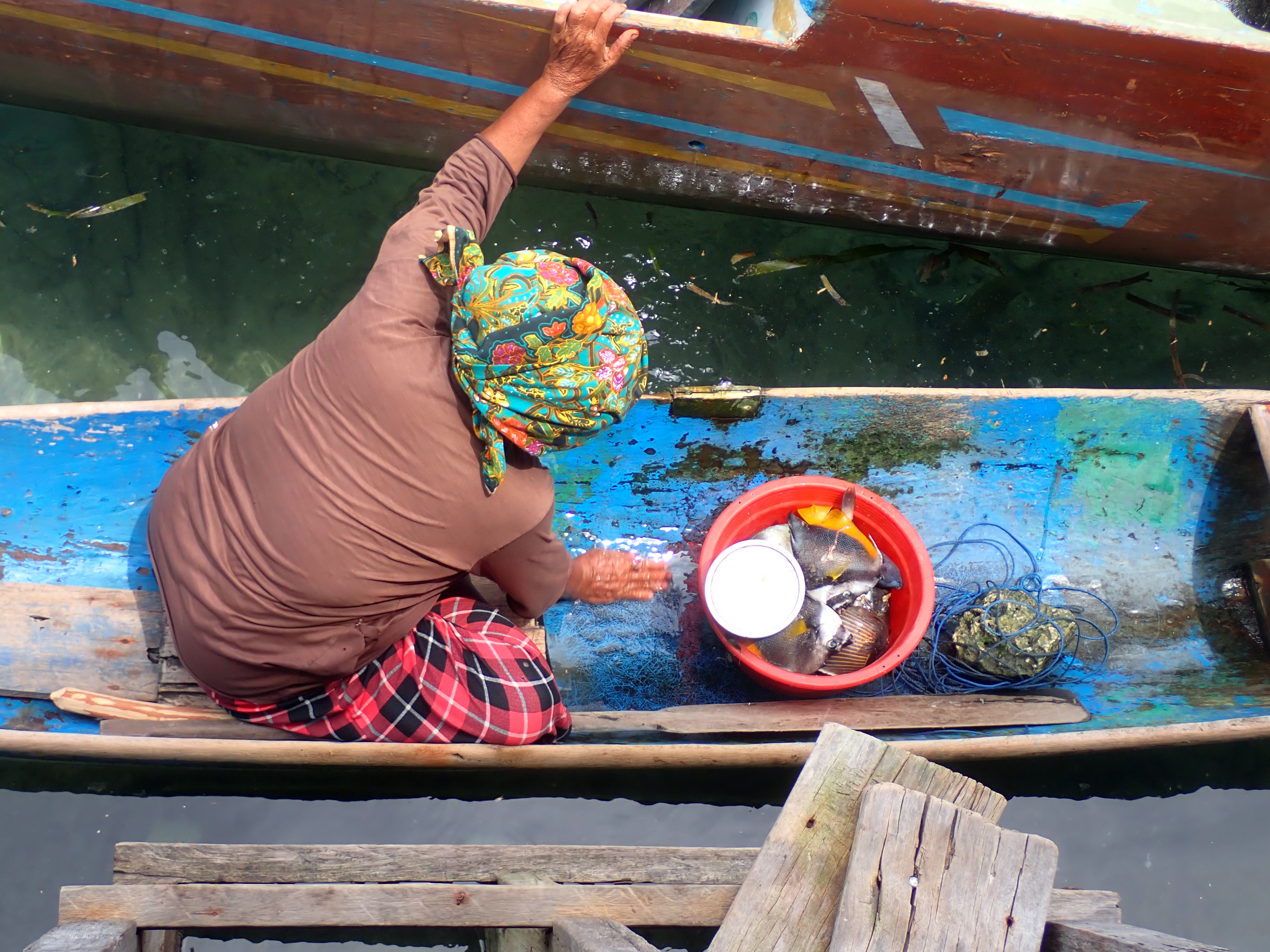
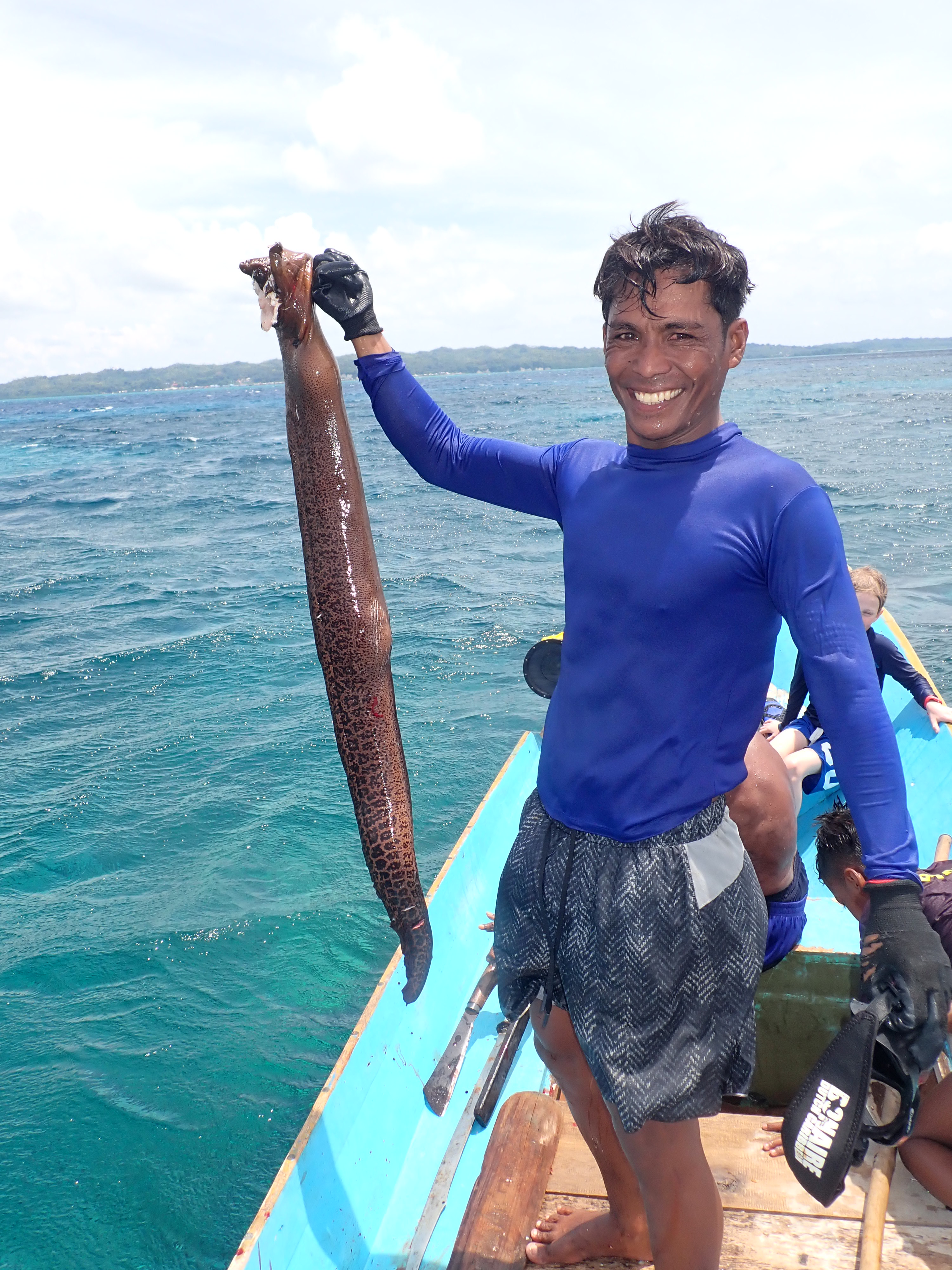
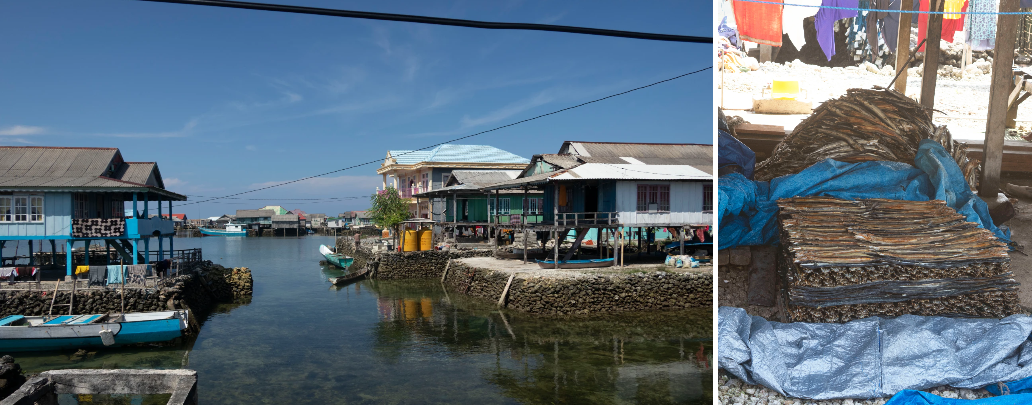
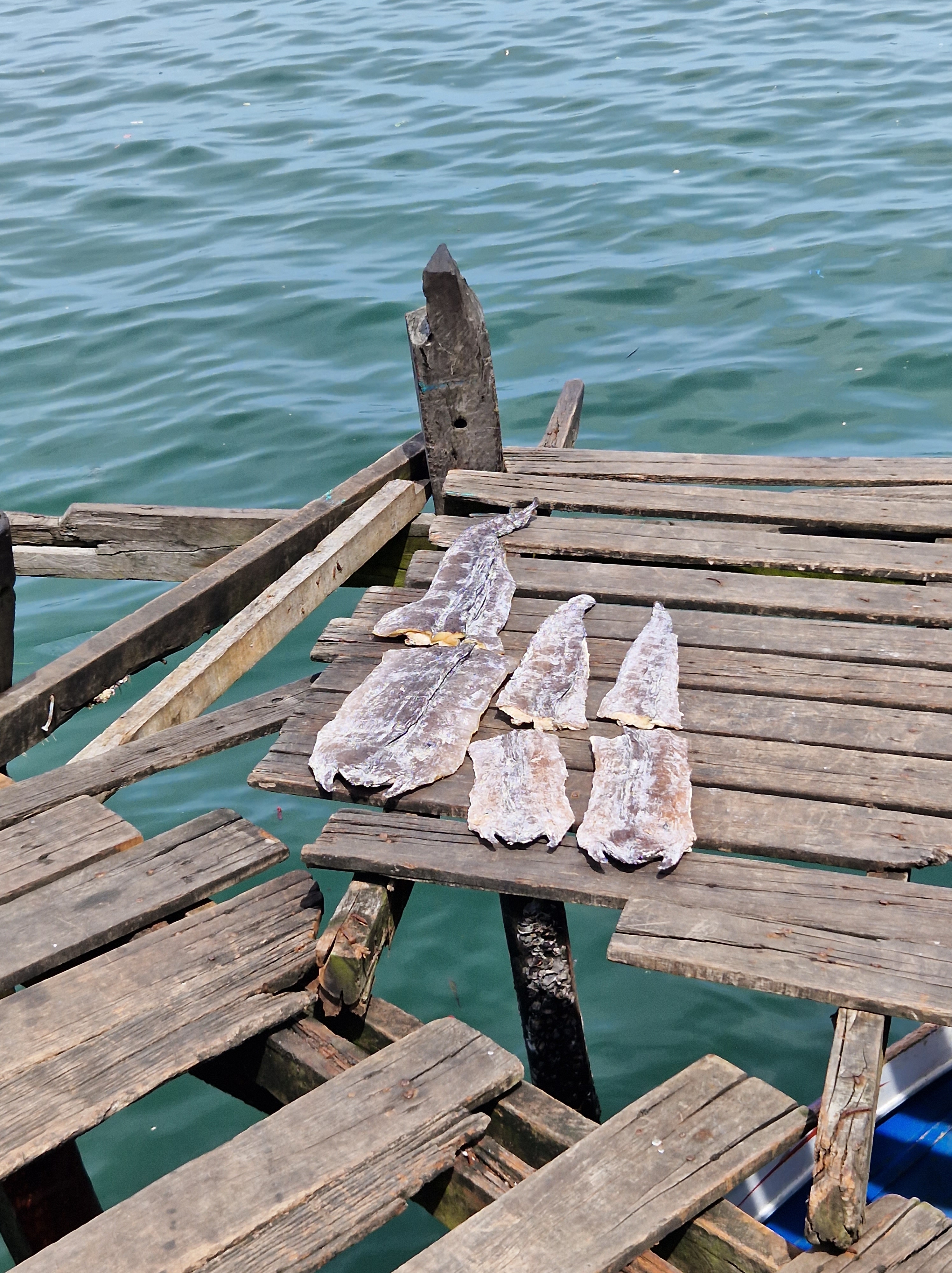
Further down the wooden bridges, I noticed dried moray eels being prepared for sale. A vendor explained that these eels are bought from fishermen for 5 RM (approximately $1.10 USD) per kilo, dried, and then sold for 15 RM (approximately $3.30 USD) per kilo in Tawau. This 200% increase in value highlights the inadequate compensation the Sama Dilaut receive for their livelihood.

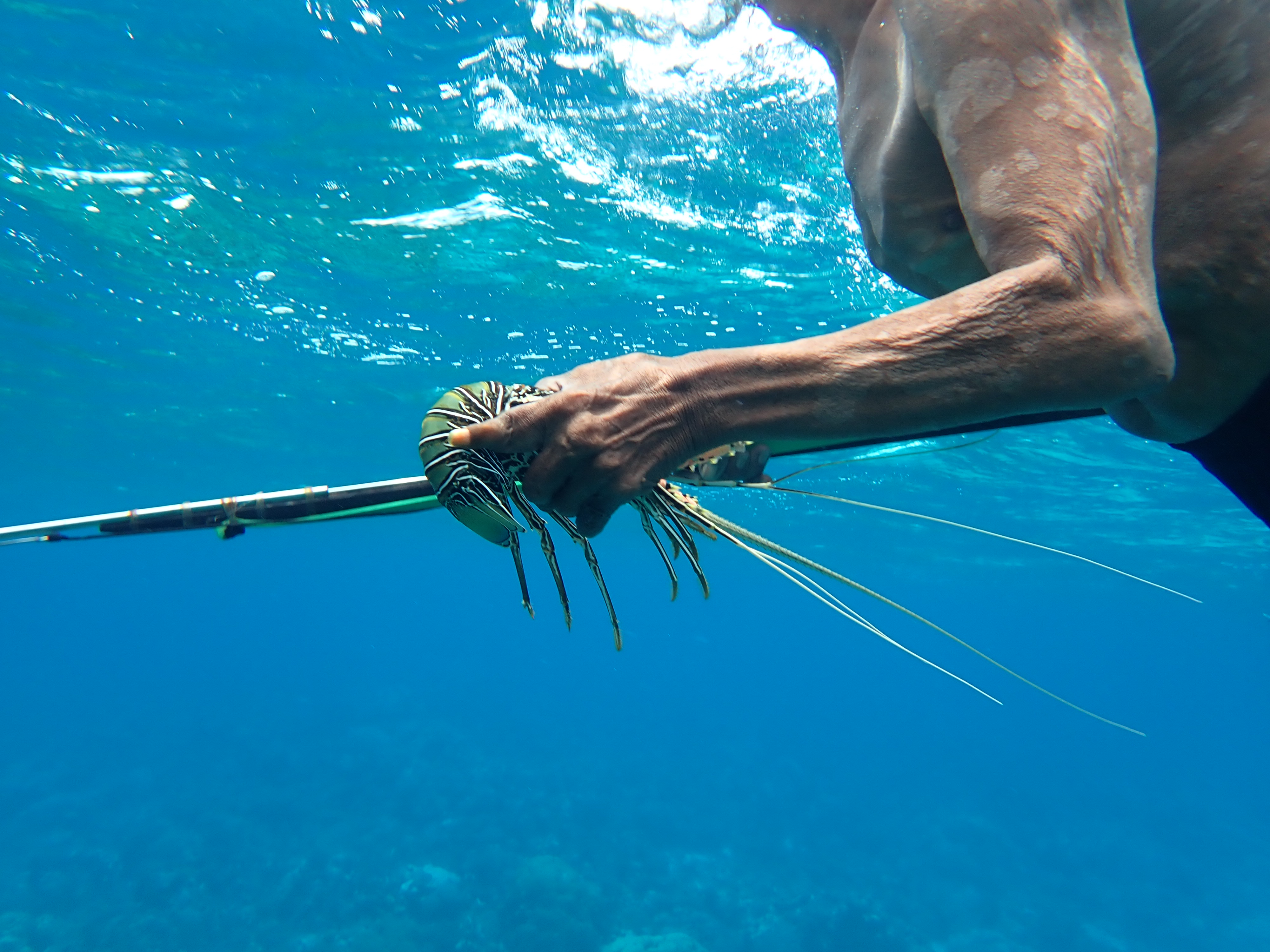
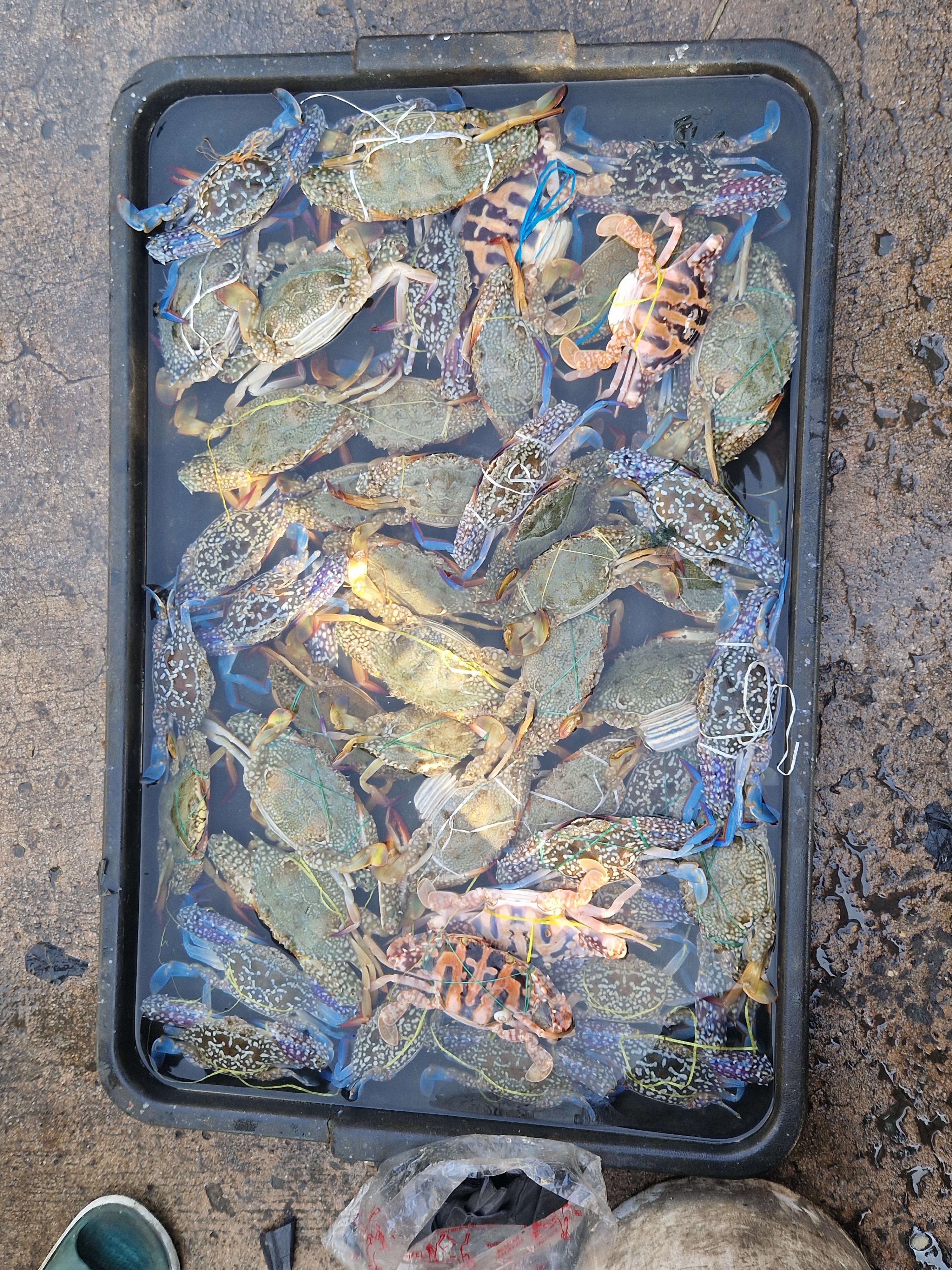
At a nearby store selling fishing equipment, I observed items reflecting various fishing methods used in the area—spear gun fishing, hook and line fishing, net fishing, and compressor diving. The new fish market near Kampung Air was lively, with many people recognizing me from previous visits. The market offered a wide variety of fish, and I engaged with children selling plastic bags, who were amazed that I could speak Sinama.

Exploring Sama Villages and Marine Life with Sabah Parks

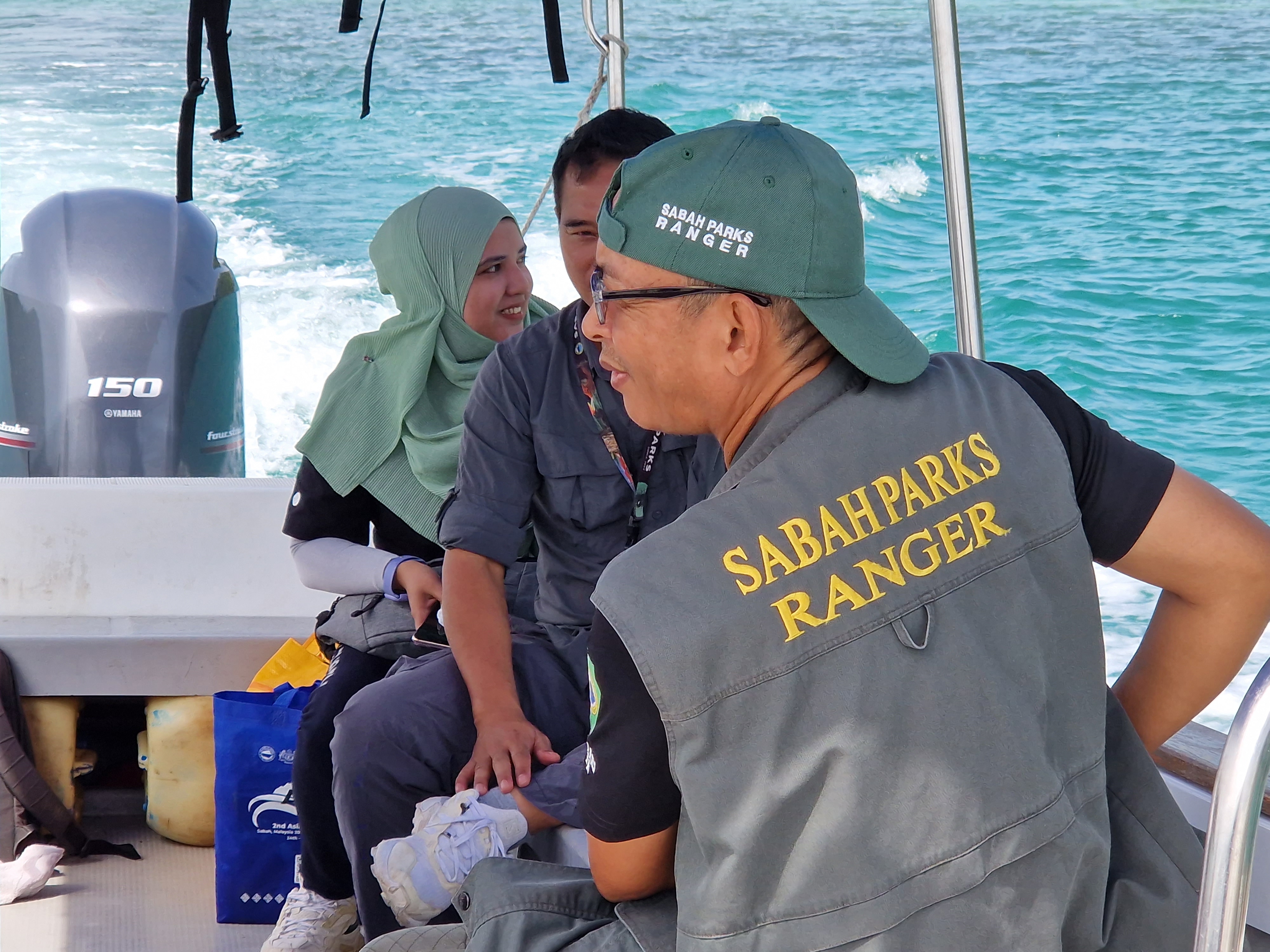
Following Sabah Parks on one of their tours, I visited the Sama Dilaut village of Tatagan, located at the foot of Mount Bod Gaya in the Tun Sakaran Marine Park. Despite tensions between Sabah Parks and the village, I met Kirihati, one of the few who still live on larger houseboats. He shared his experiences and the challenges of maintaining this traditional way of life. Kirihati was growing medicinal plants on the roof of his houseboat, and on land, he was in the process of building a new houseboat with the help of a skilled boat builder.

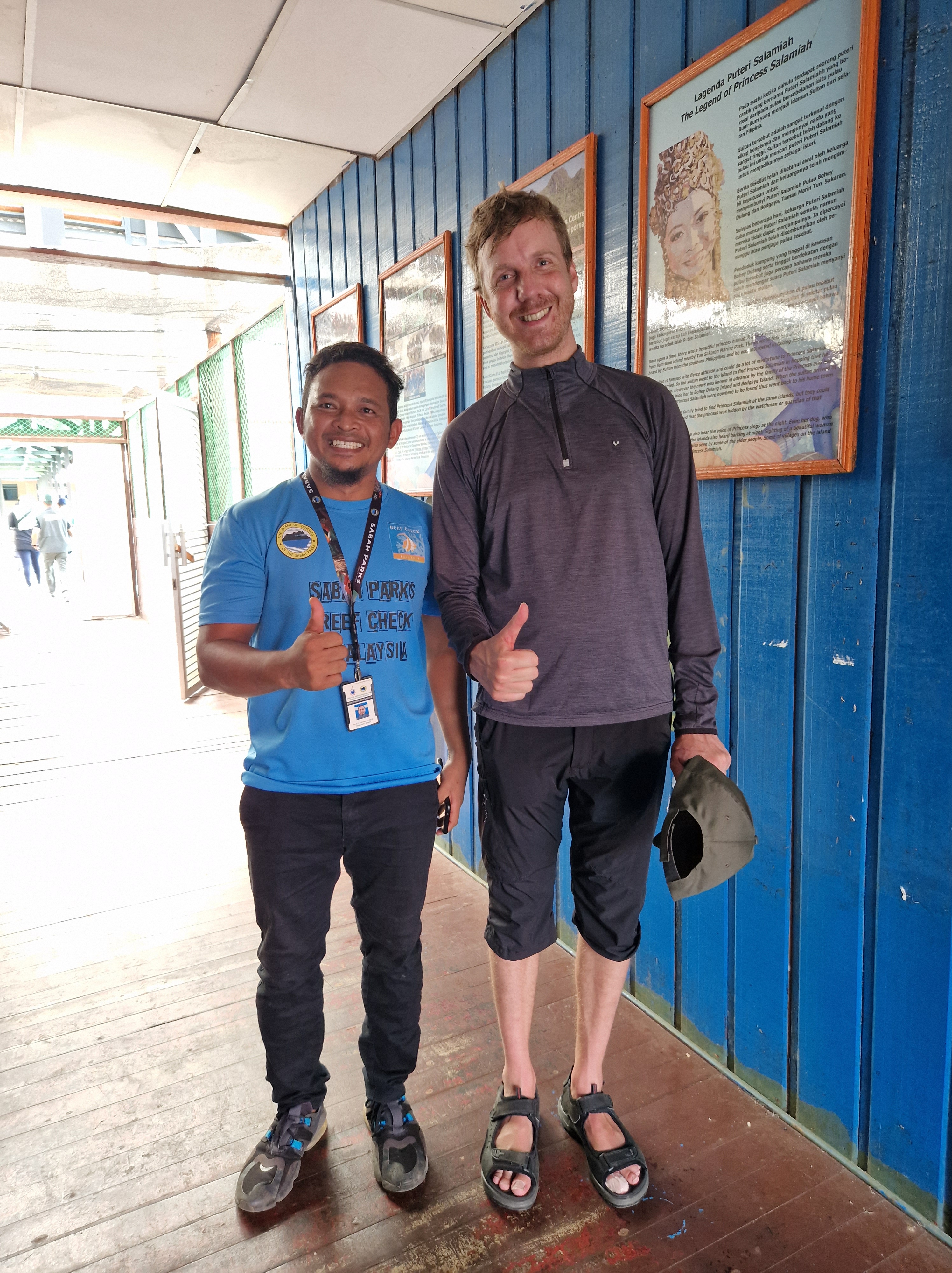
Later, we visited Bohey Dulang, where Sabah Parks had an exhibition about marine life, including an albino turtle—a rare and fascinating sight. The caretaker was thrilled to show us this unique addition to their collection, explaining that albino turtles are extremely rare.

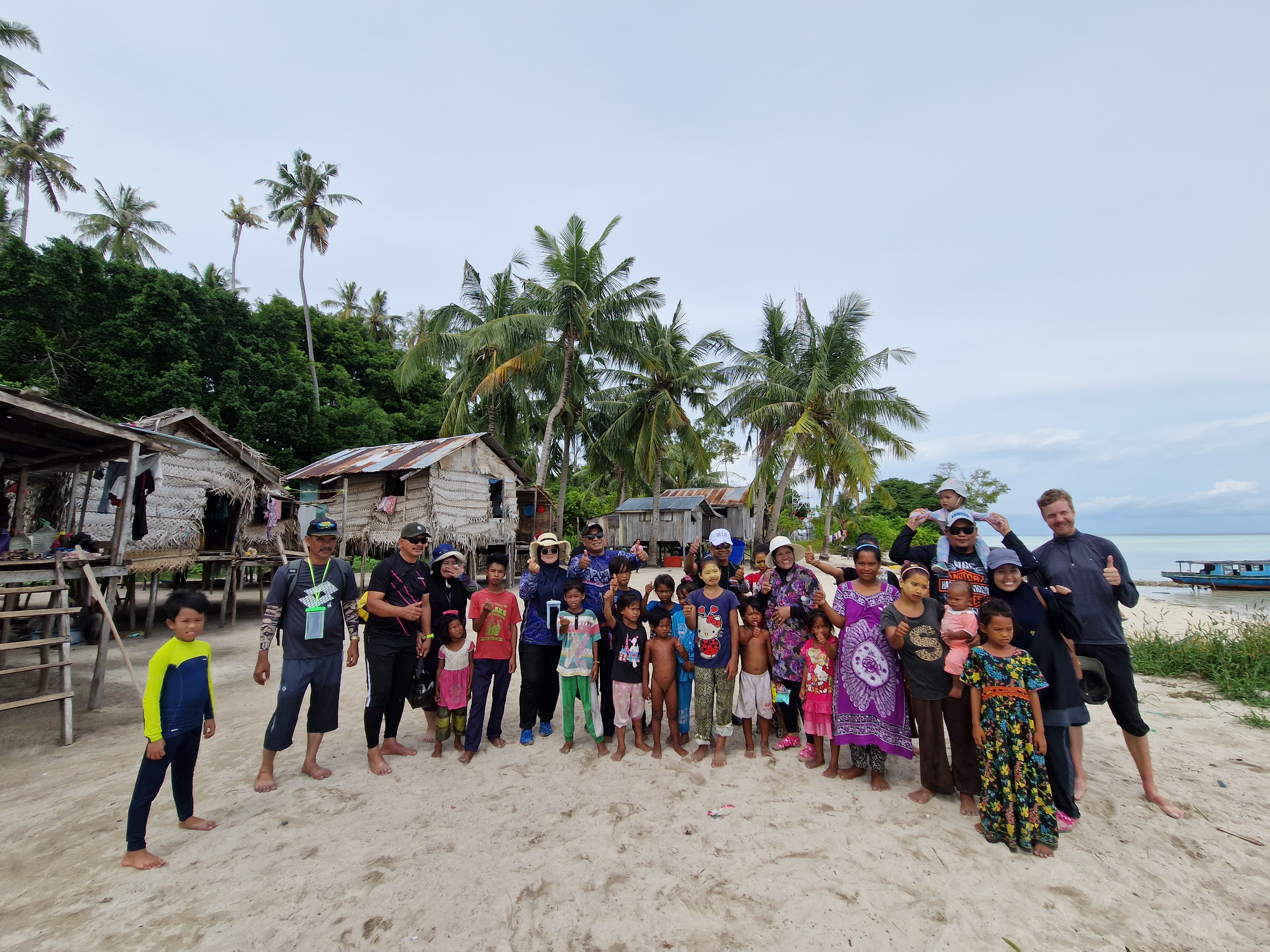
The final stop was the paradise island of Sibuan, home to a small group of Sama Dilaut, Malaysian soldiers, and Sabah Park rangers. On Sibuan, we stumbled upon a Photo Safari session. Two overly talkative and enthusiastic interpreters, who were themselves Sama Bajau, urged all the Sama Dilaut children to line up. A group of tourists from the Malaysian mainland then handed out snacks to the children. Afterwards, mandatory photography ensued, and I was invited to participate.

Following Terence on a Busy Work Day

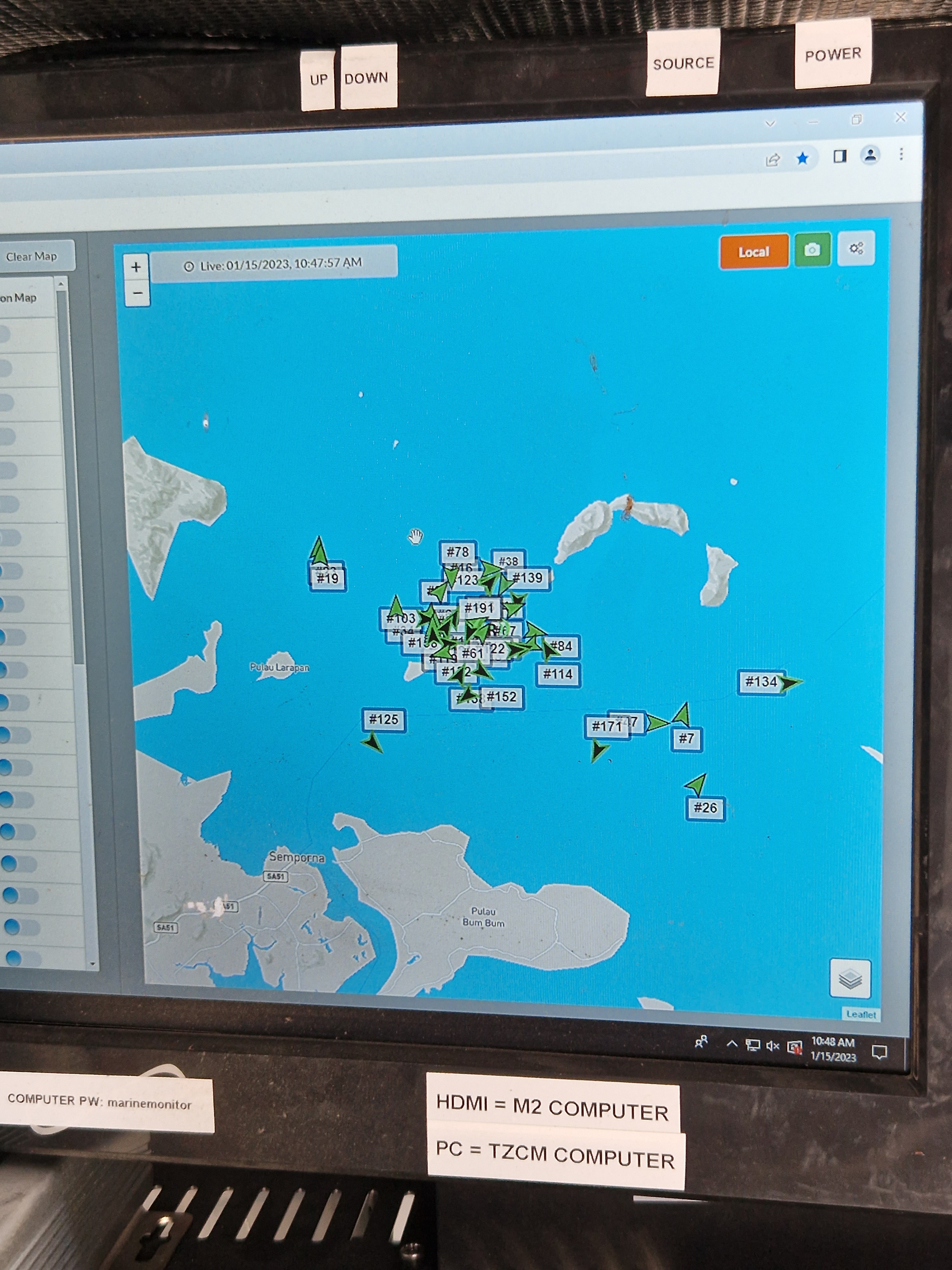
While in Semporna, I joined Terence, who had come down from Kota Kinabalu, on a day trip to check on his bomb-detecting sensors scattered throughout the area. Stop Fish Bombing Malaysia has over 10 sensors covering a large part of the sea. Terence explained that the number of explosions had dramatically decreased, especially near Bum Bum Island. However, some sensors had been bombed by fishermen who opposed the initiative. We also checked on a radar installed on Sanlakan Island, which helps track boats involved in fish bombing.

Visit to Bangau Bangau

One day, I visited Bangau Bangau, home to many Sama Dilaut who arrived from Sitangkai in the Philippines in the 1960s. Most villagers now have Malaysian Identity Cards, but many who came later remain undocumented. Some of the residents have become middlemen in the fishing trade or taken on regular jobs, with their cars parked next to the water bridges, while others continue as traditional fishermen.

I reconnected with an old friend, Si Wanti, a former boat driver who had taken me out to sea many times in the past. Now, he makes a living from small-scale net fishing. I gave him shark and coral fish posters in Sinama, which fascinated many of the elders. An old man living in the same compound as Wanti was particularly happy to see the shark poster. When I read out the names of the sharks to him, he was amazed that I even knew their names. He looked at the collage for a long time, identifying the sharks one after another. He was impressed that all the sharks had been put together in one photo and remarked that the person who took the photos must be very brave.

Reflections and Key Takeaways

Throughout my trip, I learned more about the fish value chain. For instance, moray eels are bought for 5 RM per kilo and sold for 15 RM per kilo in Tawau, representing a 200% increase in value. It’s clear that the Sama Dilaut are not adequately compensated for their hard work. They dive and fish under harsh conditions, only to sell their catch for a pittance, benefiting middlemen and end consumers who enjoy seafood at low prices. Industrial fishing forces down prices, leaving subsistence fishermen and the environment to pay the ultimate price.

People are constantly pushed to their limits, driven by physical needs and market forces. While only those higher up the value chain may become wealthy, the majority must keep pushing themselves and their environment daily. Despite the hardships, the Sama Dilaut have a deep fascination and love for the sea. They cherish moments of peace with their loved ones, swaying with the waves and watching the sunset after a fulfilling meal. However, their constant struggle for survival amidst harsh conditions places them in the grip of structural violence.

Fish serve as a lens through which we can explore important issues such as conservation, destructive fishing methods, and the structural violence faced by the Sama Dilaut. Despite their hard work and fishing skills, the Sama Dilaut continually struggle with capital and opportunities, often losing out in the economic trade. Most Sama Dilaut today live near marine national parks like Tun Sakaran Marine Park in Semporna and Tun Mustafa Marine Park in Kudat. These areas prohibit large-scale fishing, creating a niche for Sama Dilaut and other groups.

However, competition is intense, and resources are limited. Coral bleaching is already a concerning development in the area, threatening the delicate marine ecosystems that the Sama Dilaut depend on for their livelihood. Their resilience and deep connection to the sea highlight the need for greater support and sustainable practices to preserve their way of life and the marine environment they depend on. Ensuring the sustainability of these ecosystems is crucial not only for the Sama Dilaut but for the broader health of our oceans.

The resilience and deep connection to the sea exhibited by the Sama Dilaut, despite the immense challenges they face, underscore the urgent need for greater support and sustainable practices. By preserving their way of life and the delicate marine environment they depend on, we not only honor their rich cultural heritage but also safeguard the health of our oceans for future generations. Their story is a powerful reminder of the intricate bond between humans and nature, and the critical importance of fostering both community and environmental sustainability.

Sama Dilaut of Semporna

In the outskirts of Semporna there are more than 1 000 stateless Sama Dilaut. They live on remote islands in either stilt houses or houseboats with no right to basic health care. They also fear being deported to the Philippines and try to avoid the mainland.

They perceive the ocean as their home, but it can also be a trap in the longer run. There are several acute problems facing marine life, such as over fishing, coral bleaching, plastic pollution, acidification, and global warming.

Growing up Next to Dying Corals

With the current development, 90 % of all coral reefs will be dead by 2050. Carbon emissions have to to be cut by 8 % every year if we are to keep global warming within bearable limits. Corona is just the beginning.

Trapped in Modernity – Informal banking, Coastal Road Project and Shark Fin Soup in the Grand Opera

In mid-January, I made a new trip to Malaysia and the Philippines to learn more about the Sama Dilaut and their day-to-day activities. The trip started in Semporna which seemed more crowded than ever before – there was a lot of Chinese tourists, more expensive homestays, one more KFC. The central market was still under construction as it has been for almost a decade.

The live fish market was still flourishing – Sama people were offering stone fish, lobster, groupers and mantis shrimps for sale every afternoon on the busy road near the port. At this time, rumors about the corona virus had just started, and the first cases had reached Sabah. “The Chinese are bringing a virus”, the local Bajau people told me. More and more people were wearing masks in the streets.

One day, I took a trip around the harbor with a local boatman, Pohon. We passed by a houseboat nearby Bangau Bangau. “There have been “operasis” in Bodgaya” they said and pointed to a mountain protruding from the sea. “We jumped on to the houseboat and left the area”. I was surprised by this news since the Sama are mostly left alone on the islands. The reason could be increasing tensions between the Sabah parks and the Bajau Laut communities inside the Tun Sakaran Marine Park. On islands such as Sibuan and Mantabuan there are restrictions on how many stilt houses that are allowed, and the Sama are prohibited to fish in their nearby surroundings.

Banking in Stateless Communities

Later, I was invited to by Pohon to his house in Labuan Haji, a community based on Bum Bum island just outside Semporna. Originally, he is from Sitangkai where he went to high school before coming to Sabah. He and his family of nine are still waiting for Malaysian identity cards. I was offered food, a fish head, rice and cassava. I was also given soy sauce, chili and salt to prepare for myself. Most of the people in Labuan Haji are without Malaysian documentation – many of them are from Philippine islands such as Siasi and Sitangkai. “Asigpit”, Pohons told me about his situation, there is a shortage of resources now.

As we were talking, two men in traditional shalwar kameez suddenly entered the stilt house. They were collecting utang, debts. One of the men had just arrived from Pakistan and was introduced to the banking business by his friend. The other man spoke Malay and he was also picking up some Sinama. After food we were talking outside the house next to a running washing machine. On the floor next to washing machine there was a brand-new boat engine. “It’s mine”, the street banker told me and glanced at a middle-aged man who was squatting by the machine looking at it with envy. “I’m waiting for installments”.

The next day we went on a fishing trip with local Bajau people. Pohon was organizing the trip – but it was not his boat, not his license. Without Malaysian documentation he can only rely on commission when taking tourists to the outer islands. His day-to-day work is to drive locals back and forth to Labuan Haji for 1 RM per passenger.

Visit in Numbak and MSU in Kota Kinabalu

After the visit to Semporna, I headed north to Kota Kinabalu – the metropolis of Sabah with direct flights to several Southeast Asian cities. One morning, I met the Malaysian anthropologist Sanen Marshall at University Malaysia Sabah (UMS). We headed towards the village of Numbak, where there is a big community of Sama Tabawan from the Philippines, as well as a small Sama Dilaut community. When we passed by the University Malaysia Sabah’s (UMS) walls Sanen activated his GPS and signed in to work before we continued towards the seaside. Nearby the community a long line of cars was lined up. It was Friday, so many people were staying at home. Next to the water bridges there was a mandatory volleyball court.

Everyone was speaking Sinama, and they greeted me happily. I was frequented with the question if I can sing Jumadin, whose origin is Tabawan. However, I had to disappoint people since it is my friend Luke Schroeder who entertained the audience in Semporna in a karaoke bar a few years ago. Jumadin himself is still missing for a few years after a Philippines-Malaysia crossing at sea.

Many people in Numbak are increasingly integrated into the Malay society, even if some of them are still struggling to get Malaysian citizenship. Many of the inhabitants work in shops, restaurants, and shopping malls in town.

“If we had lived in a houseboat, we would only have to pull up the anchor and leave in case of any unrest”, a Sama Dilaut woman living in a stilt house told me. She was one of the key informants of Sanan. Next to her sat her 14-year-old daughter who had previously worked in a restaurant in town but stopped because she felt insecure on the way home. Now she was missing her daily meals.

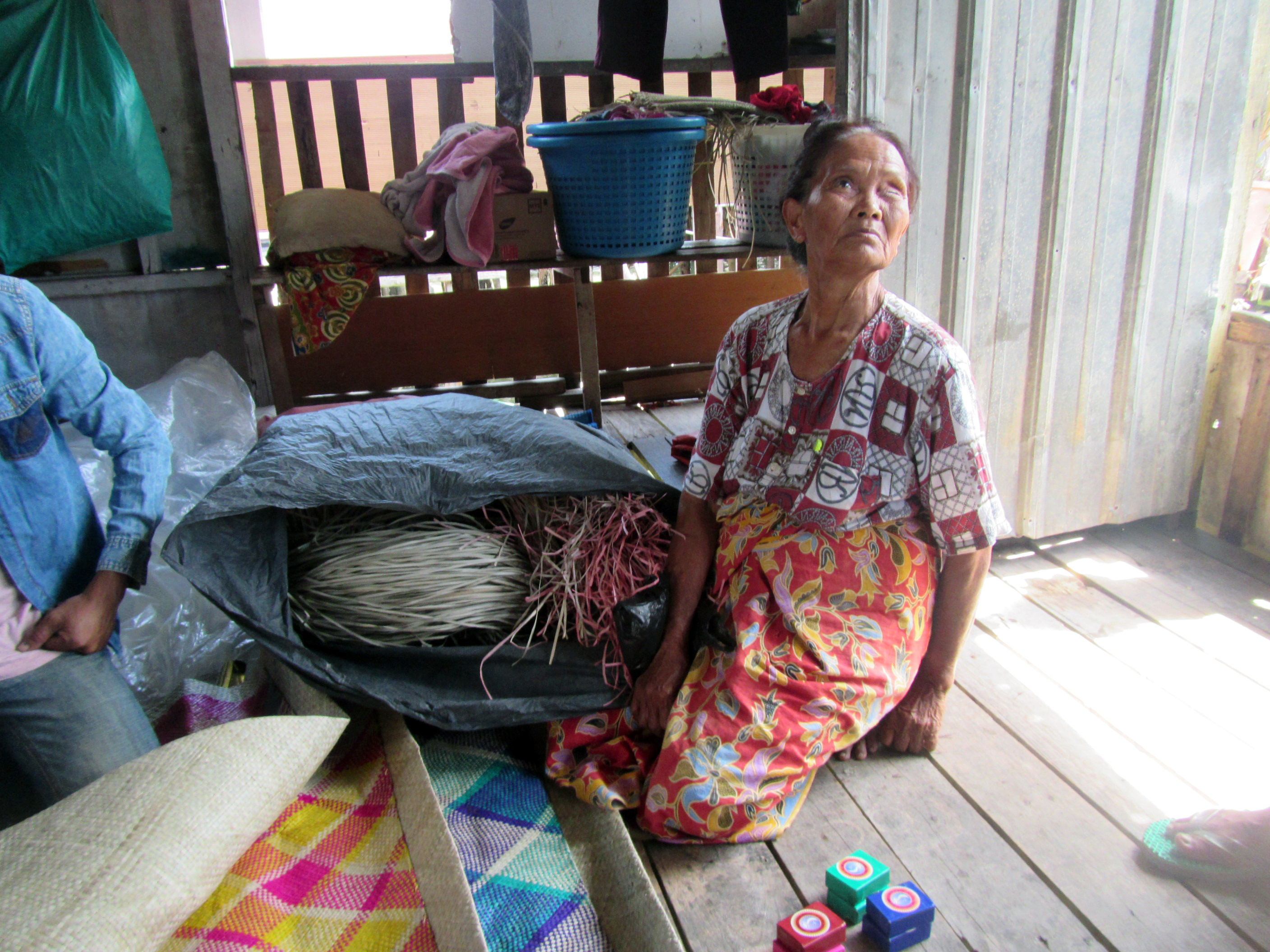
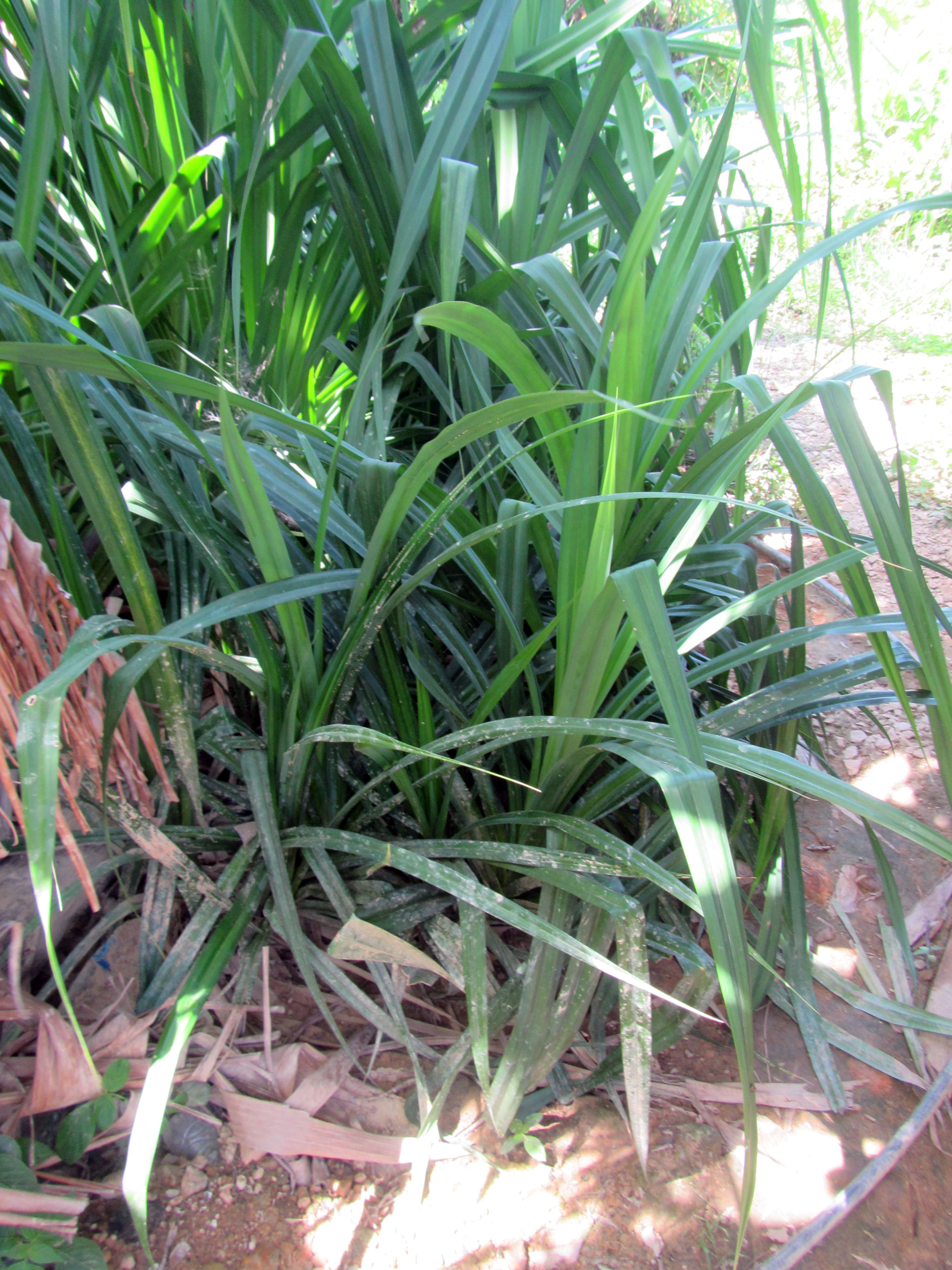
During our stay in the village, we also visited several older women who were making traditional abstractly designed mats called “tepo” – one of the specialties of Sama Tabawan. The mats are usually woven of pandanus strips and consist of a patterned upper layer with a plain under layer. They are normally used for sleeping, but they are also used during rituals and praying. In Semporna, I have seen older women Bangau Bangau selling them in the streets.

Later we headed towards MSU for lunch and a meeting with one of Sanen Marshall’s former students. On the way, Sanen stopped at nearby a storehouse belonging to the university and changed to his formal dress.

“We are working on a program in which street children can get training in a learning center”, Sanen explained when we sat in the university cafeteria. “We want to keep them away from the streets”.

Many Sama Dilaut children sell plastic bags in the night market before they return to Pulau Gaya with their families who also make a living from the market. Others live in the streets under bridges.

Sanan Marshall also stated that the Malaysian authorities don’t have a special category for the sea-based Bajau Laut in the Malaysian migratory Act. However, practically, the sea-based Bajau Laut are mostly left alone by the local officials – at least if they hold on to their traditional lifestyle. At an International Conference on Bajau-Sama Communities (ICBC), held in Sabah 2004, the Governor spoke about the Sama Dilaut as “part of Sabah’s cultural mosaic”. In many of the islands, stateless Bajau people live nearby military outposts.

“However, when the Bajau Laut linger too long in town they might be arrested and deported”, Sanen Marshall explained. 

Meeting with New York Times Writer Ben Mauk in Kota Kinabalu

In Kota Kinabalu I also met with the Berlin-based American award-winning writer Ben Mauk who presently writes an anthology about the conditions for stateless and marginalized people in Asia.

We met up at the seashore where we took a boat over to Pulau Gaya – or more specifically the village of Pondo which is generally characterized as a “no-go zone” because it is inhabited by many so called illegal Philippine refugees. As we entered, I was immediately recognized by people who had seen one movie widely shared in social media in which I speak Bajau, and a group of enthusiastic children immediately accompanied us. We stopped nearby the volleyball court where we talked to people about livelihood and statelessness.

“For men it is risky to be in town, it’s easier for the women”, one man said. “But it is very rare that the police come here, unless they suspect drug abuse”.

After the trip to Pondo, we visited a neighboring more integrated community on Pulau Gaya. I talked to a group of women about statelessness, but some of them got upset. “Why do you ask about IC?”, one woman asked suspiciously.

“Kudat is the New Center for Boat Living Sama Dilaut”

The same evening, we had food in the Philippine Night market where we were accompanied by Terence Lim who is a production’s consultant for Scuba Zoo, a Borneo-based film and production agency who has been involved in many productions on Bajau Laut, as for example Sulbin’s world famous stride under water. Terence estimated that the numbers of boat-dwelling Bajau Laut were reducing in Semporna.

“The bigger boats are disappearing in Semporna”, he said. “The problem is that the house boats are costly to build and maintain, and that fishing is getting increasingly difficult”. He concluded that larger, commercially important fish is getting scarce outside the marine protected zones. He also reported that the number of tourists were declining drastically in Semporna due to the ongoing corona outbreak. This was early February.

Terrence told me that he had been facilitating trips to Kudat, that has become one of the new strongholds for Sama Dilaut boat-dwellers. A large Sama Dilaut community has been established on the east side of the Bankawan Island inside the Tun Mustapha Marine Park, which can be seen on satellite photos from Google Earth.

“There are probably more houseboats in Kudat than in Semporna nowadays”, Terence told me.

The same evening I waked through the Night market on my way home. “Ikan baru” (fresh fish), one young Bajau woman told me while I passed by her temporary stand. She didn’t address me in English, but in Malay. “Are you often addressing foreigners in Malay? I asked her”. “I don’t know any English”, she replied. Children immediately came up to me with their plastic bags, happily shouting. “He speaks Bajau!”. “He speaks Bajau!”.      

Davao coastal road – a Four-lined Road Next to Coastal Communities

After my stay in Malaysia, I went on to Davao city in Philippines – the place where I first got in touch with the Sama Dilaut ten years ago. Some things had not changed significantly– most of the inhabitants of around 400 were still making a living from selling secondhand shoes and clothes, and there was still a group of fulltime fishermen (they mostly use the speargun) and freshwater pearl vendors.

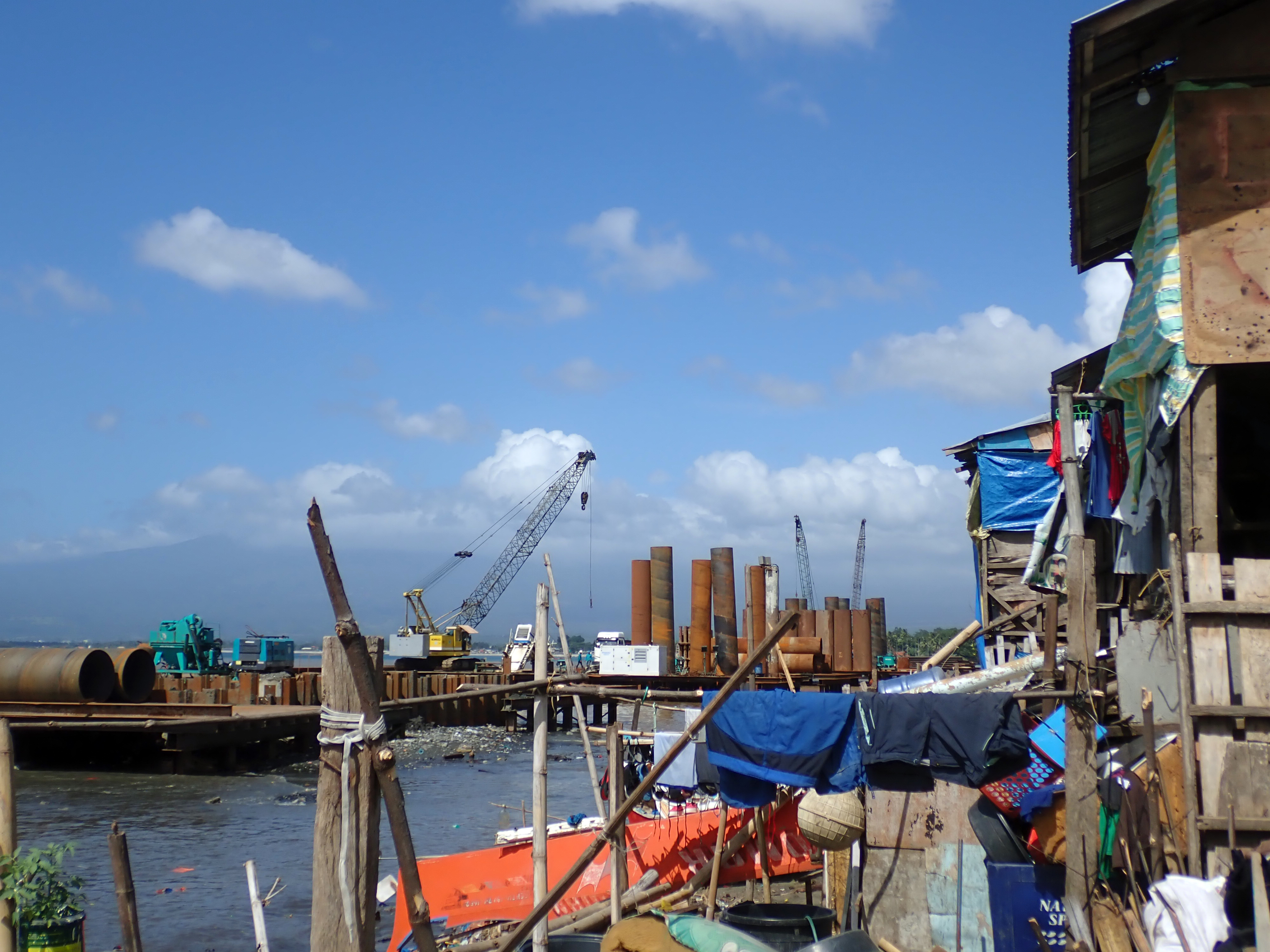
However, an extensive road construction project was underway on the seaside. A four-lined coastal road (Davao City Coastal Bypass Road) is being built just outside the community, and the fishermen need to take their boats through a tunnel below the road to get to sea. The road construction is part of Duterte’s administration’s “Build, Build, Build” program and aims to strengthen Davao’s economic muscles. As always, the inhabitants were supportive of the political leadership, and only a few criticized the road project that will severely disturb the community life upon completion. The living space has already been reduced and a few houses have been relocated.

During my stay in Davao, I had the opportunity to follow on a fishing trip with a few families I know. For ten years I have followed Issau and his son Noah at sea – and it is impressive to see how Noah has developed over the years. It is clear that it takes a lot of training and hard work to become a full-fledged fisherman, which does not only mean that one should be good at diving and aiming, but also that one should know a wide range of fish and their specific behavior, master a boat, and quickly identify potential dangers. This can only be made possible by at least a decade of knowledge transfer from older to younger, and it is sad to see that the regrowth among the younger ones is a fraction of what it used to be. It is also sad to realize that the younger generation encounters a sea far different from the one their fathers grew up in.

Manila – Shark Fin Soup in the Grand Opera

The last day – before catching my flight back to Sweden – I spent some time in Manila, where I walked down the M. Adriatico street – a Malate street that cuts right through top end night clubs and hotels, and poor areas were many Bajau and other migrants from southern Philippines dwell. Even here I was well-known – people greeted me as “the white guy from Facebook that can speak Sinama”. Here, many Bajau people facilitate the nightlife scene, while others sell jewelry and beg for money. Some of them are Bajau Laut, while others belong to other Sama groups from the Zamboanga region.

At the end of the street a large number of Sama had gathered to prepare the supper meal; cassava, fish, mango and chili. One woman told me that she had family in Semporna and she asked for help to get back there. One Bajau man said that he used to work for Smorgasbord & Bar as a doorman. “It’s own by a Swedish guy”, he told me.

In Manila, testing for corona virus was getting more and more common. One of the earliest fatalities due to the virus outside of China took place here.

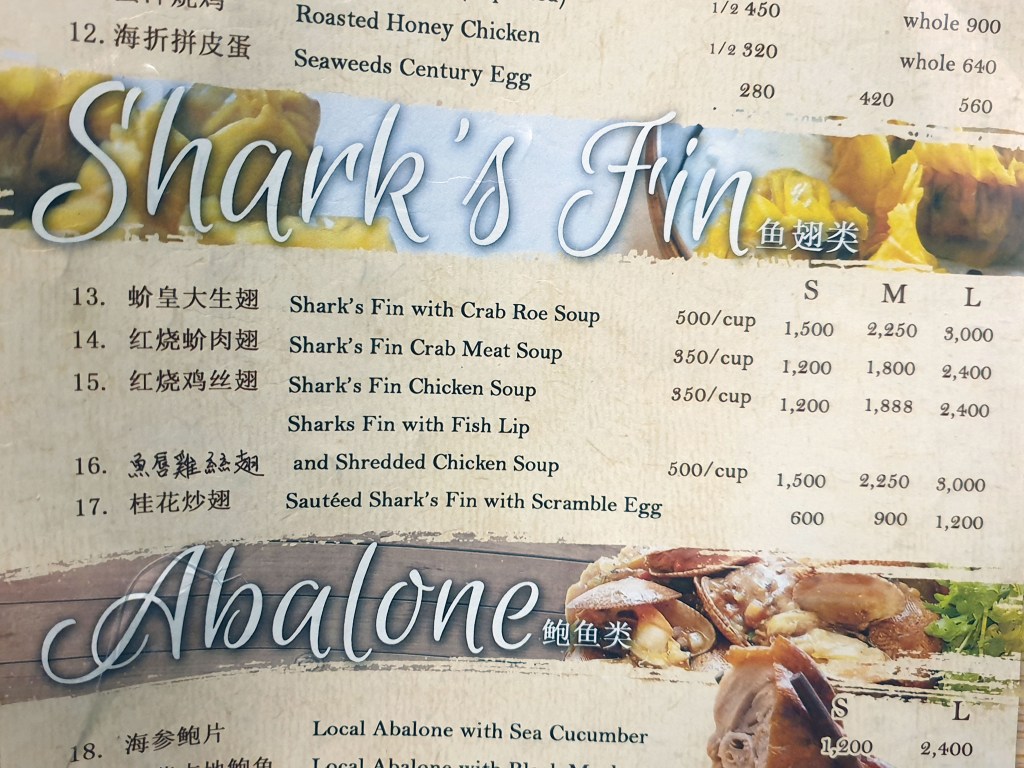
During my stay, I also visited Manila Grand Opera Hotel, located in the same building as the former Manila Grand Opera House which closed in the 1970’s. On the walls, they display pictures of early 20th century high society. On the menu, they serve expensive shark fin soup meals for 2000 pesos (approximately 40 USD).

The Bajau Laut are still providers of shark fins and other lucrative marine species throughout the coral triangle. Perhaps debt is the best way to make it continue. The Bajau are paid for future catch. Hence, their equipment, household equipment and petrol is still at sea. In the shape of groupers, mantis shrimps and shark fins. And the interest rate is high. Not only for the Sama Dilaut, also for the sea.

Bajau Laut Documentary by Radio Television Hong Kong relseased in English Version

In mid-March, the English version of Radio Television Hong Kong’s (RTHK) documentary on Bajau Laut has finally been released. In the film, we can follow three different Bajau families in Semporna whose lives have been intertwined in different ways depending on historical and socio-political circumstances. I was a managing supervisor in the production that was recorded in December 2018.

https://youtu.be/pTzWAaXCuZY

”The Only Documentation They Get is from Detention”

In the end of April I visited Semporna where I attended the International Conference on Bajau Sama Maritime Affairs of Southeast Asia (ICONBAJAU2019). During the conference, a number of speakers presented papers on topics such as the ethnography of “urban” Sama Dilaut, the material realm of Sama Dilaut boat-dwellers, initiatives for strengthening the Sinama language, use of ethnoherbals among Bajau of northern Sabah, and much more. The proceedings can be found there: Proceedings of the International Conference on Bajau and Maritime Affairs in Southeast Asia

ICONBAJAU 2019, PROGRAM BOOK

One of the speakers, Sanen Marshall from University Malaysia Sabah, presented a paper about detention of Sama Dilaut in Kota Kinabalu. A recent problem is that many Sama Dilaut have left the life at sea and started to dwell in cities as beggars and vendors, which put them at risk of detention and deportation. As of today, the Sama Dilaut have a different status than other so-called illegal immigrants from the Philippines, and as long as they stay on the sea and do not involve in illegal fishing (e.g. fish bombing, use of cyanide, targeting of turtles and red-listed shark species, fishing inside marine protected areas) they have not much to fear from migration police. In fact, one of the unofficial ethnic categories used by the Malaysian authorities to classify migrants is “Pala’u”, which is a degenerative term for Sama Dilaut and which literally means “to live on boats”.

Ongoing decline in fish stocks, however, have forced many Sama Dilaut to move into the cities, just as thousands of Sama Dilaut have already done in the Philippines. As city-dwellers, they fail to identify themselves as Pala’u, and therefore hundreds of them have been put in detention camps and eventually deported to Bongao in the Philippines, a place which most of them have no connection to since the majority of them were either born in Malaysia, or left Philippines at an early age. As a consequence, many of them return to Malaysia shortly after deportation, and some of them have been deported two or even three times. In the process, they receive the only documentation they will get in their lifetime: detention papers. 

During detention they can be hold in remote inland camps for up to six months along with members of other ethnic groups, as for example the Tausug. The situation in the camps is difficult, especially for those who don’t get support from the outside. “Many young children don’t learn how to speak inside the camps”, Marshall said.

Are They the Last Generation at Sea?

During the conference, I made a presentation about the future of boat-dwelling among the Sama Dilaut in Semporna. Researchers and journalists have suggested that the boat-dwelling lifestyle is on the verge of disappearance, but I tried to show that boat dwelling have actually had a renaissance in Semporna and that the nomadic lifestyle is still flourishing. I also concluded that the boat-dwelling Sama Dilaut are often better off than their house dwelling kin.Sama Dilaut at Pulau Sibuan

After one of the social anthropologist Harry Nimmo’s re-visit to Tawi-Tawi in 1997, he concluded that there are no more boat-dwellers in the area. In the epilogue of his book Magosaha he wrote:

Their unique boat-dwelling culture is now part of the realm of the mbo’, or ancestors. The loss of that culture is a loss for Tawi-Tawi, the Philippines, Southeast Asia, and ultimately humankind. (Nimmo 2001: 233).

However, the Sama Dilaut culture has thrived in Semporna during the last few decades, and there are still more than 100 houseboats in the region. As a matter of fact, many of the boat-dwelling Sama Dilaut of Tawi-Tawi escaped to Semporna during the clashes between Moro National Liberation Front (MNLF) and the Philippine army in the 1970’s, where they have hold on to their nomadic lifestyle. There are also many examples of Sama Dilaut who actually were house dwelling in Tawi-Tawi but who took up the boat living lifestyle in Semporna.

What then are the factors that have contributed to the preservation and even renaissance of the nomadic lifestyle in Semporna? Here comes a number of factors I have identified:

  • Lack of national recognition and support. The Sama Dilaut in Malaysia are stateless and get no or very limited support from the government. They can’t access health care or education and have no right to work, which keeps them traditional.
  • The Sama Dilaut are stateless but as long as they stay on the sea and in the proximity of islands, they rarely face risk of deportation. As a consequence, they cling on to the life at sea and can hardly look for other means of livelihood.
  • The Malaysian authorities do not let everyone settle in the islands around Semporna. Only native Bajau from Semporna with land ownership, traditional Sama Dilaut and a few other migrant groups as for example Sama Laminusa and Tausug who arrived in the 70’s and 80’s, are allowed (or perhaps tolerated) to live in the area. For others it’s is very costly to acquire land ownership or to lease land.
  • The traditional lifestyle of the Sama Dilaut plays a crucial role in the advertisement of Semporna: photos of remote Sama Dilaut stilt houses show up on international hotel booking websites, and photo safaris are being organised regularly. The Sama Dilaut community nearby Bodgaya is probably the most well-known “sea gypsy” attraction which alone creates large annual tourism revenues for Semporna. Why would the authorities displace them?
  • There is a high level of security in the region. There have been a number of kidnappings of mostly tourists carried out by Philippine militant groups such as the Abu Sayyaf in Semporna during the last decades which has prompted the Malaysian government to increase their military presence. There is also an ongoing land dispute between Malaysia and the successors of the Sulu Sultanate (one of them is the Philippines) regarding the eastern part of Sabah. In 2013, an armed group sent by Jamalul Kiram III, another claimant to the throne of the Sultanate of Sulu, arrived by boat at Lahad Datu claiming the territory. In that standoff, 56 militants along with 6 civilians and 10 Malaysian soldiers were killed. Consequently, the Malaysian military have outposts in many of the islands along the coast, and they patrol the sea regularly. The Sama Dilaut benefit from the military presence as they don’t need to fear piracy, as they did in the Philippines.
  • The tourist industry creates incentives to maintain healthy coral reefs. Marine protected areas such as Sipadan National Park and Tun Sakaran Marine Park contribute heavily to the diverse marine life in the area, thus enabling traditional Sama Dilaut fishing practises. It has been estimated that shark diving activities alone create revenues for more than 12 million USD a year 2017 (Vianna etc. 2017). However, some members of all ethnic groups in the islands outside of Semporna do engage in destructive fishing, and there are increased tensions between marine conservationists and local fishermen. If the status of the marine life declines further, more Sama Dilaut may be deported to the Philippines or in other ways prevented from engage in fishing. We must remember, though, that there are many factors contributing to the decline in marine life, such as climate change, ocean acidification, coral bleaching, plastic waste, pollution and large-scale fishing (mainly trawling).
  • There are also economic reasons why many Sama Dilaut choose to live on boats. The increased mobility of boat-dwelling makes it possible for the boat living Sama Dilaut to stay longer at sea, as well as to sell fish to a higher price without relying on middlemen and buy commodities to a lower price in town compared to those who stay nearby Semporna or in the islands. For example, Sama Dilaut fishermen from Bangau Bangau must invest a higher price for making daily fishing trips, so called omkos (which apart from gasoline also include drinking water, staples such as rice and cassava, and cigarettes). House-dwelling Sama DIlaut residents in islands as Mabul and Maiga, on the other hand, largely depend on middlemen for selling their catch, and they also have to pay considerably more for petrol as well as for staples and drinking water. In the long run, the economic equation simply makes sense.
  • Lastly, we must also consider the physical connection that many boat dwelling Sama Dilaut have to the life at sea, which is also partly backed up by science. According to a study in Current Biology, rocking (as for example the rocking of waves) shortens the time it takes to fall asleep, and also to reach non-REM sleep, which correlates with improved sleep quality (Perrault, etc. 2019). We also know that natural sounds from water and waves increase or concentration and make us more relaxed (Gould van Praag 2017). It is also well-known that grounding contributes to reduced inflammation and increased well-being, and proximity to water or even better – swimming in the ocean – is a strong source of grounding (Oschman 2015). It has also been found that consumption of fish improves sleep quality (St-Onge 2016). Many Sama Dilaut claim that they are strongly interconnected to the sea, and as we have seen there can be physiological reasons to that. Many Sama Dilaut also say that they become land-sick if they stay away from the sea too long.Picture1

In Semporna today, there is also a tendency for larger houseboats. The more traditional boats as for example djenging have for long disappeared. The lepa is still used, even though it is more commonly used by Sama Dilaut from Sitangkai. Among the Sama Dilaut from Tawi-Tawi other types of boats, which are not traditional Sama Dilaut boats, are now being used. They are called lansa and motol, of which motol is the largest and which can accommodate up to 20 people. Lansa and motol are typically run by a big diesel engine, good for longer slow-paced trips at sea, and some of the boats are also equipped with smaller gasoline engines for pumping out saltwater from the interior of the boat through a small pipe. A large fully equipped motol can cost up to 50 000 ringgit to construct.

Hence, Semporna is still today a stronghold for Sama Dilaut boat nomadism, and those who live in houseboats are mostly more well-off than other members of their kin. We have to keep in mind, however, that the relative success of many Sama Dilaut boat dwellers correlates with the use of fossil burning engines and higher investments in fishing (as for example large drift nets). Many house dwelling Sama Dilaut say that they would prefer to live in a houseboat – if they could afford it.

Boat dwelling Throughout Sabah

In the presentation “Ethnography of the ‘Urban’ Sama Dilaut: Displacement and Survival”, we were told that there is a small Sama Dilaut community, some of whom live in houseboats in Tun Mustapha Marine Park in Kudat. This means that there is boat dwelling Sama Dilaut in at least four places in Sabah: Kota Kinabalu (Pulau Gaya), Kudak (in the marine park), Lahad Datu (near the city and in nearby islands and, Semporna (near town and in multiple islands).

Poetry Depicting the Traditional life of Sama Dilaut from Bangau Bangau

During the conference, I met the author Zubir Osman, whose mother is Sama Dilaut from Bangau Bangau. In the book “Yang Terhempas Dan Yang Putus” (whicroughly “The crashed and the broken”) he describes the hardships of the Sama DIlaut fisherman, who struggles under the fierce sun, not knowing if he will bring back any fish to his family that day. But even if he does, he is still dependent on the middleman, who will profit from his hard work. 

Semporna was Part of Long-Distance Trade Network More than 3 000 Years Ago

Bukit Tengkorak (which literally means “Skull Hill”) is an important archaeological site in Semporna. Here, archaeologists have found large amounts of pottery which is up to 6 000 years old (Chia 2003b) Interestingly, this pottery is very similar to the present pottery tradition in some of the local communities in Semporna. At the site, the archaeologists have also found many remains of shell and fish bones. This has raised questions about the history of the Sama Bajau, since linguistic research has shown that the Sama Bajau originated from a proto-Sama-Bajau speaking people inhabiting the Zamboanga Peninsula at around 800 AD.

At the Bukit Tengkorak Archaeological Heritage site, the archaeologists have also found large amounts of obsidian artefacts used to make small flake tools that are estimated to be between 6400 and 2900 years old. The youngest artefacts have been chemically traced to the Kutau/Bao obsidian sub-source in Talasea, New Britain – north of New Guinea – which means that the obsidian must have been transported 3 500 km, thus representing the longest traded obsidian in the world for this time period (Chia 2003c).

BUKIT_TENGKORAK_03b

Stephen Chia, Professor at the Centre for Global Archaeological Research, University of Science Malaysia, Penang, who was the leading excavator at Bukit Tengkorak, presented a paper entitled “Archaeological and Historical Perspectives on Sama-Bajau Origin and Culture in Sabah” during the conference in which he raised the idea that Bajau may be direct descendants of the Austronesian language speakers who originated from South China/Taiwan at around 4500 BP and dispersed into Island Southeast Asia. However, even if the lifestyle of the early inhabitants at Bukit Tengkorak somehow reflects the lifestyle of present day Sama Dilaut, if it is difficult to tell how long Sama Bajau been on the sea. Nevertheless, the findings at Bukit Tengkorak show that collecting of shellfish, seafaring and long-distance trade have been of importance for thousands of years – thus reflecting a more maritime oriented past throughout Southeast Asia.

Antarbangsa Dance Festival

In conjunction with the ICONBAJAU 2019 conference there was also a dance competition, called Festival Igal Antarabangsa (FIA2019). The competition was designed as a dance battle between different dance groups from Sabah, performing in three traditional dance styles. The well-known community of Bangau-Bangau (which is largely inhabited by Sama Dilaut from Sitangkai) participated with two teams, of which both went on to the semi-finals vividly supported by their friends and family members in the audience – where they faced each other. In the final a team from Kampung Simunul won over the Bangau Bangau finalist in a spectacular and colourful dance show. One of the teams from Bangau-Bangau – dressed in green and white like the traditional djin (shaman) received price for best costume.

One fascinating fact about the Sama Bajau dance is that their feet movements reflect the smooth wading in shallow water as they gather shellfish. It is also said that the gracile hand movements imitate the movement of fish.

Regatta Lepa Festival – 25th Silver Jubilee

During my stay in Semporna I also attended the annual Regatta Lepa festival in which the traditional houseboat, the lepa, and the Sama Bajau culture is being highlighted and celebrated. The festival attracts thousands of visitors from all over Sabah, other parts of Borneo, peninsular Malaysia as well as foreign tourists. Big sponsors, as for example Petronas (a Malaysian oil and gas company), supports the event.

Every year, new lepa’s are being constructed around Semporna to participate in the festival in which prices to the finest boats and best “igal-igal” dancing are awarded. The brand-new boats are mostly done by local Bajau Semporna boatbuilders in for example the island of Bom-Bom – where the famous Bajau Kubang once made lepas that were often purchased by Sama Dilaut fishermen from Sitangkai. Many local schools also participate with the making of their own boats.

This year many Sama Dilaut from Bangau Bangaui participated in the festival bringing their own lepas and decorating them with flags, called sambulayang. However, they were not brand new. In total, more than one hundred boats took part in the boat parade around Semporna harbour. During the festival their was also a hand-out of free food by organizers which caused a rush of Sama Dilaut families at the docking station – and that partly explains why they showed up at all. There was also a showcase of traditional Sama food as different kind of bang bang (sweets) and panjam (rice cake).

Final days in Semporna

During the Regatta lepa festival I also met Kirihati and his family who were anchored in the harbour. He told me that they did not participate since they had no flags. He also said that only a few Sama Dilaut of Tawi-Tawi participated in Regatta lepa since they were busy “magosaha” (roaming the seas for making a living).

After the festival I stayed a few days more in Semporna spending some time with Kirihati and his family. He showed me his diesel engine which he has owned for 20 years. He also told me that he had another houseboat under construction and that he had already purchased all the materials and payed 5 000 ringgit to a skilled boat builder who currently was constructing it. In the meantime, Kirihati was fishing the islands, collecting money for another 5 000 ringgit to be payed during the final state of construction. “I will use my old diesel engine in the new boat”, he said proudly.

Kirihati also told me that he and his family use to make weeklong fishing trips in the islands before returning to Semporna. For a one-week trip they normally need 700 ringgit for buying staples, diesel and gasoline. He also promised me that I could follow him on my next visit to Semporna.

Thus, his life went on, searching and harvesting the sea – just as his forefathers have done for generations. They call it magosaha.

Literature

Chia, S. (2003b) Prehistoric Pottery Production and Technology at Bukit Tengkorak, Sabah, Malaysia. Society Journal, 20, 45-64

Chia, S. (2003c). Obsidian sourcing at Bukit Tengkorak, Sabah, Malaysia. In J. Miksic (Ed.), Earthenware in Southeast Asia (pp. 187-200). Singapore: National University Singapore Press.

Gould van Praag, Cassandra D. (2017) Mind-wandering and alterations to default mode network connectivity when listening to naturalistic versus artificial sound. Nature: Scientific Reports volume7, Article number: 45273 (2017) <https://www.nature.com/articles/srep45273>

Nimmo, H. Arlo (2001) Magosaha: An Ehtnography of the Tawi-Tawi Sama Dilaut. Ateneo de Manila University Press, Manila.

Oschman, James L., etc. (2015) The effects of grounding (earthing) on inflammation, the immune response, wound healing, and prevention and treatment of chronic inflammatory and autoimmune diseases. <https://www.ncbi.nlm.nih.gov/pmc/articles/PMC4378297/>

Perrault, Aurore A., etc. (2019) Whole-Night Continuous Rocking Entrains Spontaneous Neural Oscillations with Benefits for Sleep and Memory. Current Biology: VOLUME 29, ISSUE 3, P402-411.E3.

St-Onge, etc. (2016) Effects of Diet on Sleep Quality. Advances in Nutrition: 2016 Sep 15;7(5):938-49 <https://www.ncbi.nlm.nih.gov/pubmed/27633109>

Vianna, Gabriel, etc. (2017) Shark-diving Tourism as a Financing Mechanism for Shark Conservation Strategies in Malaysia. PeerJ Preprints — the Journal of Life and Environmental Sciences. <https://peerj.com/preprints/3481.pdf>